How Much Do Shingles Cost? A Pricing Guide for Homeowners on the Eastern Shore
If you are reading this, you probably know your roof is nearing the end of its life (thank you for being proactive). Maybe you found shingles in the yard after a storm, or maybe your neighbors are getting theirs done and you are wondering if you should be next.
The first question everyone asks is always the same: “How much is this going to cost?”
It is a fair question. A new roof is a significant investment. At G and Bros, we believe in being upfront about what goes into that number. While we cannot give you an exact quote without seeing your home, we can help you understand what you are paying for and what realistic budget ranges look like for homeowners in Salisbury and Ocean City.
How Roofing is Measured: The “Square”
To understand the cost, you first have to understand how the industry measures your roof. Most of the roofing world operates on a unit of measurement called a “square.” One square equals 100 square feet of roof area. So, if your roof is 2,000 square feet, that equals 20 squares.
A Note on How G and Bros Prices
While “per square” is the industry standard for measuring materials, at G and Bros, we do not issue quotes based strictly on a flat “price per square” rate.
Why? Because two homes can have the exact same square footage but be completely different projects. One might be a simple rancher that is easy to walk on, while the other has steep slopes, skylights, and complex valleys. The second roof requires more skill, time, and safety measures. We price based on the complexity of the job, not just the size.
However, since “per square” is the language the rest of the industry uses to discuss general pricing, we will use it here to help you understand the baseline costs.
When you see a price for a roof, it includes three main buckets:
- Materials: The shingles, underlayment, ridge vents, vents, flashing, etc.
- Labor: The skilled crew tearing off the old roof and installing the new one.
- Overhead: Insurance, disposal fees for the dumpster, and the warranty.
The Three Tiers of Shingle Costs
Not all asphalt shingles are the same just like not all companies provide the same level of quality. Your total cost will depend heavily on which type of shingle you choose. Here is a breakdown of the three most common categories.
1. 3-Tab Shingles (The Economy Option) These are the flat shingles you see on older homes or rental properties. They are the most affordable option upfront.
- Pros: Lowest initial cost.
- Cons: They are thinner, have lower wind ratings (usually only up to 60 mph), longer install process, and don’t last as long.
- Verdict: We generally do not recommend these for homeowners in Ocean City or areas with high winds. They just don’t hold up to our coastal weather.
2. Architectural Shingles (The Standard Choice) This is what we install on the vast majority of homes in Wicomico County. They are thicker, have a multi-dimensional look that boosts curb appeal, and come with much better warranties.
- Pros: Excellent wind resistance (up to 130 mph with proper installation), great aesthetic by providing various colors, and long lifespan (25 to 50 years).
- Cons: Slightly higher material cost than 3-tab, but the value is significantly better.
- Verdict: This is the “sweet spot” for 90% of homeowners. You get a strong, beautiful roof without breaking the bank.
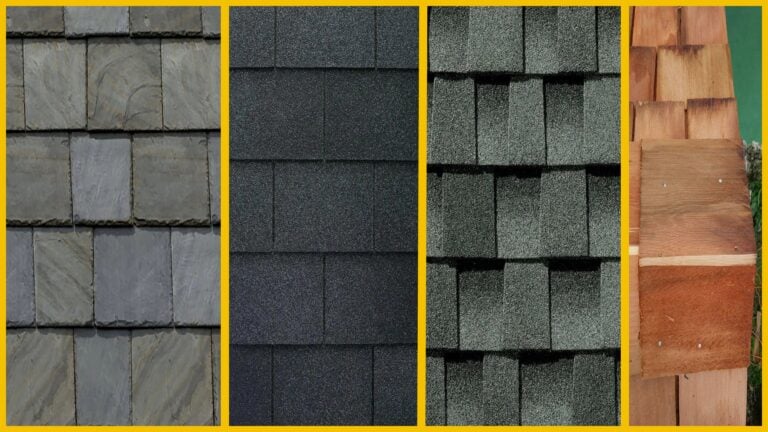
3. Premium or Designer Shingles (The Luxury Option) These are designed to look like slate or cedar shake but offer the same durability as asphalt. They are heavy, thick, and give a home a very distinct, high-end look.
- Pros: Incredible durability and unique curb appeal.
- Cons: Significantly more expensive due to the material weight and detailed installation process.
- Verdict: Perfect for historic homes or if you want your house to stand out in the neighborhood.
Factors That Change the Price
You might have a friend with a house the same size as yours who paid a different price. Why? Because the footprint of your home is only one part of the equation. Here are the “hidden” factors that affect your estimate.
Roof Pitch (Steepness) A steep roof is harder to work on. If your roof is very steep, our crew needs extra safety equipment. They have to move slower and use more staging to work safely. This adds to the labor cost.
Accessibility Can we get a dump truck right up to the house? Or do we have to carry bundles of shingles by hand across a long yard? Easy access keeps labor costs down. Difficult access can increase the price.
Tear-Off Complexity If you have two layers of old shingles on your roof (which was common practice years ago), we have to remove both layers. That means double the labor for removal and double the disposal fees for the landfill.
Decking Repairs This is the wild card. Once we tear off the old shingles, we inspect the plywood decking underneath. If we find rotten wood from a long-term leak, we have to replace those sheets of plywood to ensure the new shingles have a solid surface to nail into. We can’t always see this until the old roof is off, which is why we recommend having a small contingency fund.
Why the “Cheapest” Quote is Dangerous
You will likely get quotes from different contractors that vary by thousands of dollars. Be very careful with the lowest bid.
A price that seems too good to be true usually means that it is too good to be true. They may have some missing items or overseen stuff that will come up later.
- Are they using a high-quality underlayment, or just cheap felt paper?
- Are they replacing the flashing, or reusing the old rusted metal?
- Do they have proper insurance? (If an uninsured worker falls on your property, you could be liable).
At G and Bros, our price reflects a complete system. We use high-quality GAF materials, we replace the flashing, we ensure proper ventilation, and we back our work with a solid warranty. We don’t cut corners because we know that a cheap roof costs more in the long run when it leaks two years later.
Getting an Exact Number
We know that budget is a huge factor in your decision. That is why we offer free, detailed inspections. We don’t just give you a number; we explain exactly what your roof needs and why.
If you are wondering about the cost of a new roof for your home in Salisbury, Fruitland, or Ocean City, reach out to us. We will come out, measure your roof, and give you an honest, transparent estimate so you can make the right choice for your home and your wallet.

Recent Blog Posts