How to Cut Shingles: A Pro’s Guide to Clean Cuts and Safety
Whether you are patching a small leak or trying your hand at a shed roof, knowing how to cut shingles correctly is the difference between a watertight seal and a future headache. It looks easy when you watch a professional crew from the ground. They move fast, scoring and snapping shingles in seconds. But up close, it requires the right tools, a steady hand, and a lot of patience.
At G and Bros, we have cut thousands of shingles across Salisbury and Ocean City. We know that a sloppy cut is not just ugly because it is also a vulnerability. Here is our guide on how to cut asphalt shingles like a pro to keep your fingers safe and your roof secure.
The Right Tool for the Job: Straight Blade vs. Hook Blade
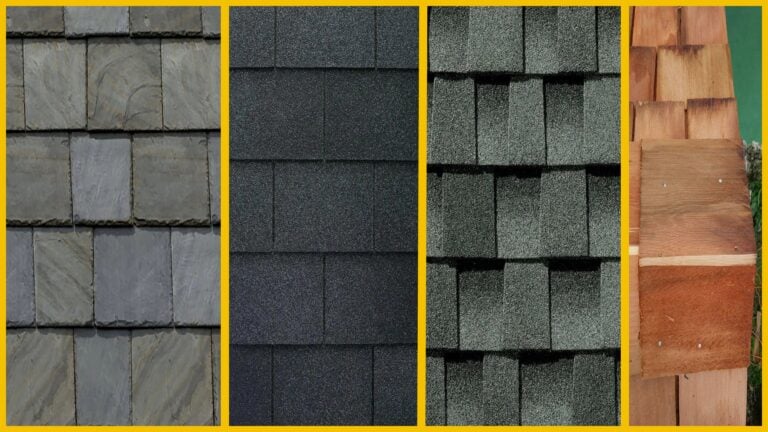
If you grab a standard utility knife with a straight blade, you are going to struggle. Asphalt shingles are covered in granules, which are basically tiny rocks. These granules dull a straight blade almost instantly.
The Pro Tip: Use a hook blade.
A hook blade fits into your standard utility knife but has a hooked tip. This allows you to pull the knife through the shingle from the bottom side. By cutting from the back or using the hook to glide under the granules, you protect the blade’s edge. You will get a cleaner line and your blade will last much longer.
Safety First (Seriously)
Roofing is dangerous. Before you even pick up a knife, make sure you are stable. If you are working on a pitched roof, use roof jacks and planks. Never cut towards your body. It sounds like common sense, but when you are balancing on a slope, it is easy to get careless. Always cut away from yourself.
Method 1: The Score and Snap (Best for Straight Cuts)
This is the most common method for making vertical cuts, like when you need to end a row at the edge of the roof (the rake edge).
- Measure and Mark: Flip the shingle over so the black asphalt side is facing up. Use a chalk line or a straight edge to mark your cut.
- Score the Shingle: You do not need to cut all the way through. Take your utility knife (hook or straight blade works here) and press firmly, dragging it along your line. You are just scoring the fiberglass mat inside the asphalt.
- Snap It: Bend the shingle back along the line. It should snap cleanly, just like a piece of drywall.
- Trim the Hinge: Sometimes, the fibers won’t separate completely. Just run your blade lightly through the fold to finish the cut.
Method 2: Cutting in Place (Best for Valleys and Obstacles)
When you are working around a chimney, a vent pipe, or cutting a valley, you cannot always measure and cut on the ground. You have to cut the shingle while it is on the roof.
This is where the hook blade is mandatory.
- Position the Shingle: Lay the shingle in place, letting it overlap the area you need to cut.
- Mark Your Line: Use chalk to mark exactly where the cut needs to be.
- The Hook Cut: Place the hook blade under the edge of the shingle. Pull the knife towards you (carefully) along the line. The hook grabs the material and slices through it without cutting the shingle underneath.
- Watch Your Pressure: If you press too hard with a straight blade here, you will slice right through the shingle below it. That creates a hidden cut that will leak the next time it rains.
Cutting for Aesthetics: The Rake Edge
The “rake” is the side edge of your roof that runs from the eaves up to the ridge. For a professional look, you want these shingles to overhang the drip edge by about a half-inch to three-quarters of an inch.
If you cut them flush with the wood, water can wick back underneath and rot your fascia board. If you leave them too long, high winds in Ocean City will catch them and rip them off.
We recommend snapping a chalk line down the entire rake edge once all the shingles are installed. Then, cut them all at once for a perfectly straight line. It is incredibly satisfying and gives your home that sharp, crisp curb appeal.
When to Call a Pro
Cutting a few shingles for a repair is a great DIY skill. However, if you are looking at a full roof replacement, the cutting alone is a massive undertaking. A typical roof has thousands of cuts. Valleys, hips, ridges, and starter rows all require precision.
If you are unsure about your footing, or if your cuts are looking jagged and uneven, it might be time to call in the cavalry. A bad cut in a valley or around a chimney is the number one cause of leaks we see in Wicomico County.
At G and Bros, we have the tools and the team to handle the complex cuts so you do not have to. We ensure every shingle fits perfectly to keep your home dry and looking its best.

Recent Blog Posts