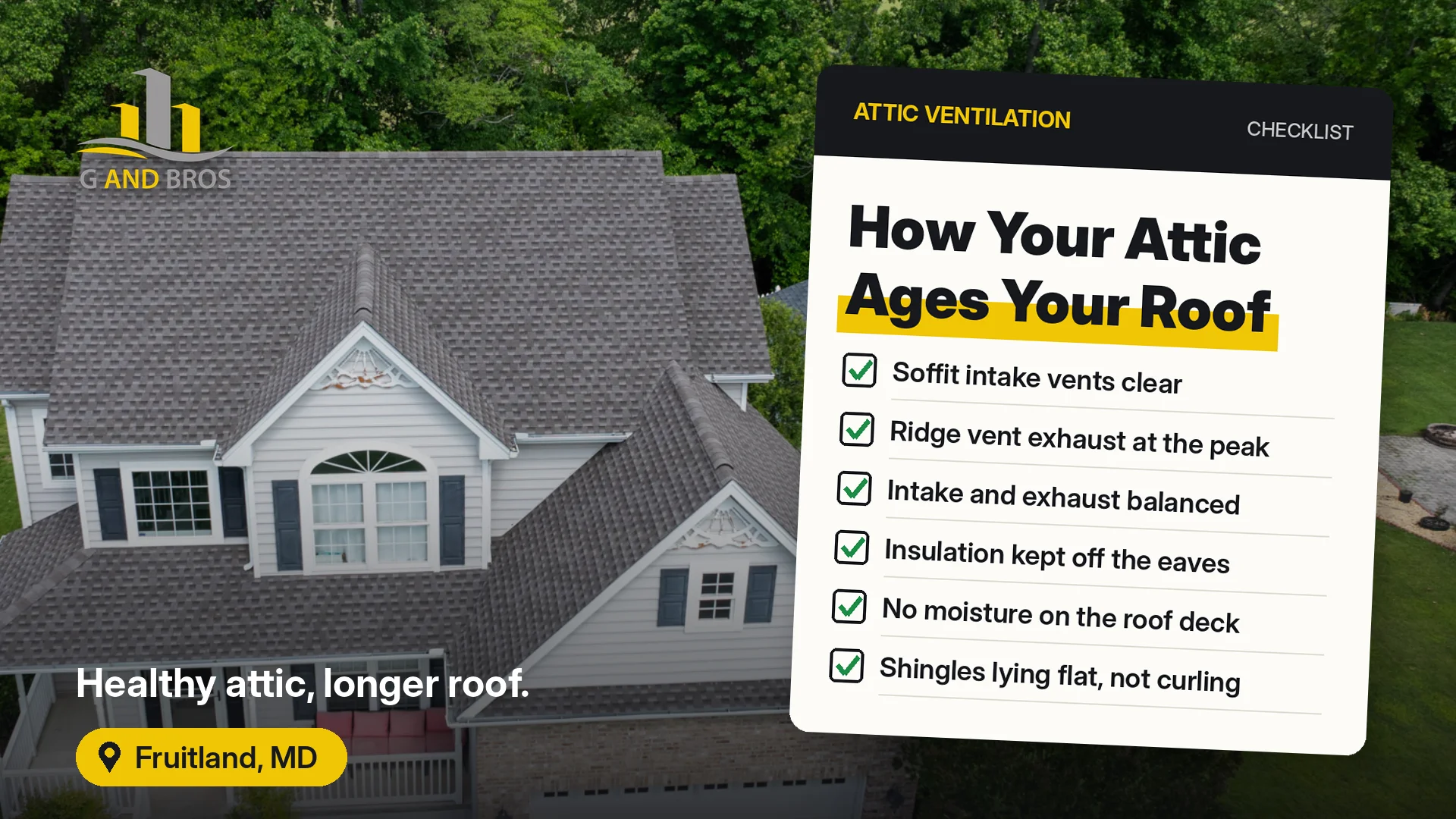
How Attic Ventilation Affects Your Roof: What Fruitland, MD Homeowners Need to Know
Attic ventilation is one of the biggest roof factors Fruitland MD homeowners never see. Most people in Fruitland and across Wicomico County think about their roof from the outside: shingles, flashing, gutters. The attic rarely comes up until something goes wrong. But how air moves through your attic has a direct effect on how long your roof lasts and how well it performs.
This guide explains what proper attic ventilation looks like, what happens when it fails and why the Eastern Shore climate makes it matter more than it would in cooler, drier places.
What Attic Ventilation Actually Does
Your roof works as a system. Shingles, underlayment, decking and ventilation all work together. Attic ventilation lets outside air move steadily through the attic, coming in through soffit vents along the lower edges of the roof and leaving through a ridge vent or other exhaust vents near the peak.
That airflow does two jobs. In summer, it pushes out the hot air that builds up in the attic, which keeps the roof deck cooler. In winter, it lets warm, moist air from the house escape before it condenses on cold surfaces and leads to rot or ice dams.
When ventilation is blocked, too small or poorly designed, both problems build on each other. Heat and moisture do their worst damage in an attic that cannot breathe, and the shingles above pay the price over time.
Why the Eastern Shore Makes Attic Ventilation More Important
The Delmarva Peninsula stays hot and humid through a long summer. On a sunny July or August afternoon, a poorly ventilated attic can get far hotter than the air outside. That trapped heat bakes the roof deck and the shingles from underneath, which can speed up granule loss, curling and brittleness.
Humidity adds a second problem. Everyday activity inside the house, like cooking, showers and laundry, sends moisture up into the attic. Without enough airflow to carry it out, that moisture condenses on the roof sheathing and rafters. Over time, that can lead to wood rot, mold and weakened decking.
Signs Your Attic May Not Be Ventilating Properly
Some warning signs you can spot without climbing into the attic. Others need a closer look from you or a roofer.
- Shingles curling or cupping early. If your roof is fairly young and the shingle edges are already curling, poor ventilation is one of the first things to rule out.
- High cooling bills in summer. An attic that cannot release heat makes your air conditioner work harder. If the upstairs is noticeably warmer than the first floor, the attic may be trapping heat.
- Ice dams in winter. Hard freezes are not constant on the Eastern Shore, but when they come, poor ventilation can cause uneven melting and ice buildup at the eaves that pushes water under the shingles.
- Moisture or dark staining in the attic. Condensation on the underside of the roof deck, or dark spots on the rafters, means moisture is sitting instead of escaping.
- Damp attic insulation. Wet insulation loses much of its value and can grow mold. Damp insulation in the attic often points to a ventilation problem.
If you are seeing any of these signs and the roof is otherwise in decent shape, correcting the ventilation may cost far less than a replacement brought on early by a roof that aged too fast.
What Balanced Ventilation Looks Like
The goal is balanced intake and exhaust. Air comes in through soffit vents (the vented panels under your roof overhang) and leaves through a ridge vent or other exhaust vents near the peak. GAF’s technical guidance on proper attic ventilation describes continuous soffit intake paired with ridge exhaust as an effective way to get a balanced system.
One of the most common problems roofers find is blocked soffits. Insulation pushed too far toward the eaves covers or squeezes the intake vents and cuts off the airflow the whole system depends on. It is a fixable problem, but only if someone looks for it. Many homeowners do not find out until the shingles start failing ahead of schedule.
Ventilation also matters for your warranty. GAF’s limited warranties exclude damage caused by inadequate ventilation, so a roof with a poorly ventilated attic may not be covered for problems that ventilation caused. That is one more reason to have ventilation checked whenever a roof is replaced.
What to Do If You Suspect a Ventilation Problem
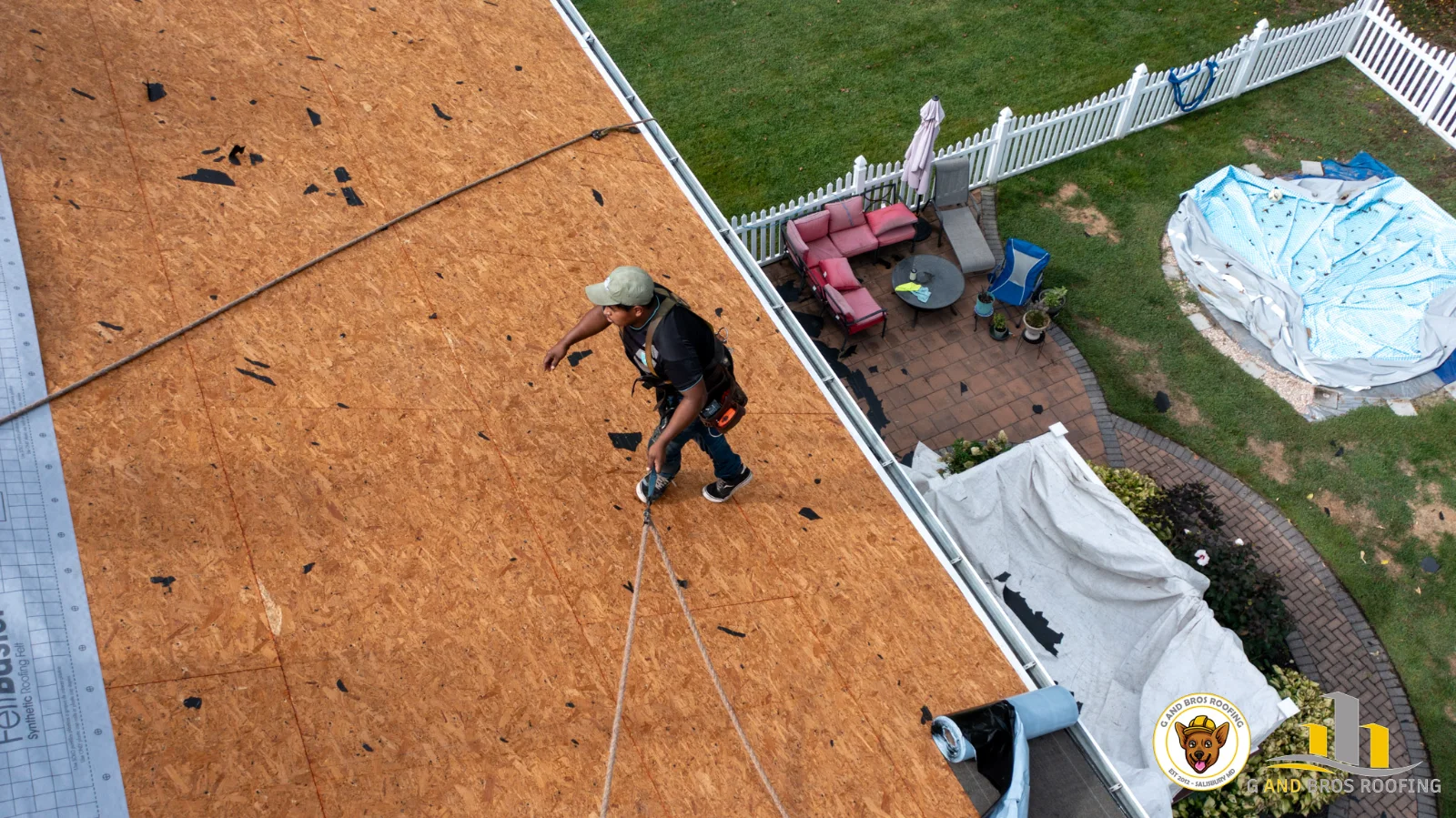
The right first step is a professional roof inspection that includes a look inside the attic. In Salisbury, Fruitland and across Wicomico County, G and Bros checks both the outside of the roof and the attic: ventilation balance, insulation placement, moisture and the condition of the decking.
If the ventilation needs work, the fix is often simple: adding baffles, clearing blocked soffits or adding a ridge vent where there was none. Those are usually repair-sized jobs, not full projects. If poor ventilation has already damaged the decking or worn out the shingles early, a replacement with proper ventilation built in from the start may be the better long-term value.
Either way, the conversation starts with an accurate picture of what is happening up there. Catching the problem early is almost always the lowest-cost option.
Frequently Asked Questions
How do I know if my attic is properly ventilated?
The most reliable answer comes from an inspection that checks both the vents outside (ridge and soffit vents) and the conditions inside (moisture, insulation placement and airflow). From the ground, look for vented soffits along the roofline and a ridge vent or other exhaust vents near the peak. If you see few or no vents, your attic may not be getting enough airflow.
Can poor ventilation affect my shingle warranty?
Yes. GAF’s limited warranties exclude damage caused by inadequate attic ventilation, and other manufacturers have similar terms. If shingles fail early because the attic was not properly ventilated, that damage may not be covered. Ask your roofer how ventilation will be handled before a replacement starts.
Does adding more vents always improve ventilation?
Not necessarily. The goal is balance between intake and exhaust, not simply more vents. Adding exhaust without enough intake can pull conditioned air out of your living space or let weather in. A good assessment looks at the whole system before recommending changes.
How much does fixing attic ventilation cost?
It depends on the problem. Clearing blocked soffits and adding baffles is usually a modest job. Adding a ridge vent costs more on its own than it does as part of a full roof replacement. G and Bros serves homeowners in Fruitland, Eden and across Wicomico County, and we will explain what we find and what it would take to fix it before any work starts.
Is attic ventilation the same thing as attic insulation?
No, and mixing them up is common. Insulation slows heat moving between the attic and your living space. Ventilation moves air through the attic to control heat and moisture. Both matter, and they affect each other: insulation packed too close to the eaves can block the intake vents and defeat the ventilation system.
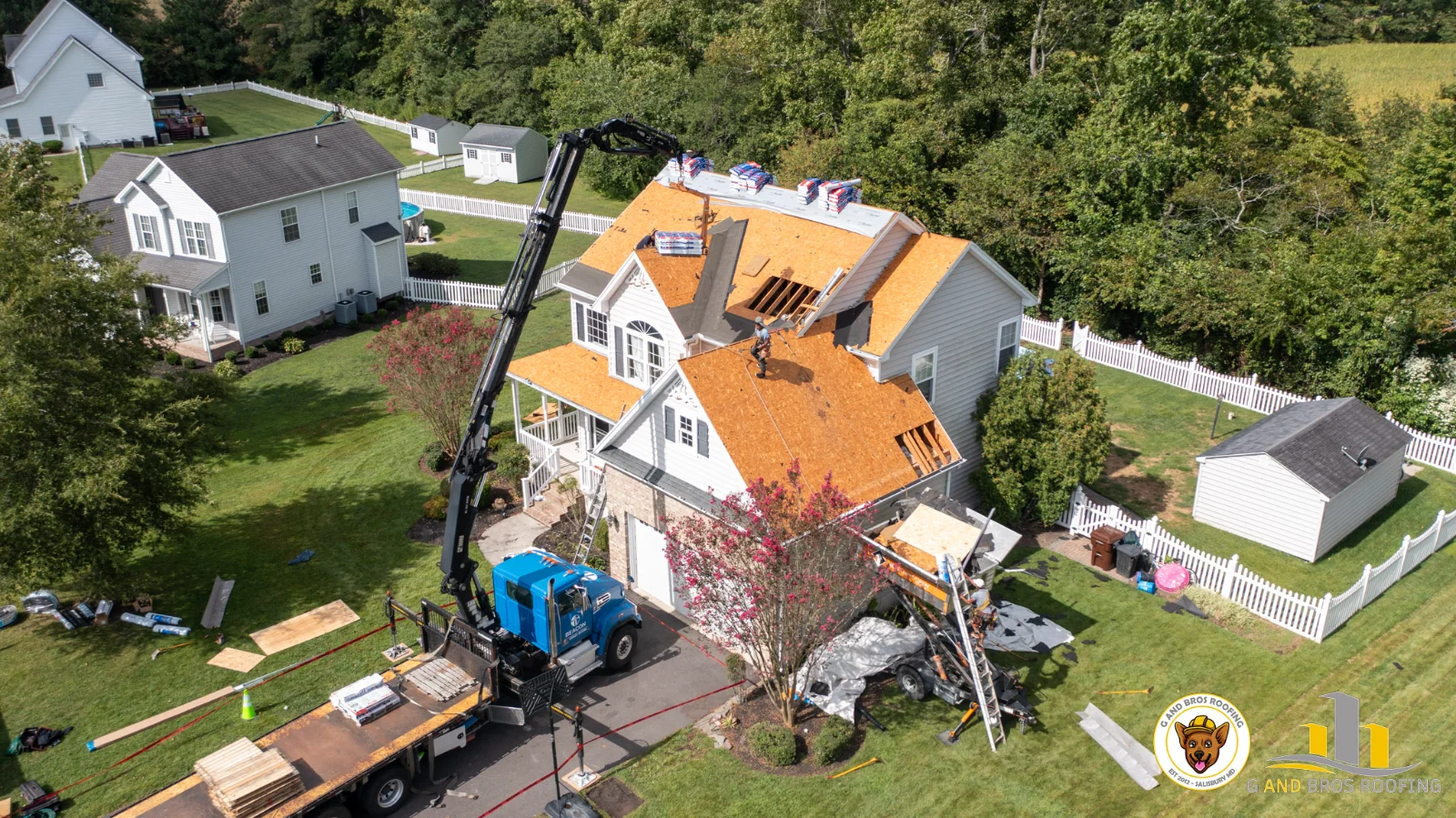
Get a Clear Answer on Your Attic and Roof
G and Bros is GAF Certified Plus, family-owned since 2012, with 25+ years of Maryland roofing experience from our founder. We serve homeowners across Fruitland, Salisbury and the Eastern Shore. If you are worried about your attic ventilation, your shingles are aging early or you just want to know where your roof stands, call us at 410-677-4975 or contact us online. We will take a look and walk you through what we find, with no pressure on what comes next.

Recent Blog Posts