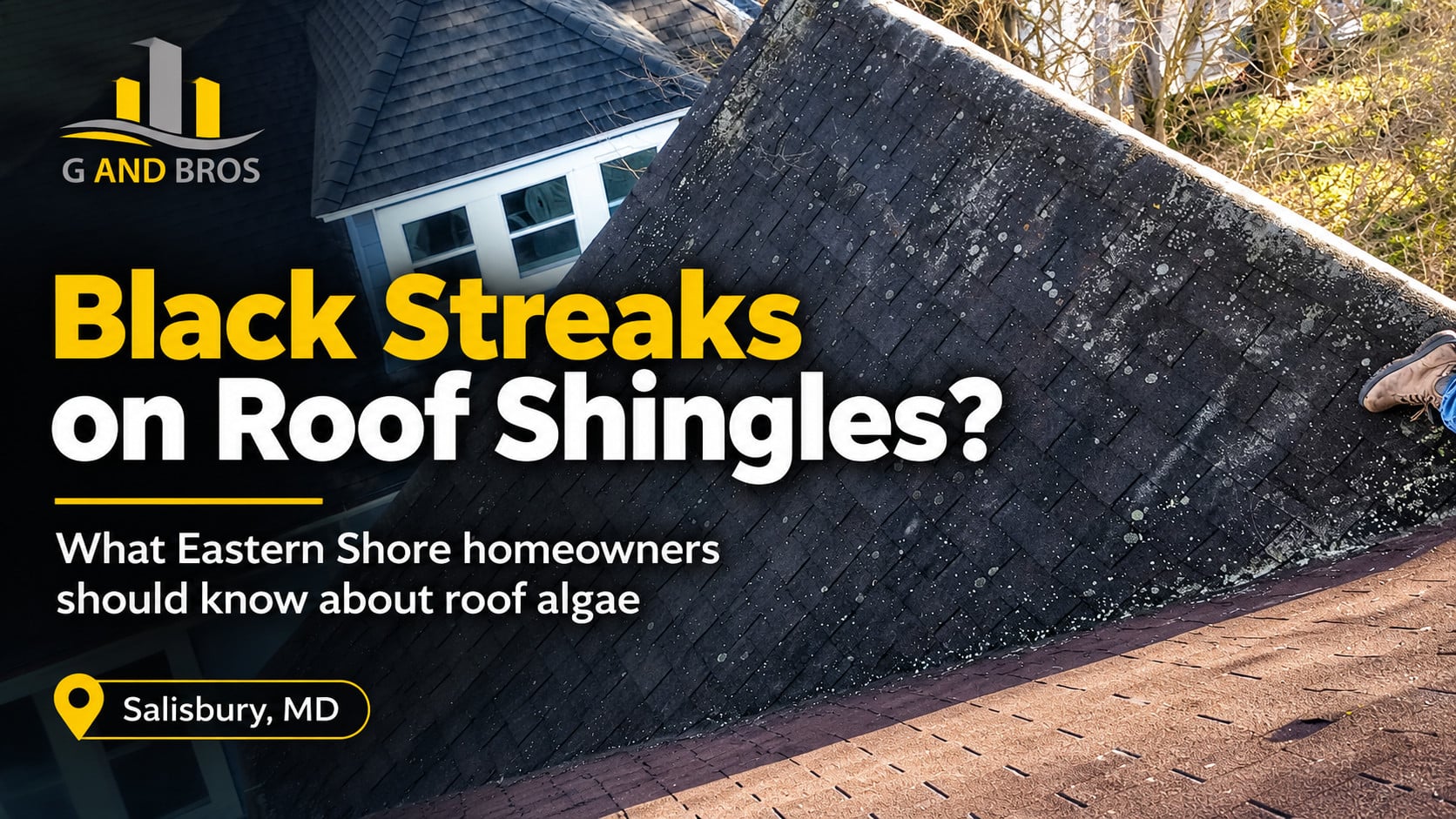
What Are Those Black Streaks on Your Roof? What Salisbury and Fruitland, MD Homeowners Need to Know

If you have looked up and noticed long, dark streaks running down the slope, you are not alone. Black streaks on roof shingles are one of the most common things homeowners across Salisbury, Fruitland, and Wicomico County ask us about. The question is almost always the same: my roof has dark stripes, is something wrong?
The short answer: those streaks are almost always roof algae, not structural damage. The longer answer: they are not purely cosmetic, and on Maryland’s Eastern Shore they spread faster than most homeowners expect. Here is what is actually happening, and what you can do about it.
What Are Those Black Streaks?
The dark streaks you see on asphalt shingle roofs are caused by a cyanobacteria called Gloeocapsa magma, a type of algae that feeds on the crushed limestone used as filler in asphalt shingles. As colonies grow, they produce a dark pigment that shields them from UV radiation. That pigment is what you see: dark gray to black streaks running vertically down the roof slope, following the path of rainwater.
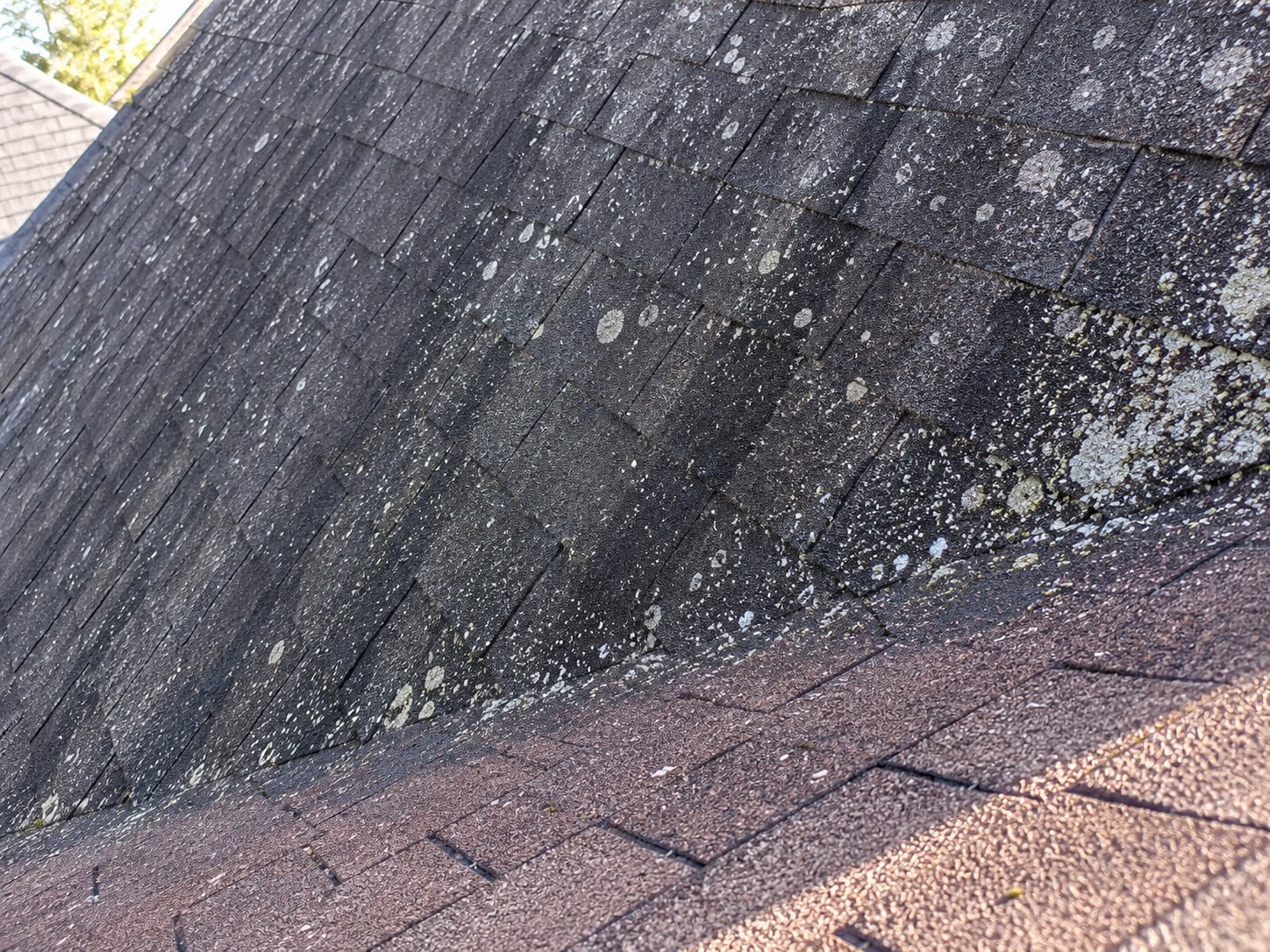
Algae spreads by releasing spores carried by wind, birds, and squirrels. Once one roof in a neighborhood develops it, nearby homes commonly follow within a season or two. If your neighbor already has streaky shingles, do not be surprised when yours start showing the same pattern.
Why Eastern Shore Roofs Are Especially Prone
Roof algae thrives in warm, humid conditions, which makes the Delmarva Peninsula close to ideal territory. Salisbury, Fruitland, and the surrounding Wicomico County area experience high summer humidity, generous tree canopy, and proximity to the Chesapeake Bay watershed. All of those factors keep roof surfaces damp longer and accelerate algae growth.
Specific contributors for Eastern Shore homes:
- High ambient humidity: Dewpoints across the region stay elevated through summer, giving algae more moisture to feed on between dry periods.
- Shaded roof exposures: North-facing and tree-shaded sections dry out slowly, staying damp far longer than south-facing slopes that receive direct sun.
- Mild winters: The Delmarva climate rarely gets cold enough, for long enough, to kill off algae colonies between growing seasons.
- Proximity to water: Homes near the Wicomico River, Chesapeake Bay tributaries, or tidal waterways tend to see faster algae growth due to elevated moisture year-round.
If your roof faces north or has overhanging tree canopy, you will likely see streaking sooner than a south-facing, sun-exposed roof.
Is Roof Algae Actually Harmful?
This is what most homeowners miss: algae is not a purely cosmetic problem. Left unchecked, it causes real long-term damage to your roof system.
Moisture retention: Algae colonies hold moisture against the shingle surface. Over time, this accelerates breakdown of the granule coating that protects shingles from UV rays and weather exposure.
Granule loss: As granules loosen from extended moisture contact, shingles age faster. If you are noticing heavy granule buildup in your gutters alongside dark streaks, that is a meaningful warning sign.
Heat absorption: The dark pigment algae produces causes your roof to absorb more solar heat than clean shingles would. This can raise attic temperatures during Salisbury’s hot summers and put extra demand on your cooling system.
Shorter lifespan: A roof with active, long-standing algae may need replacement years ahead of its rated lifespan. Shingle warranties and manufacturer ratings assume normal conditions. Persistent algae growth is not a normal condition.
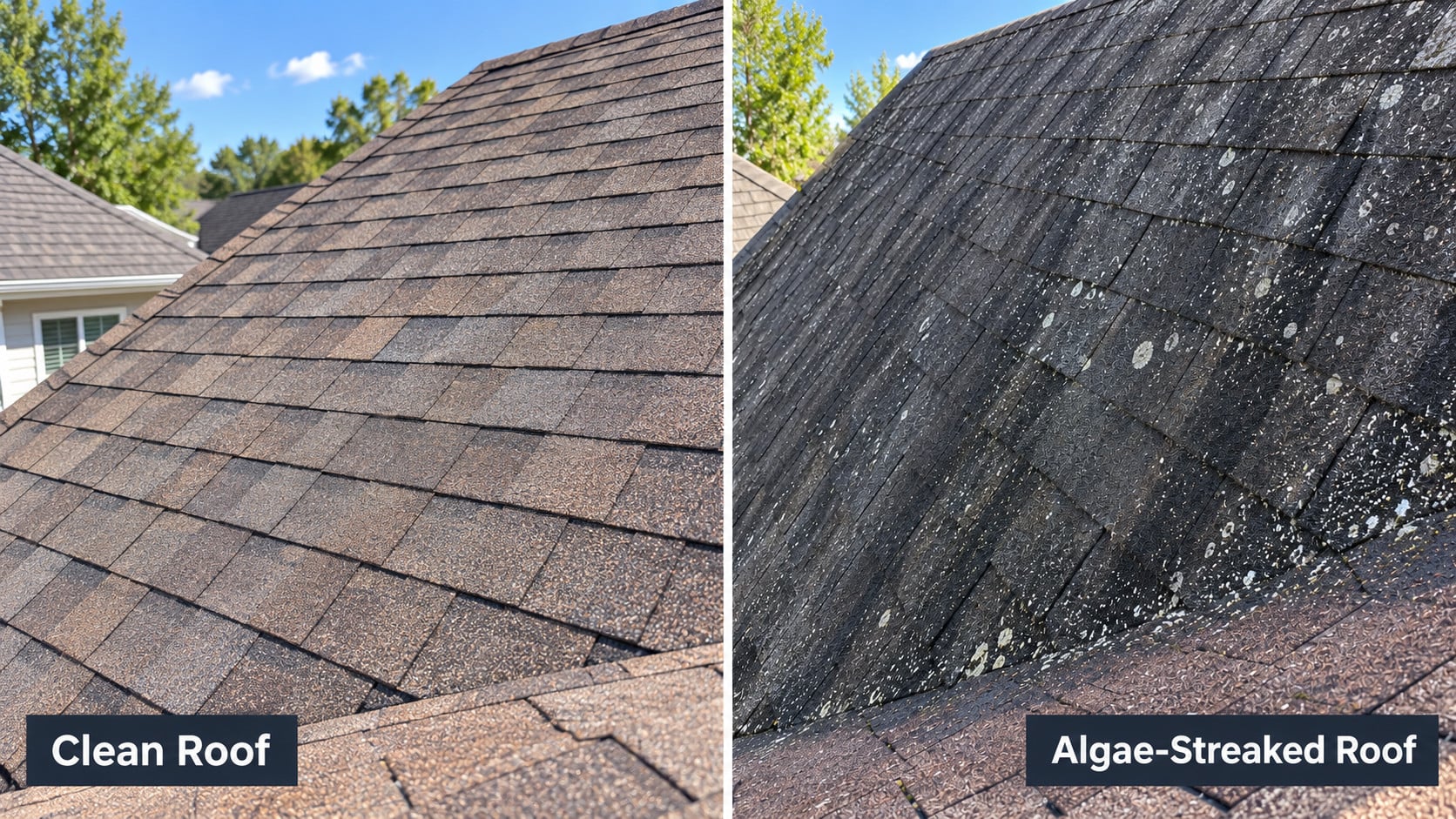
How to Tell Algae from Other Roof Problems
Not every dark spot on a roof is algae. Here is how to tell the difference.
| What you see | What it looks like | What to do |
|---|---|---|
| Algae streaks | Flowing dark lines running vertically down the slope, mostly on north-facing sections, uniform in color. The surface underneath feels normal. | Soft-wash cleaning. Not urgent, but do not leave it for years. |
| Moss | Raised and fuzzy, green or greenish-gray. Physically lifts shingle edges as it grows. | Address quickly. Root-like structures pry apart bonded layers over time. |
| Actual shingle damage | Bare patches with granules gone, cracked or curling edges, soft or sunken deck areas, interior ceiling stains. | Get an inspection, not a cleaning. Cleaning will not fix this. |
If you see dark streaks alongside any of the symptoms in the bottom row, the right call is an inspection. See roof repair options.
What Can You Do About Roof Algae?
Soft-wash cleaning is the most effective and safest method. A soft-wash system applies a diluted cleaning solution at low pressure, killing algae without stripping granules or voiding manufacturer warranties. Pressure washing, by contrast, blasts off protective granules and can accelerate shingle wear significantly. Avoid it, regardless of what some companies advertise.
Algae-resistant shingles are worth asking about if your roof is approaching the end of its lifespan or if you are planning a replacement. These shingles incorporate copper or zinc granules that are naturally toxic to algae. Most carry algae-resistance warranties of 10 to 25 years. Ask about them when you request a roof replacement estimate.
Tree trimming reduces shade and increases airflow across the roof surface, both of which slow algae growth. Branches overhanging your roof also deposit organic debris that holds moisture and creates ideal conditions for algae to take hold.
Zinc or copper ridge strips installed along the peak of the roof release trace amounts of metal each time it rains, running down the slope and inhibiting algae regrowth. They are a cost-effective supplement to cleaning rather than a full solution on their own.
Gutter maintenance supports the whole system. Clean gutters allow water to move off the roof quickly rather than backing up and sitting against shingles or fascia boards.
When Algae Signals Something Bigger
Most of the time, algae is just algae. But there are situations where it is a flag to look more closely at the roof’s overall condition:
- The roof is 15 or more years old and streaks have been present for multiple seasons.
- Algae returns quickly after a professional cleaning, suggesting underlying granule loss is accelerating moisture retention.
- Streaks appear alongside soft spots, sagging sections, or signs of interior moisture.
- Granule buildup in the gutters is heavier than it used to be.
In these situations, a professional inspection is the right first step rather than scheduling a cleaning. G and Bros provides free roof inspections for homeowners throughout Salisbury, Fruitland, and all of Wicomico County. Schedule yours at gandbrosroofing.com/contact.
Frequently Asked Questions
Are black streaks on my roof a sign I need a full replacement?
Not on their own. Black streaks are almost always algae growth, not a structural failure. Whether your roof needs replacement depends on its age, the degree of granule loss, and the condition of the underlying deck and flashing. A professional inspection is the most reliable way to know. G and Bros offers free inspections across Wicomico County.
Will pressure washing remove roof algae?
Pressure washing will remove the visible staining, but it also strips protective granules from asphalt shingles and can void manufacturer warranties. The recommended method is soft-wash cleaning, which uses low-pressure application of a cleaning solution that kills algae at the root without damaging the shingle surface.
Do algae-resistant shingles actually work?
Yes, to a meaningful degree. Shingles with copper or zinc granules are rated for algae resistance and typically carry warranties of 10 to 25 years. In a humid climate like the Eastern Shore’s, they will not prevent algae indefinitely, but they significantly delay regrowth compared to standard shingles. For homeowners planning a replacement anyway, they are well worth the modest price difference.
How soon will algae come back after my roof is cleaned?
In the Eastern Shore’s climate, algae can begin reappearing within two to four years on north-facing or heavily shaded sections. Zinc or copper ridge strips can extend that window somewhat. Algae-resistant shingles offer the longest-term protection for homeowners who are already considering a replacement.
Can I clean roof algae myself?
It is possible using a diluted bleach-and-water solution with a pump sprayer, but the risks are real. Working on a wet or sloped roof surface is genuinely dangerous, runoff can damage surrounding landscaping if not rinsed properly, and uneven application often leaves patchy results. For most homeowners, hiring a professional for soft-wash cleaning is the safer and more consistent choice.
Find Out What Those Streaks Actually Mean
Ready to find out whether those dark streaks are cosmetic or a sign of something bigger? Contact G and Bros for a free inspection. Call us at 410-677-4975 or visit gandbrosroofing.com/contact.

Recent Blog Posts