How Salt Air and Coastal Weather Damage Roofs in Ocean Pines, MD
Living Near the Water Has Its Perks. Your Roof Pays the Price.
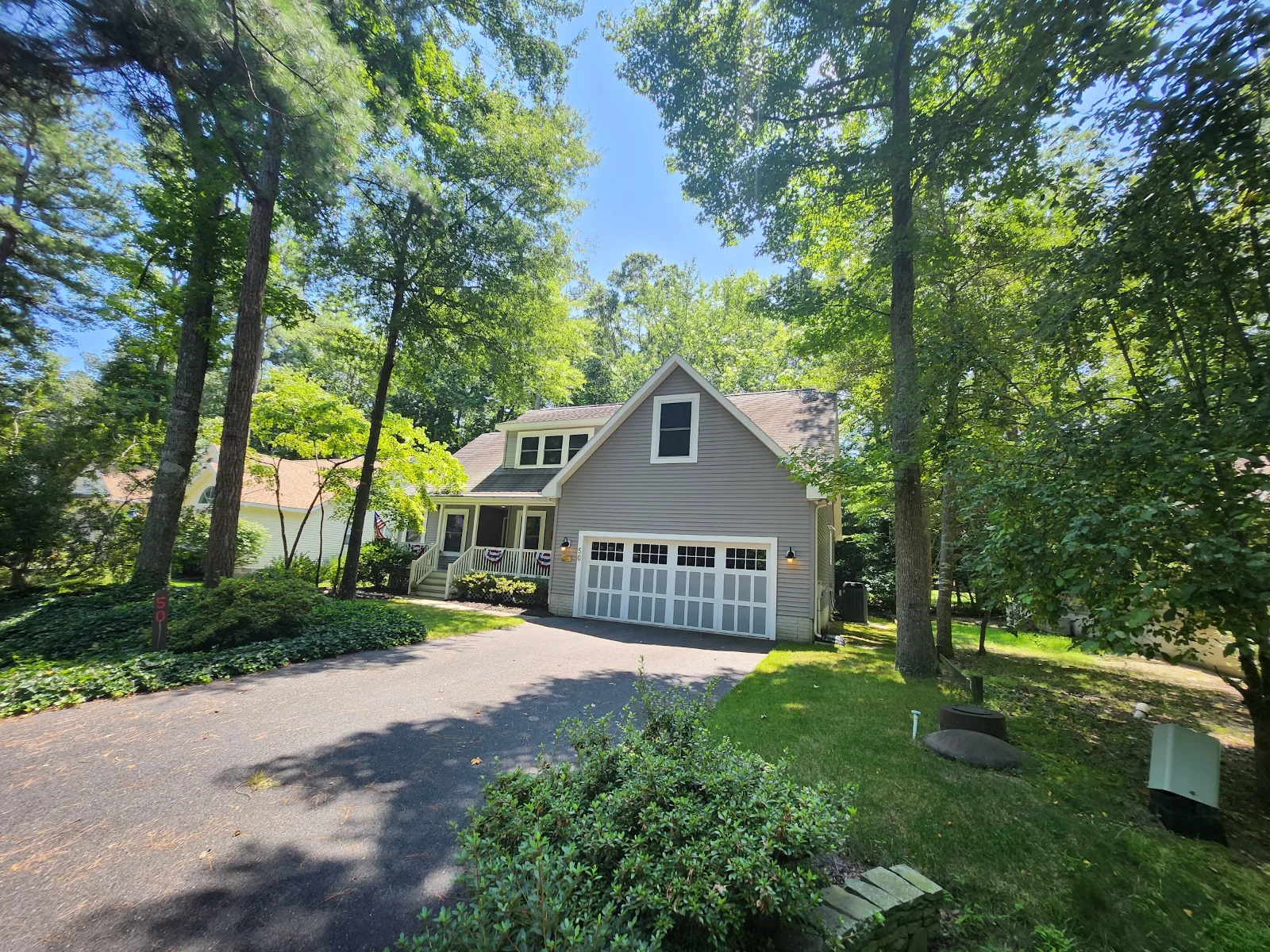
Ocean Pines is one of the most popular communities on Maryland’s Eastern Shore. The waterways, the tall pines and the short drive to Ocean City make it a great place to own a home. That same coastal setting also creates roofing problems that homeowners farther inland rarely deal with.
Salt air, humidity and the storms that move up the Delmarva coast every year put steady stress on a roof. This guide covers what that stress looks like, where it shows up first and what to check before winter.
How Salt Air Wears Down Roofing Materials
Salt carried on coastal breezes settles on every surface of your home, including the roof. Combined with moisture, it speeds up corrosion and wear in ways that have nothing to do with hail or heat.
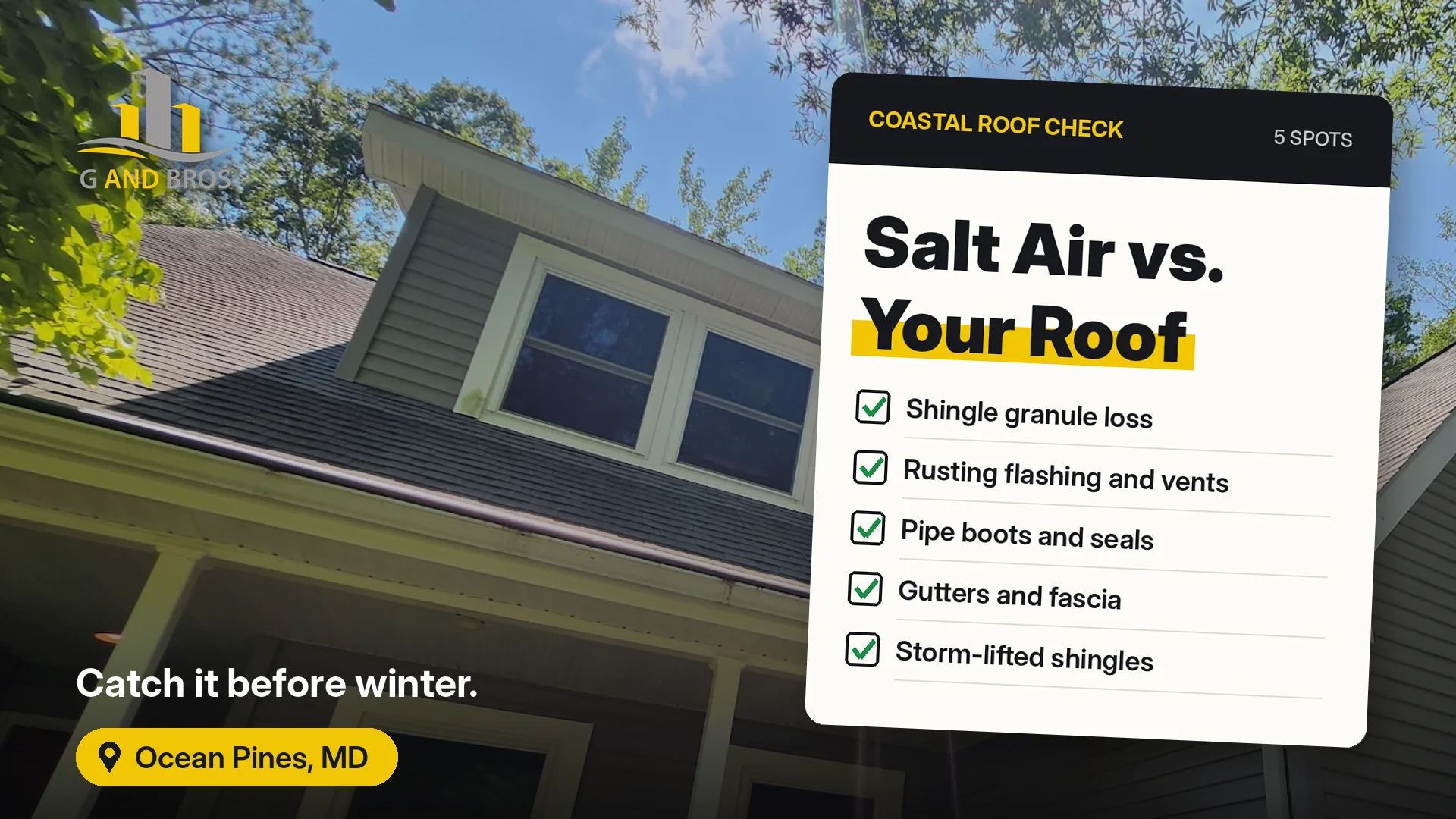
| Roof part | What coastal air does | What to look for |
|---|---|---|
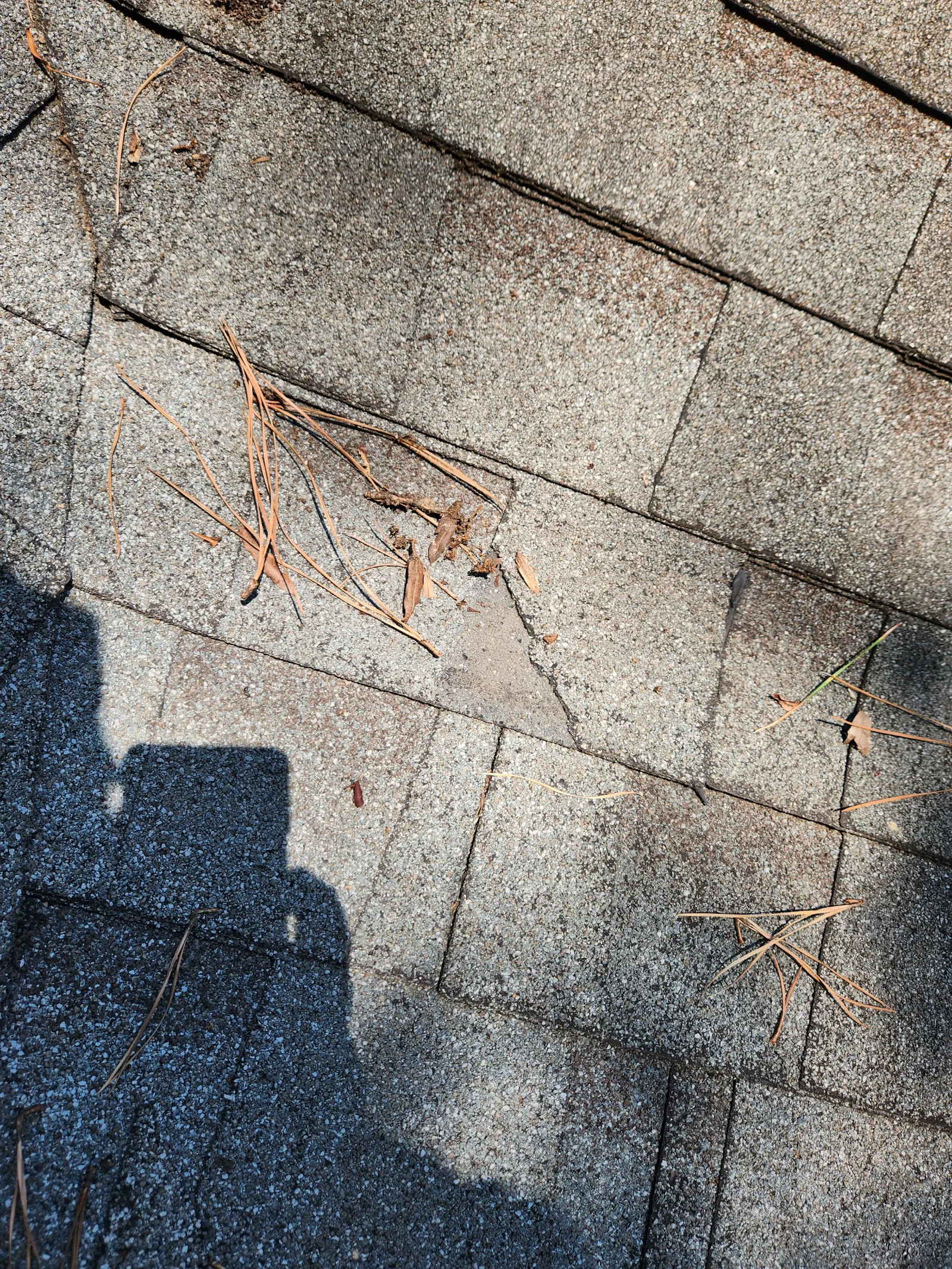
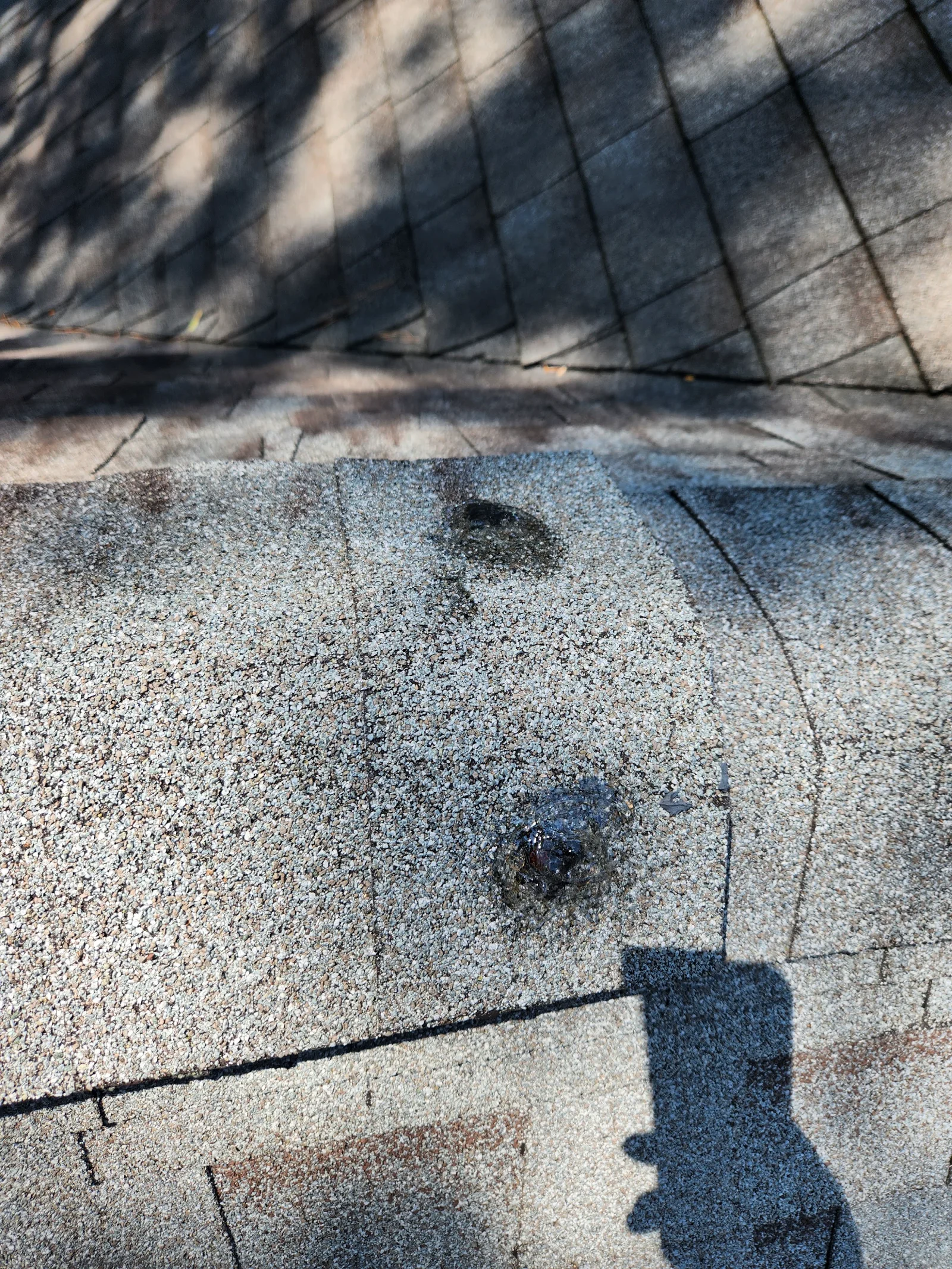
| Asphalt shingles | Speeds up granule loss and UV wear | Bare spots, cracks, granules in the gutters |
| Flashing and fasteners | Corrodes metal around chimneys and edges | Rust stains, streaking, loose metal |
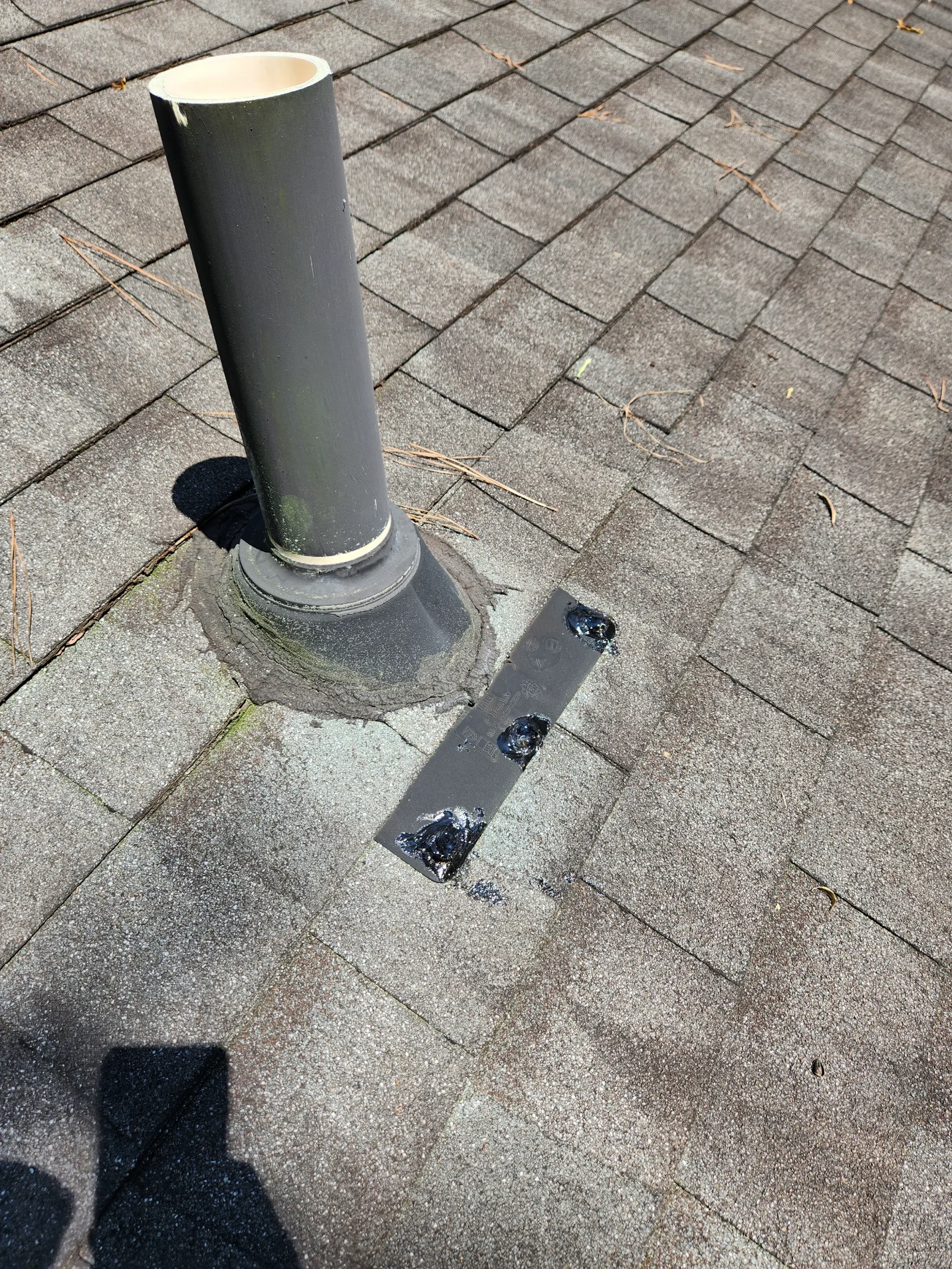
| Vents and pipe boots | Dries out rubber seals and rusts metal | Cracked collars, gaps around pipes |
| Gutters and fascia | Holds salty water against wood and metal | Sagging sections, soft or stained fascia |
Decking damage is the part you will not see from the ground. Moisture that gets past worn shingles or failed flashing can soften the roof deck for a long time before a stain shows up on a ceiling.
Storm Season on the Coast
The Eastern Shore sees nor’easters, strong summer storms and the occasional tropical system. Even storms that never reach hurricane strength can bring hard wind, heavy rain and salt spray.
What that means for your roof:
- Wind-driven rain gets under shingles that are lifted, cracked or missing.
- Branches and debris can cause impact damage that is easy to miss until a leak shows up.
- Repeated wind can loosen shingles and break the seal strips that hold them down.
After a big storm, a look from the ground is a good first step. The damage that costs the most, though, is often not visible from the driveway. That is why a roof inspection after a significant storm makes sense, especially on an older roof.
What to Check Before Winter
Fall is the best time to catch summer and storm-season damage before it turns into a winter leak. Here is a quick checklist for Ocean Pines homeowners:
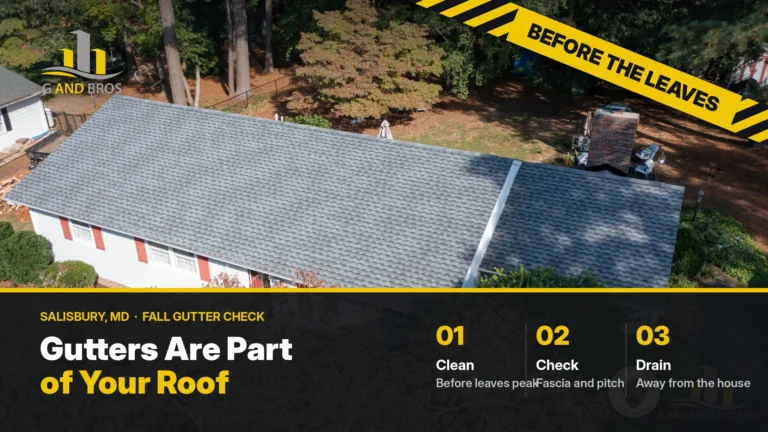
Gutters and downspouts. Clear pine needles and look for rust, sagging or sections pulling away from the fascia.
Missing or curling shingles. Even one missing shingle is an open door for water.
Flashing, vents and pipe boots. Rust, streaking or cracked rubber around chimneys, vents and valleys are common leak points.
Your attic. Daylight through the decking, stains on the rafters or a musty smell are red flags.
Interior ceilings. New stains or soft spots near exterior walls often trace back to the roof above.
If anything on that list applies to your home, dealing with it now is usually easier than waiting until winter. A small roof repair today can help you avoid a full roof replacement sooner than you planned.
Frequently Asked Questions
How often should coastal homeowners have their roof inspected?
In a coastal area like Ocean Pines or nearby Ocean City, once a year is a good rule, plus a check after any major storm. Salt air and moisture speed up wear, and regular checks catch problems while they are still small.
Does homeowners insurance cover salt air damage to my roof?
Usually not. Homeowners policies generally cover sudden damage from events like storms, falling trees or fire. Gradual wear from coastal exposure is typically treated as wear and tear. Check your own policy for details.
Which roofing material holds up best near the coast?
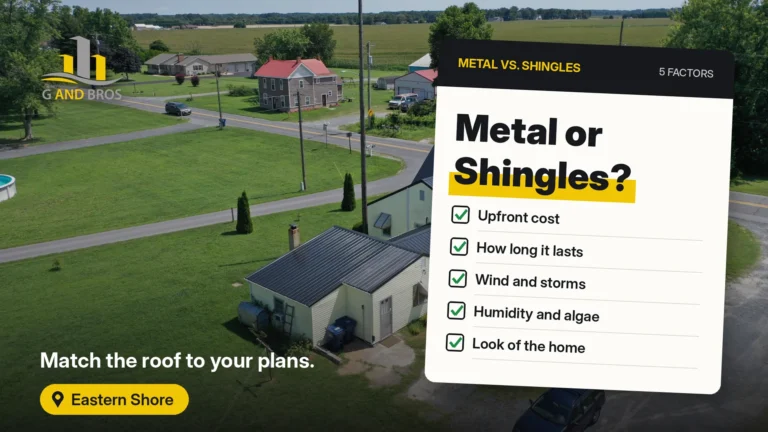
Metal roofing with a coastal-rated finish and quality architectural shingles installed with corrosion-resistant fasteners can both work well near the water. The right choice depends on your home, budget and plans. Our metal vs. asphalt guide compares the two.
How do I know if my roof has hidden water damage?
Water damage often starts in the attic or inside walls before it shows on a ceiling. Musty smells upstairs, soft spots in the ceiling or mold near roof penetrations are common signs. An inspection can find it before it spreads.
Does G and Bros work in Ocean Pines?
Yes. G and Bros works in Ocean Pines, Ocean City, Berlin and communities throughout Worcester County and the Eastern Shore.
Get Your Coastal Roof Checked
If you live in Ocean Pines and your roof has not been looked at this year, fall is a good time to do it before winter storms arrive. We will tell you plainly whether your roof has years left or needs attention now.
G and Bros is GAF Certified Plus, family-owned since 2012, with 25+ years of Maryland roofing experience from our founder. Call 410-677-4975 or contact us online.

Recent Blog Posts