How Long Does a Roof Last in Salisbury, MD? A Homeowner’s Guide by Material
If you own a home in Salisbury, MD, you have probably asked yourself at some point: how long is this roof actually supposed to last? It is a fair question, and one that matters a lot when you are deciding whether to fix a few shingles or start budgeting for a full replacement. The honest answer depends on what your roof is made of, how well it was installed, and what Eastern Shore weather has put it through over the years.
This guide walks through typical roof lifespans by material, the regional factors that can cut those lifespans short, and the signs that your roof may be approaching the end of its useful life.
Typical Roof Lifespans by Material
The material your roof is made from is the single biggest factor in how many years you can expect to get out of it. Here is what the most common options look like in the Salisbury area.
3-Tab Asphalt Shingles
Three-tab shingles are the most common type found on older homes throughout Wicomico County. They are rated for 15 to 20 years under normal conditions, though many homeowners get closer to 22 years with good attic ventilation and routine maintenance. If your home was built in the early 2000s and still has its original shingles, you are likely at or near the end of that window.
Architectural (Dimensional) Shingles
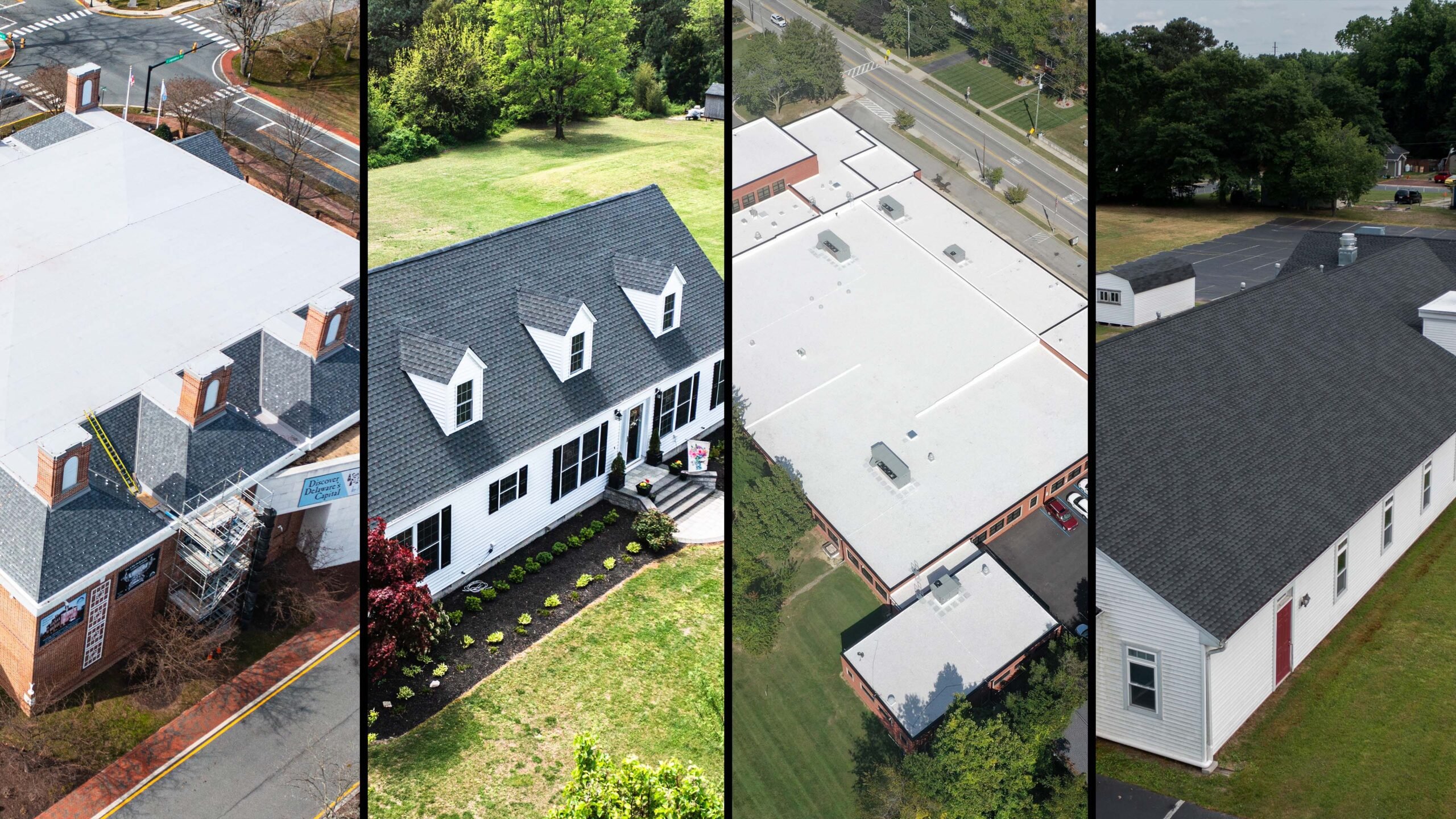
Architectural shingles are heavier and more wind-resistant than three-tab, carrying manufacturer warranties typically in the 25 to 30-year range. Most new roofs installed in Salisbury and Fruitland today use architectural shingles because they hold up better against the wind uplift and high humidity that are facts of life on Delmarva.
Metal Roofing
Standing seam metal and metal shingle systems are built to last 40 to 70 years with relatively little maintenance. The upfront cost is considerably higher than asphalt, but the long-term math often favors metal for homeowners planning to stay in their home for many years. Metal is especially well-suited to the Eastern Shore’s storm exposure and coastal salt-air conditions.
Flat and Low-Slope Roofing
Flat roofs on additions and commercial properties typically use materials like TPO, EPDM, or modified bitumen, with lifespans ranging from 15 to 25 years depending on installation quality and how consistently they are inspected. Flat roofs are more sensitive to deferred maintenance than pitched roofs, which makes annual inspections especially important for these systems.
Eastern Shore Factors That Can Shorten a Roof’s Life
A manufacturer lifespan rating reflects performance under average conditions. Maryland’s Eastern Shore has some specific conditions that can chip away at those estimates over time:
- High summer humidity: Heat and moisture accelerate granule loss on asphalt shingles and promote algae and moss growth, especially on north-facing roof slopes.
- Tropical storms and nor’easters: Wind damage is not always visible right away. Repeated high-wind events can loosen nail seals and compromise the shingle seal strip long before you notice anything wrong from the ground.
- Salt air near the coast: Homes closer to the shoreline face salt-air exposure that accelerates corrosion of metal flashings and fasteners, shortening the effective life of roofing systems overall.
- Poor attic ventilation: Trapped summer heat bakes shingles from below and can cut years off their lifespan. Ventilation problems are one of the most common hidden causes of early roof aging in older Salisbury homes.
- Tree overhang and debris: Overhanging branches deposit debris, trap moisture, and encourage moss. Shaded sections of a roof typically show wear faster than sun-exposed ones.
A professional inspection can identify whether any of these factors are actively shortening your roof’s life. In many cases, a ventilation correction or drainage improvement can extend your roof’s usefulness without requiring a full replacement.
Signs Your Roof May Be Nearing the End of Its Life
Age alone does not tell the full story. Some roofs need attention before their rated lifespan; others hold strong past it. These are the warning signs to watch for:
- Granule loss in gutters or at downspout outlets: Asphalt shingles shed granules as they age. Significant granule buildup in your gutters is one of the most reliable signs that your shingles are worn out.
- Curling or cupping shingle edges: Shingles that curl upward or fold at the edges have lost their flexibility, usually from heat stress, moisture damage, or both.
- Missing or cracked shingles across multiple areas: Isolated damage can often be repaired. Widespread cracking or shingle loss typically means the whole roof system is near the end of its cycle.
- Daylight visible from the attic: If light is coming through your roof deck when you check the attic, water can get through as well.
- Soft spots or sagging in the roof deck: This almost always indicates rotted sheathing beneath the shingles, which usually means replacement rather than repair.
- Failing flashing around chimneys, vents, or skylights: Metal flashings corrode and pull away from surfaces over time. A compromised flashing is the most common water-entry point on aging roofs.
Repair vs. Replace: A Practical Way to Think About It
If your roof is under 15 years old and the damage is isolated, repair almost always makes more economic sense than replacement. But once a roof is approaching or past its expected lifespan, repeated repairs tend to become a cycle of diminishing returns.
A useful rule of thumb: if the cost of a repair exceeds 30% of what a full replacement would run, and your roof is already in its later years, replacement is typically the smarter investment. A new roof resets your warranty, eliminates the ongoing uncertainty of what fails next, and gives you the chance to address any decking or ventilation issues before the new shingles go on. You can learn more on our roof replacement page.
At G and Bros, we always start with an honest assessment of what your roof actually needs. If a repair is the right call for your situation, that is what we will recommend. Call us at 410-677-4975 to schedule a free evaluation with our Salisbury team.
Frequently Asked Questions
How do I know if my roof is too old to repair?
The most reliable way to find out is a professional inspection. An inspector will document the condition of your shingles, decking, flashing, and ventilation system. If they find widespread granule loss, multiple damage zones, or soft spots in the decking, replacement is usually the more cost-effective path.
Does a new roof add value to a home in Salisbury, MD?
Yes. A new roof consistently ranks among the home improvements with the highest return on investment at resale, and it removes a major condition flag that buyers and home inspectors routinely raise on older roofs. In the Salisbury market, an aging roof can give buyers leverage to negotiate the price down or request credits at closing.
How often should I have my roof inspected?
Every two to three years is a reasonable interval for roofs under 15 years old. Once your roof passes the 15-year mark, annual inspections are worth scheduling. After any significant storm, a post-storm inspection is a good idea regardless of how old the roof is.
Can I install new shingles over my existing roof?
Maryland building code typically allows up to two layers of shingles. However, installing over an existing layer hides the condition of the decking and adds structural weight. Most quality contractors, including G and Bros, recommend a full tear-off so the decking can be inspected and any damaged sections replaced before the new shingles are installed.
What roofing material lasts longest in the Salisbury area?
Metal roofing, either standing seam or metal shingles, has the longest rated lifespan at 40 to 70 years and handles Eastern Shore humidity and storm exposure particularly well. Architectural asphalt shingles remain the most popular choice because they offer a strong combination of durability, curb appeal, and manageable upfront cost.
Talk to a Local Roofer Who Knows the Eastern Shore
G and Bros has served homeowners across Wicomico County, Worcester County, Dorchester County, and Sussex County, Delaware for years. We know what the Eastern Shore climate does to roofs, and we give honest assessments rather than pushing replacements when a repair will do the job right.
If you are not sure where your roof stands, we would be glad to take a look. Call us at 410-677-4975 or visit our roof replacement page to learn more. No pressure, no hard sell. Just straight answers from a family-owned crew that works the same streets you live on.

Recent Blog Posts