Roof Flashing Explained: What It Is, Why It Fails, and What Frankford, DE Homeowners Should Watch For
What Is Roof Flashing and Why Does It Matter?
If you have ever had a roof leak that seemed to come from nowhere, flashing is often the cause. Flashing is the metal (or rubber, around pipes) installed wherever the roof meets something that sticks up or a change in direction: chimneys, dormers, skylights, vents, walls and valleys. Its job is simple: steer water away from those joints and off the roof.
When flashing works, you never think about it. When it fails, water gets in fast. For homeowners in Frankford, DE and across Sussex County, knowing where flashing is and what failure looks like can keep a small drip from turning into a big repair.
Where Flashing Lives on Your Roof
Most homeowners never look at these spots. Here is where flashing does its work:
The five places flashing protects
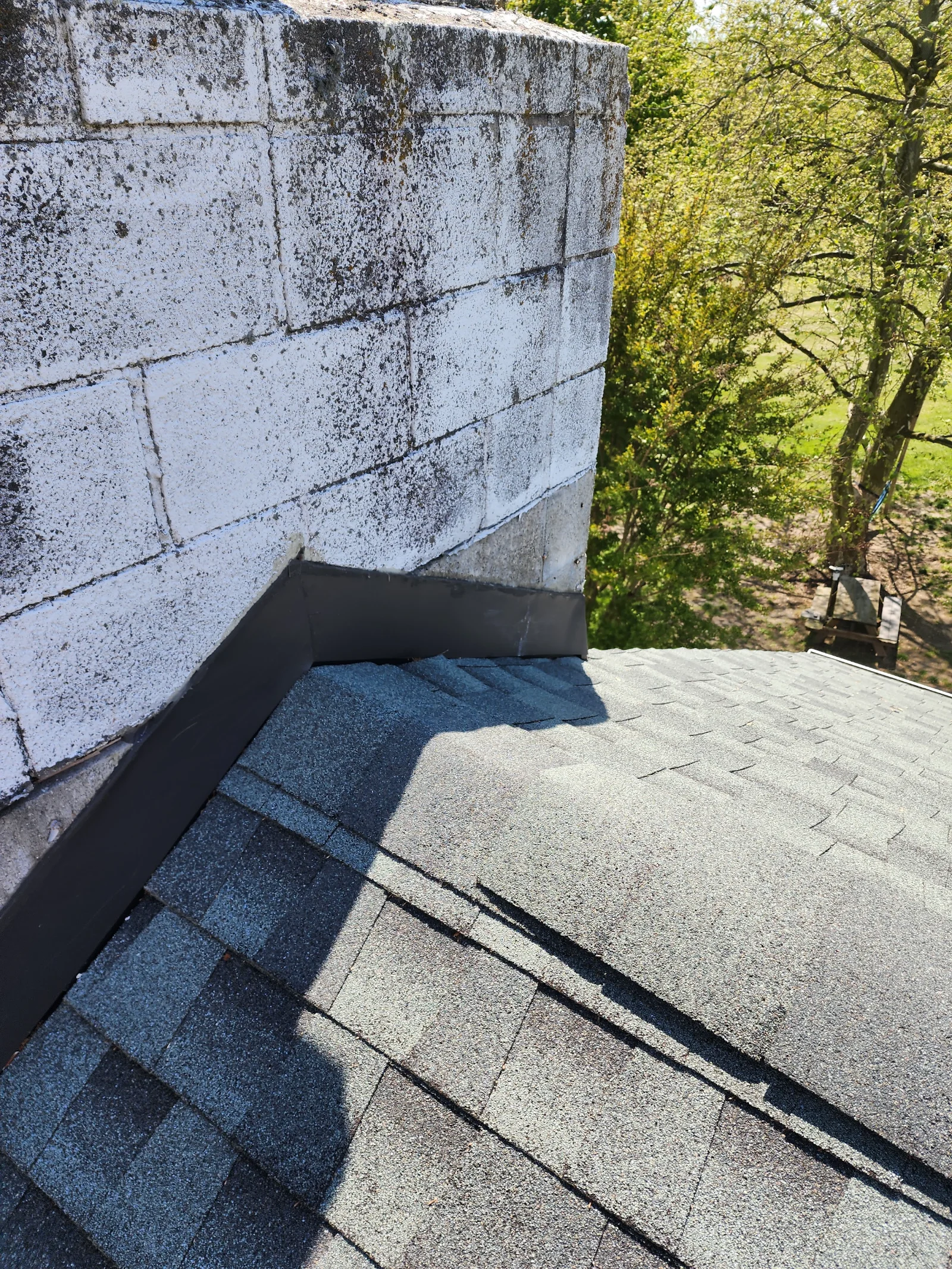
Illustration. Chimney flashing is the spot that most often leaks on older homes.
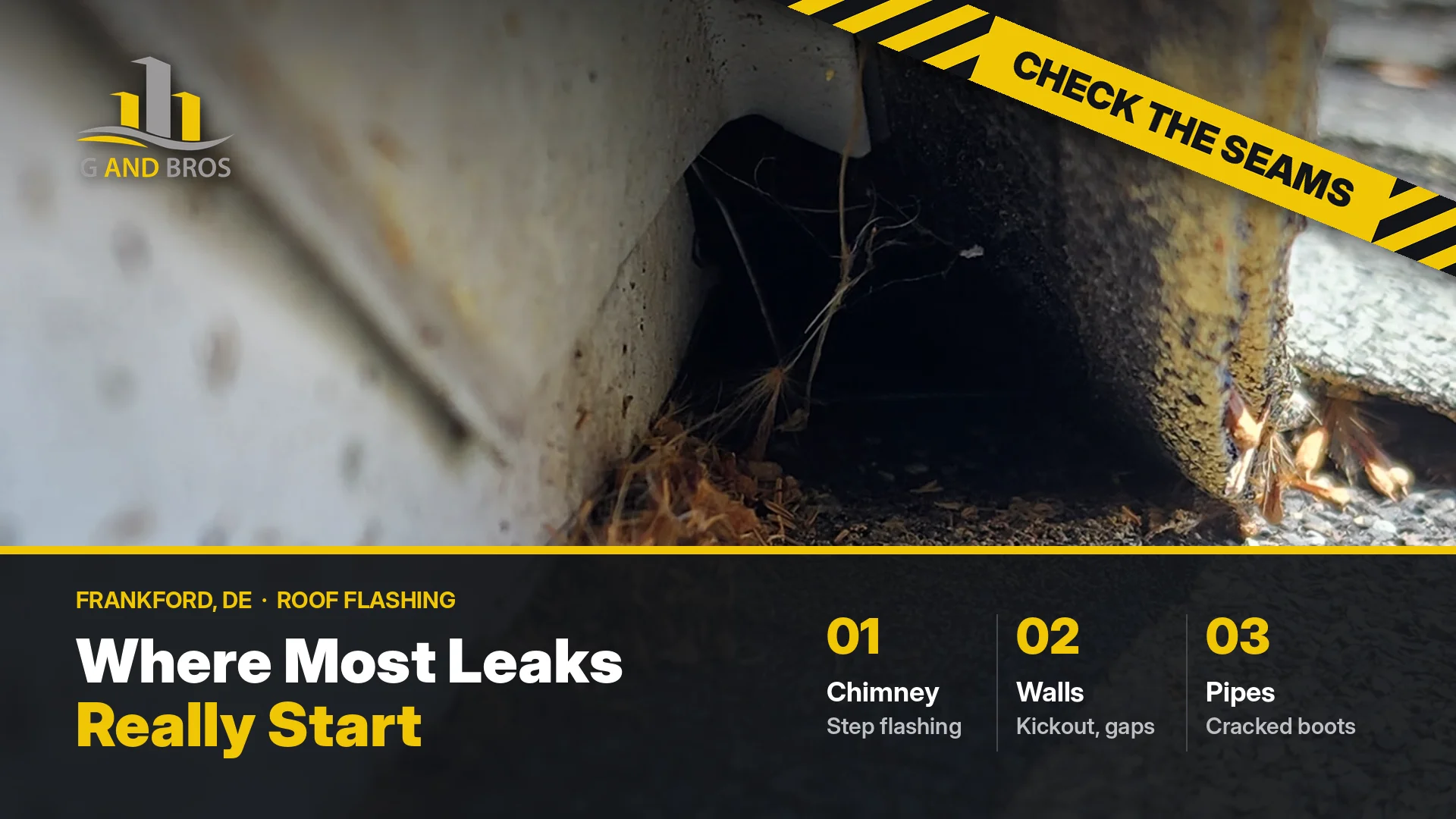
- Chimney: step flashing and counter-flashing seal all four sides where the chimney meets the roof.
- Valleys: where two slopes meet, a lot of water funnels through, and the valley has to carry it down and off.
- Vent pipes: rubber or metal boots seal the gap between the pipe and the shingles.
- Skylights: the frame depends entirely on its flashing kit to stay watertight.
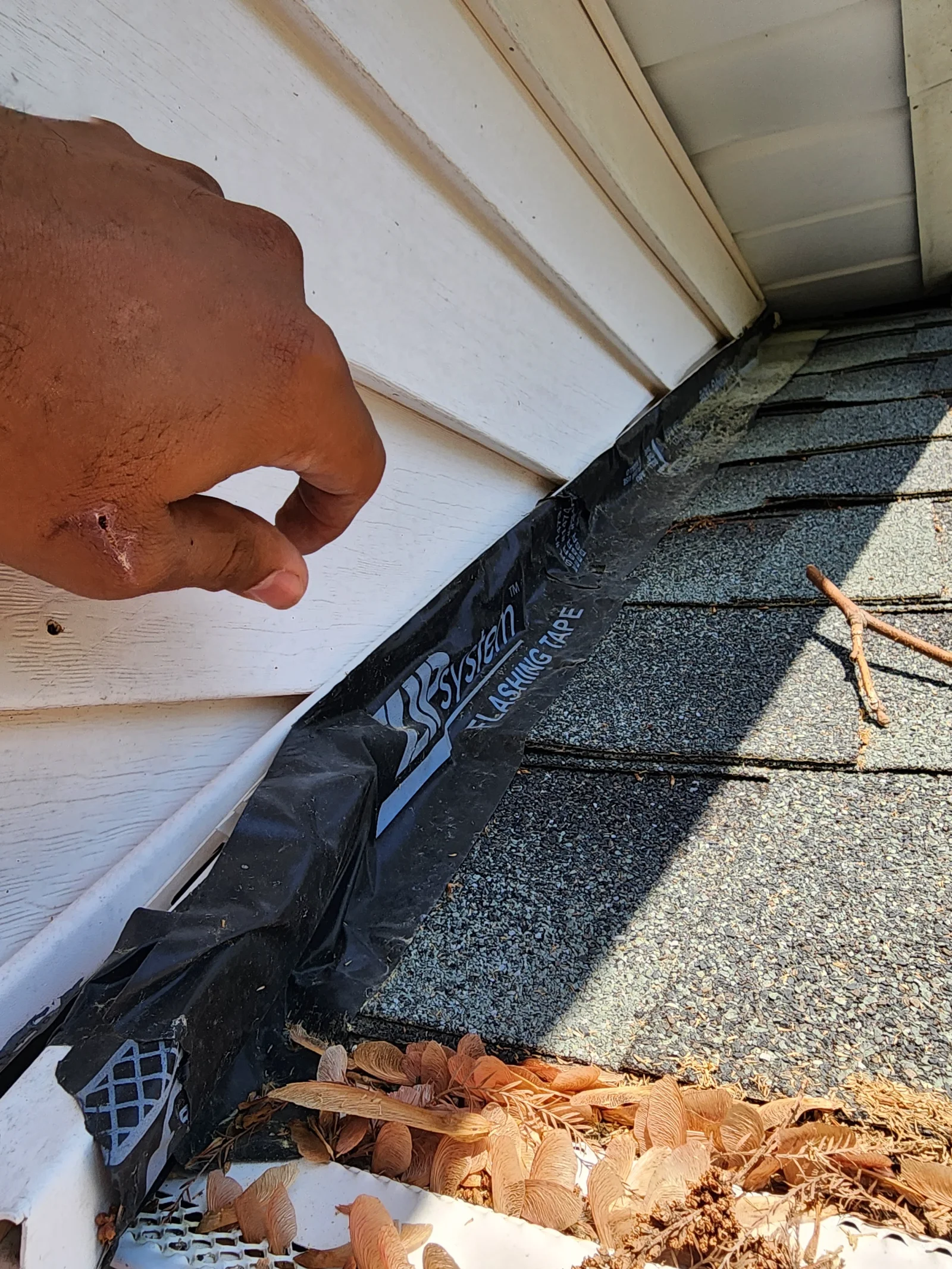
- Walls and dormers: step flashing and a kickout at the bottom keep water out from behind the siding.
Why Flashing Fails
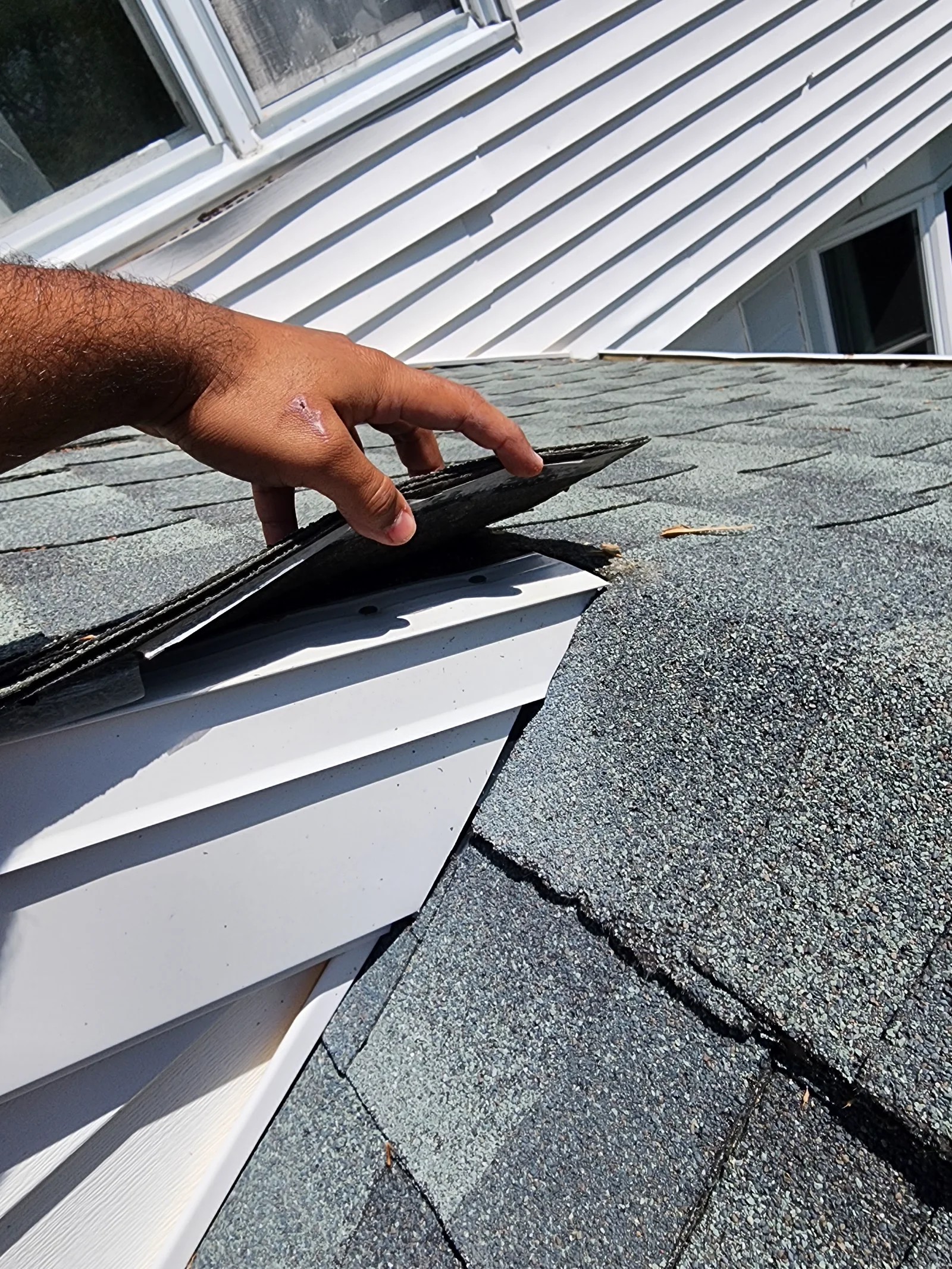
Flashing is usually galvanized steel, aluminum or copper. Heat and cold make it expand and contract, which can loosen it and break the seal. Poor installation can leave gaps from day one. Some older homes have joints sealed only with tar or caulk instead of properly lapped metal, and that dries out and cracks. Near the coast, salt air speeds up corrosion on steel and aluminum.
Signs of Flashing Problems You Can Spot From Below
Inside the house: water stains on ceilings near a chimney or dormer, damp attic insulation after rain, a musty smell upstairs and peeling paint near a roof-to-wall joint.
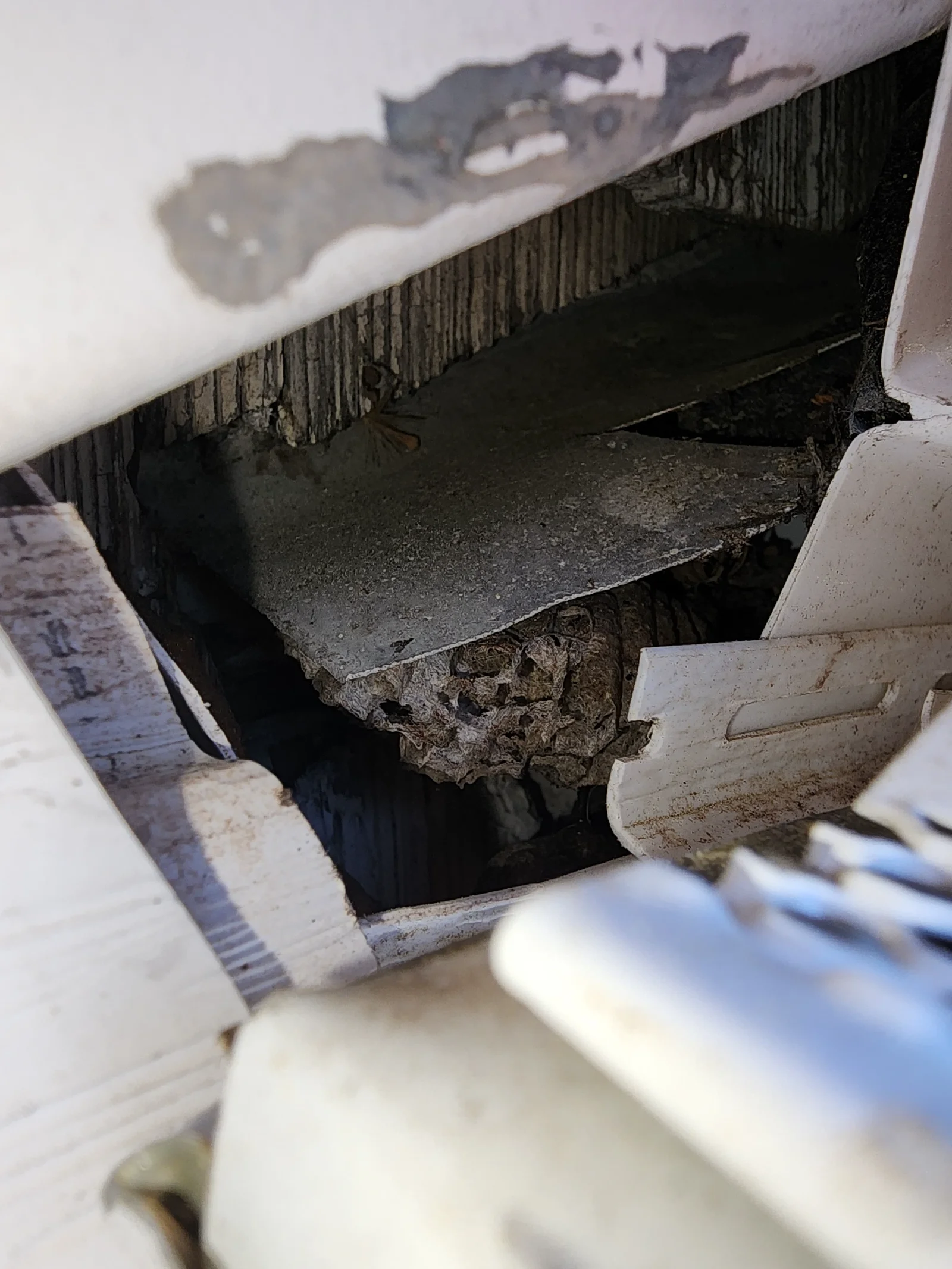
Outside, with binoculars: rust streaks below metal flashing, lifted edges or gaps at the chimney or a wall, missing pieces, dark staining on shingles next to a joint and cracked rubber boots around vent pipes.
Quick rule of thumb: a leak near a chimney, skylight, dormer or wall almost always points to flashing. A leak out in the open field of the roof points more often to shingles or a nail pop.
Coastal Conditions That Wear Flashing Faster
Homes in Sussex County sit in humid, salty air for much of the year, and that speeds up corrosion on metal. Hot summers and cold snaps keep metal and sealants moving. Then nor’easters and late-season tropical storms push wind-driven rain into every weak joint. A roof inspection in the fall is the best way to catch flashing problems before winter.
Flashing Repair or a New Roof?
Failed flashing does not automatically mean a new roof. Often a targeted roof repair is enough: replacing corroded metal, re-lapping joints correctly and replacing tired pipe boots. Replacement only comes up when long-term leaks have rotted the decking or the shingles around it are failing too. That is why catching flashing problems early saves money.
Frequently Asked Questions
How long does roof flashing last?
It depends on the metal and the setting. Copper lasts the longest. Aluminum and galvanized steel last less, and coastal salt air can shorten their life. Rubber pipe boots usually wear out before the shingles around them do.
Can I repair flashing myself?
A dab of roofing sealant can slow an active leak for a short time, but it is not a real fix. Proper flashing work depends on correct overlap and counter-flashing, and quick patches often hide damage that keeps growing.
What affects the cost of a flashing repair?
Where the flashing is, how much needs replacing, the material and how hard the area is to reach. A single pipe boot is a small job. Re-flashing a whole chimney is bigger. An inspection gives you an actual number.
Does homeowners insurance cover flashing damage?
It depends on the cause. Damage from a storm may be covered, while normal wear usually is not. If a storm was involved, take photos and contact your insurer. We can document what we find for you to share with them.
How do I know if a leak is from flashing or shingles?
Leaks near a chimney, skylight, dormer or wall usually trace to flashing. Leaks in the open part of the roof more often point to shingles or nails. An inspection finds the actual source so you do not pay to fix the wrong thing.
Get Your Flashing Checked in Frankford and Sussex County
Flashing is easy to overlook because you rarely see it from the ground. If your roof is more than ten years old, or you noticed any of the signs above, have it checked before winter. G and Bros works in Frankford, Bethany Beach, Selbyville and across Sussex County.
G and Bros is GAF Certified Plus, family-owned since 2012, with 25+ years of Maryland roofing experience from our founder. Call 410-677-4975 or contact us online.

Recent Blog Posts