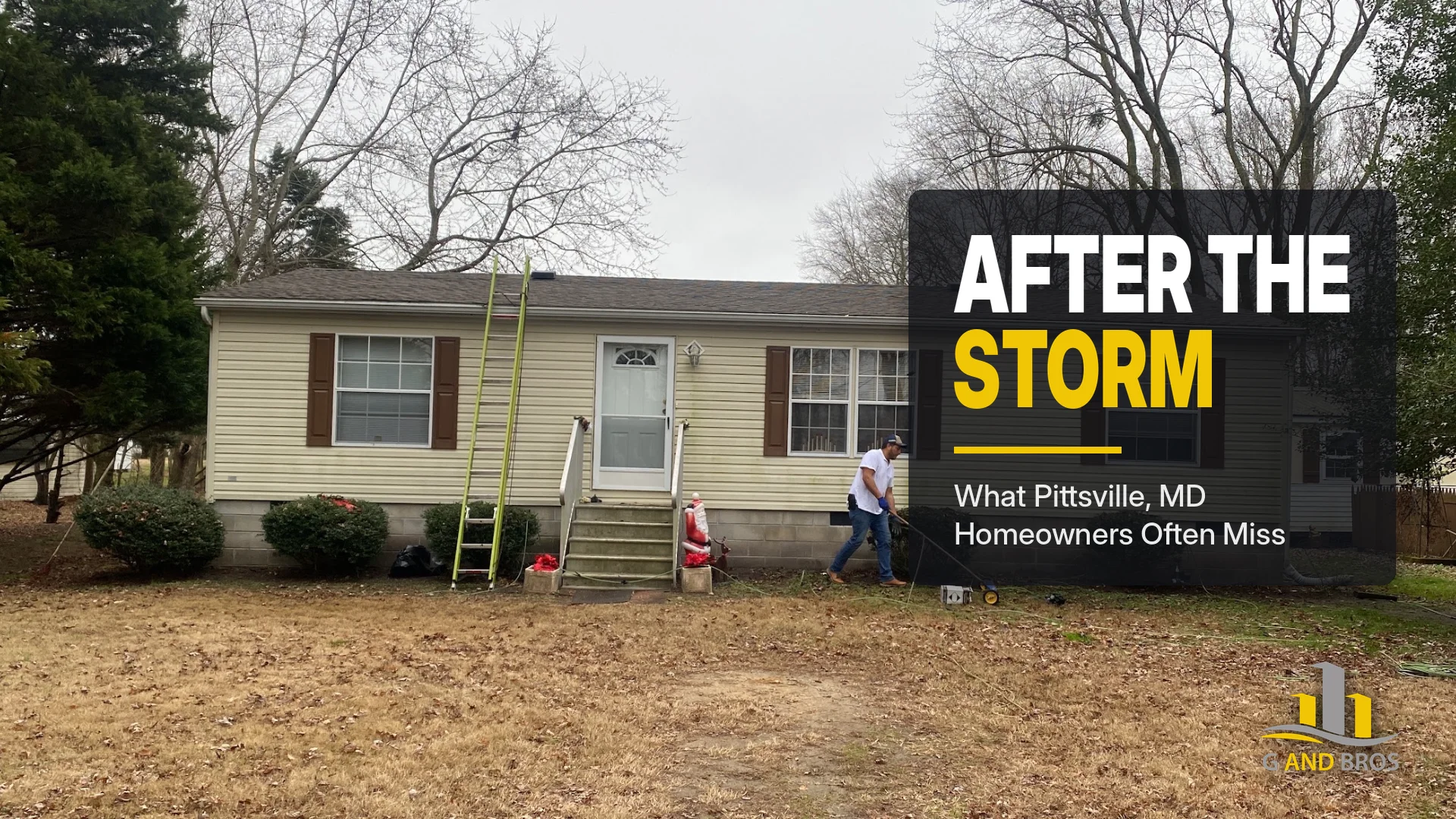
How to Read Your Roof After a Storm: What Pittsville, MD Homeowners Often Miss
Eastern Shore storms can be deceptive. One line of hard rain or a fast summer thunderstorm can leave branches in the yard and leaves in the gutters, but the damage that matters most, the damage to your roof, is often easy to miss from the ground. It usually shows up later, when the next rain turns into a stain on the ceiling.
If you live in Pittsville, MD or anywhere in Wicomico County, this guide covers the signs that matter, what you can check safely on your own and when it is time to have a professional take a closer look.
The Two Kinds of Storm Damage
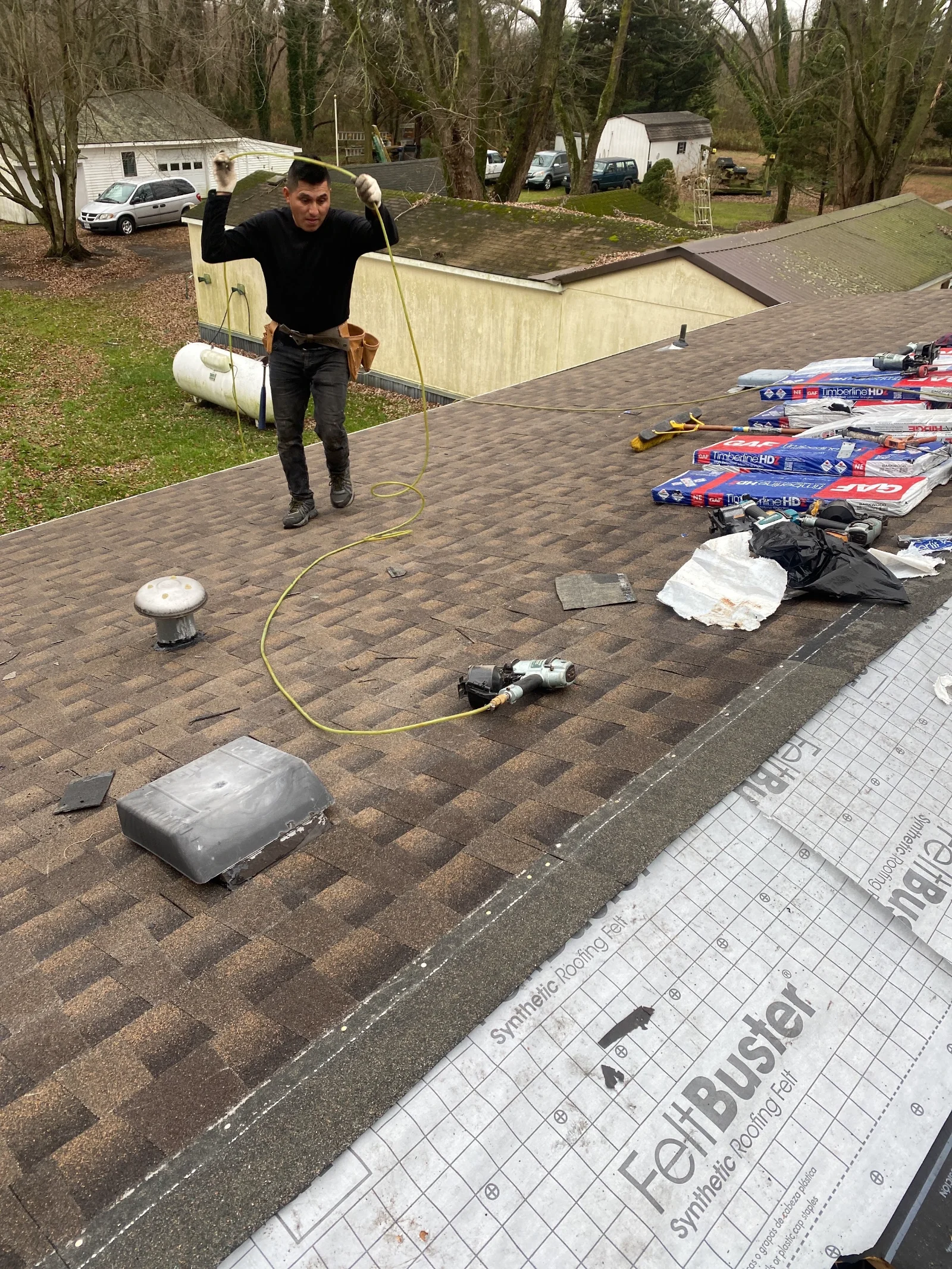
Not all storm damage looks the same. Roofers sort it into two groups:
- Obvious damage: missing shingles, holes, visible sagging or debris that punched through.
- Hidden damage: granule loss, cracked or bruised shingles from hail, lifted flashing, broken seals around vents and skylights, and water sitting in valleys.
The obvious damage is easy to spot. The hidden damage is what drives up repair costs, because it lets water in slowly for weeks or months before anything shows inside.
What storm damage looks like up close
Illustration. Most of these are hard to see from the ground, which is why a close inspection matters after a big storm.
What Wind Does to a Shingle Roof
High wind does not always tear shingles off. More often it lifts the tabs or edges just enough to break the adhesive seal underneath. The shingle still looks fine from the driveway, but the next rain can work its way under it.
Look for shingles that look slightly curled at the corners, especially along the ridge and the rakes (the sloped edges of the roof). Those usually lift first. After a major storm, a roof inspection can catch broken seals before they let water in.
What Hail Does That Most Homeowners Miss
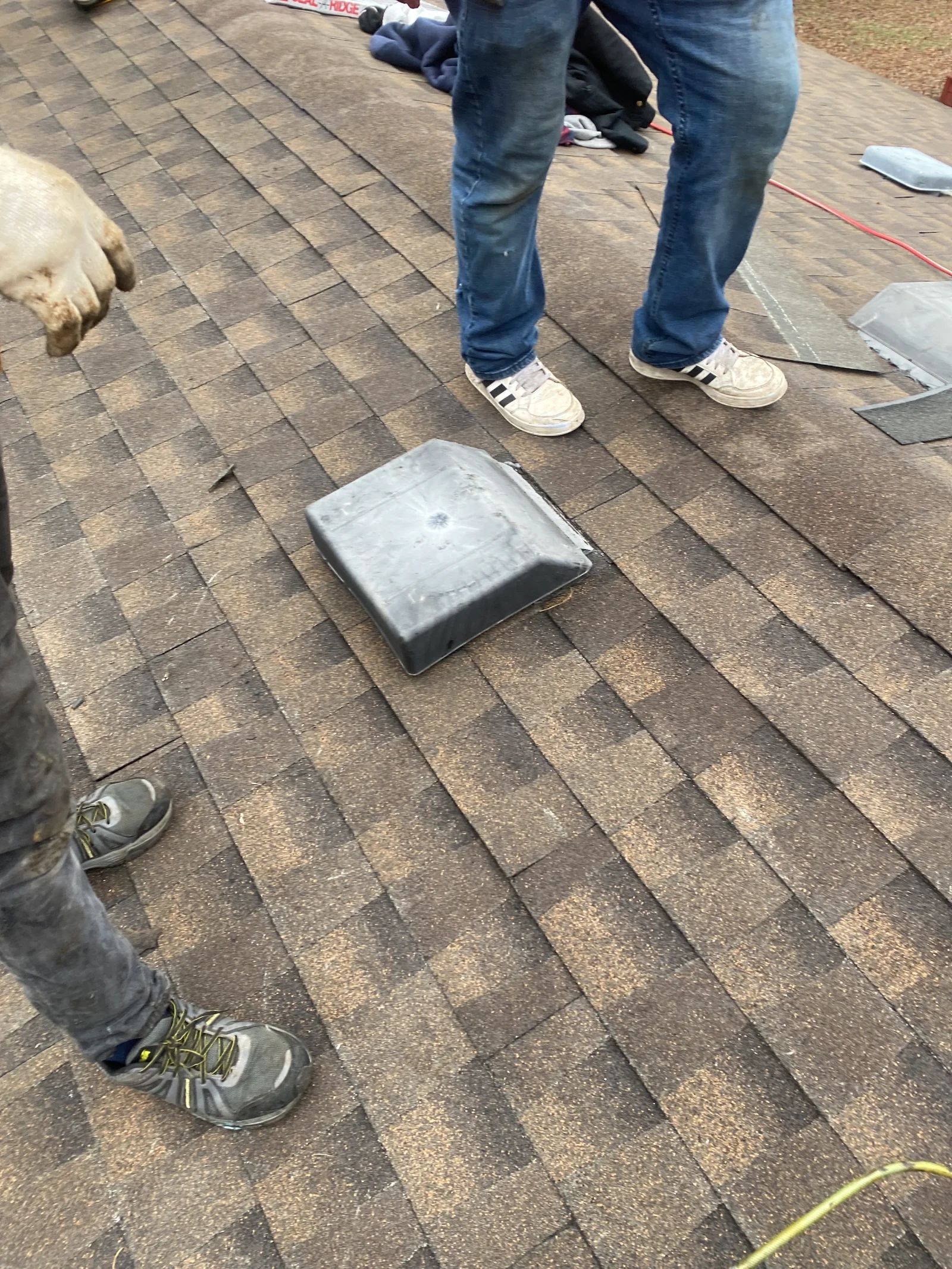
Hail leaves small round bruises on asphalt shingles and knocks loose the protective granules. These spots rarely look dramatic. They often look like a dark circle with a soft or shiny center.
The bruise itself is not the main problem. Once the granules are gone, the sun hits the bare asphalt directly and the shingle ages much faster. Insurance adjusters are trained to look for these marks.
A useful check from the ground: look at your gutters and downspout splash blocks after a storm. A lot of dark, sand-like grit there means your shingles lost some of their coating, and that is a good reason to schedule an inspection.
Do not climb up to look. A wet or freshly damaged roof is slippery, and walking on loosened shingles can make the damage worse. A ground check and a look in the attic tell you most of what you need.
Flashing: The Most Overlooked Storm Damage Spot
Flashing is the metal that seals the joints where your roof meets a wall, chimney, skylight or vent pipe. In a storm it is one of the first parts to pull away, and because it sits flat against those surfaces, the gap is almost invisible from the ground.
If you have a chimney, look for dark streaks or staining on the brick just below the roofline. That usually means water is getting in at the flashing. The same goes for skylights and the walls of any additions.
What You Can Do Right Now (Without Getting on the Roof)
A safe post-storm check
Walk the perimeter. Look for shingles, granule piles or pieces of metal flashing on the ground.
Check your gutters. Are they pulling away from the house? Full of dark granules? Clogged enough to back water up under the roof edge?
Go into the attic. In daylight, look for spots of light through the roof boards and for water stains on the wood or insulation.
Check the ceilings. Water travels before it drips, so a stain can show up several feet from where it actually got in.
Take photos first. Get dated photos before any temporary repair. Your insurance company will want them.
If you find any of these, call a local roofer before the next rain. A temporary tarp can protect the house while you wait for a full roof repair estimate.
Frequently Asked Questions
Should I get on my roof after a storm to check it myself?
No. A wet or damaged roof is dangerous to walk on, and you can loosen shingles further. A look from the ground and from the attic tells you most of what you need. Leave the close-up work to a professional.
Does homeowners insurance cover storm damage to my roof?
Many standard policies cover sudden damage from wind, hail and falling debris, while wear and tear usually is not covered. Check your own policy, report damage promptly and keep dated photos taken right after the storm.
How quickly should I get an inspection after a storm?
As soon as you can, ideally within a few days. Small damage can turn into a leak after the next rain, and an early record also helps if you file a claim.
What if I only see one or two missing shingles?
Even one missing shingle lets water reach the layers underneath, which can soak the decking and lead to rot. It is a small repair now or a bigger one later.
Does hail damage always cause an immediate leak?
No, and that is the risk. Hail damage usually speeds up shingle wear instead of punching through right away, so a leak can show up much later. An inspection now protects both your roof and your insurance options.
Had a storm roll through Pittsville?
G and Bros is GAF Certified Plus, family-owned since 2012, with 25+ years of Maryland roofing experience from our founder. We work in Pittsville, Salisbury and across Wicomico County, and we can document what we find for your insurer.
Get a Roof Quoteor call 410-677-4975

Recent Blog Posts