What to Check on Your Roof Before Hurricane Season: A Delmarva Homeowner’s Guide

If you own a home in Salisbury or anywhere across the Eastern Shore, you already know what the back half of summer can bring. Tropical systems, sustained nor’easter winds, and driving rain that finds every weak point in a flashing joint or a worn boot collar. The right time to discover a vulnerability in your roof is July, not during a wind event in late September.
This checklist is built for homeowners who want to do a meaningful pre-season review without getting on the roof. The majority of what matters can be seen from the ground and from inside your attic.
Why Mid-Summer Is the Right Time for a Roof Check
By July, your roof has already been through a full spring storm season. Hail events, high-wind days, and the thermal cycling of Maryland’s wide temperature swings have done whatever damage they are going to do. Inspecting now gives you enough lead time to schedule needed repairs before the peak of Atlantic hurricane season, which historically runs from mid-August through October for the Delmarva Peninsula.
Waiting until September is one of the most common mistakes we hear from homeowners in Pittsville, Eden, and surrounding Wicomico County communities. Contractors fill up fast once active storm systems move through the corridor. A July check puts you ahead of that backlog.
Exterior Checklist: What to Look for from the Ground
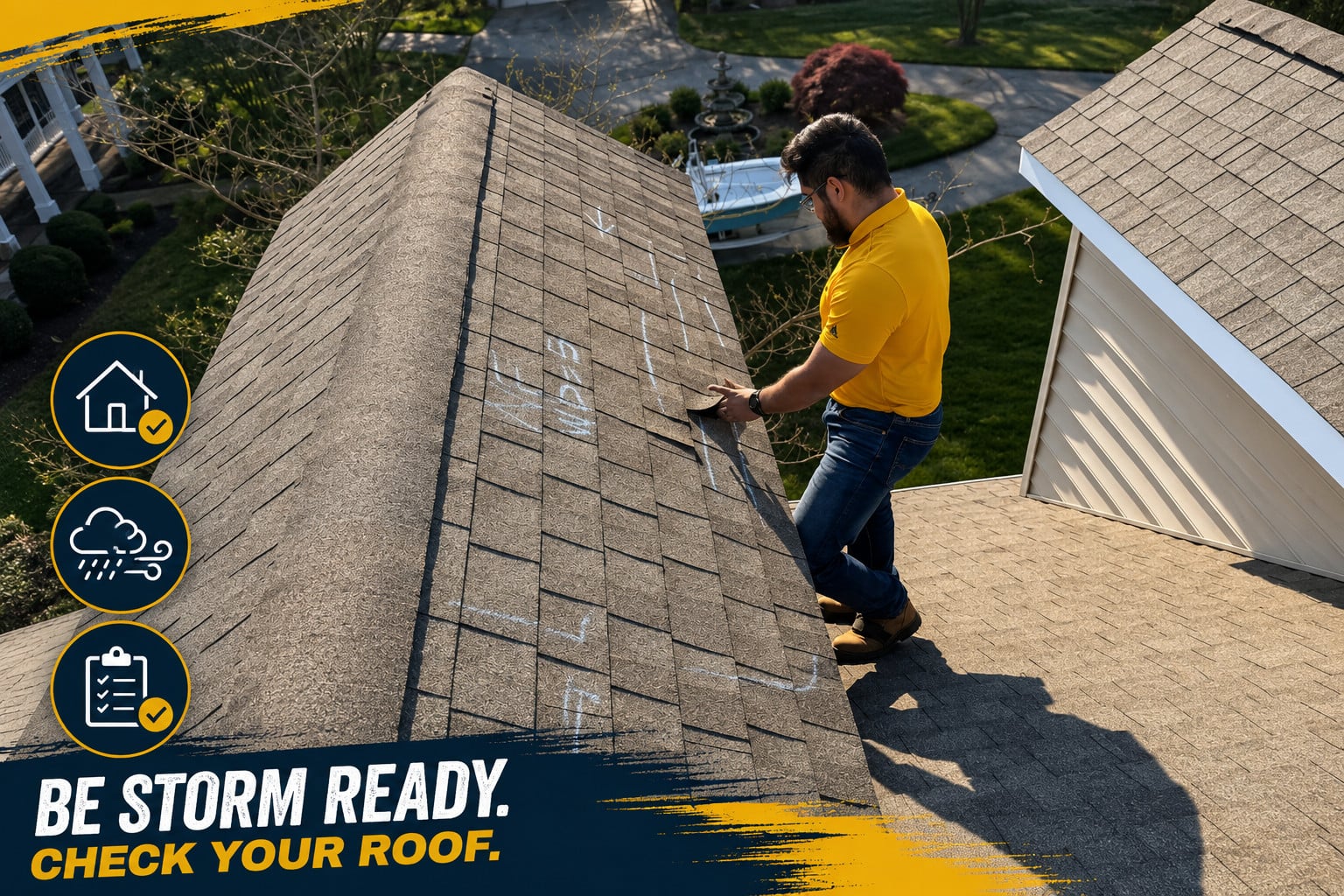
Walk each side of your home and use binoculars if you have them. A thorough perimeter walk takes 15 to 20 minutes. You are not climbing anything. You are observing.
Shingles and Surface Condition
- Missing shingles. Any gaps in the shingle field are a repair priority heading into wind season. Even a small opening allows water infiltration under the surrounding field during driven rain.
- Curling or cupping edges. Shingle edges that lift or curl upward at the corners have aged past their useful life. They catch wind and peel back under sustained gusts.
- Granule loss. Bare or discolored patches on the shingle surface indicate heavy granule shedding. This exposes the asphalt mat to UV and moisture, accelerating the path to failure.
- Ridge cap condition. The ridge cap absorbs more wind stress than any other surface on your roof. Raised, shifted, or missing ridge cap shingles are the first item to flag.
- Moss or algae streaking. Dark streaking down the slope is common on Eastern Shore roofs due to year-round humidity. Heavy moss growth traps moisture and accelerates wear beneath the surface.
Gutters and Drainage
- Granules in your gutters. A small amount is normal. Heavy accumulation after rain means shingles are shedding significantly and may be approaching the end of their service life.
- Sagging or pulling gutter sections. Gutters separating from the fascia will not drain properly during heavy rain. Left unaddressed, they damage the fascia board over a single storm season.
- Downspout extensions. Downspouts should carry water at least 4 to 6 feet from the foundation. Pooling at the base of your home during storms creates long-term structural and moisture risk.
Flashing at Key Transitions
- Chimney and skylight flashing. Look for visible gaps, rust staining, or lifted edges where metal meets shingles. Flashing failures are one of the most common sources of interior water damage on Eastern Shore homes.
- Roof-to-wall transitions. On homes with dormers or attached structures, the vertical wall connections are common entry points for wind-driven rain.
- Pipe boots and vent collars. Rubber boots around plumbing vents crack under UV exposure and age. Visible splits or separation from surrounding shingles mean the boot needs replacement.
Interior Checklist: Signs You Can Spot from Inside
Check your attic on a sunny day and again after any significant rain event. You are looking for two things: light and moisture.
- Daylight through the roof deck. Any pinhole or streak of daylight visible from inside the attic is an active water entry point during wind-driven rain.
- Dark staining on rafters or decking. Brown or black staining on wood framing indicates past or current moisture intrusion. Even dried staining shows you where water has traveled.
- Soft or spongy decking. If you can safely access the roof decking and press on it, soft spots indicate moisture-damaged OSB or plywood that will need replacement before any future repair or re-roof.
- Drips or water trails after rain. Check your attic within an hour of a heavy rain event. Fresh drips are the easiest form of roof damage to locate and document for an insurance claim.
- Attic ventilation. Blocked soffit vents or a clogged ridge vent trap heat and moisture in your attic all summer, accelerating shingle deterioration from below. Make sure both ends of the ventilation path are clear and unobstructed.
What to Do When You Find a Problem
If any item on this list raises a concern, the next step is a professional inspection, not a DIY repair. Most roof repairs attempted without proper training create additional water entry points or void manufacturer warranties. A licensed roofer can confirm what you found, assess whether the issue is isolated or part of a broader pattern, and give you an honest recommendation on repair versus replacement.
At G and Bros, our inspections include a written assessment with photos. You leave with documentation of your roof’s current condition and a clear explanation of what is urgent versus what can wait. To schedule in Salisbury, Fruitland, or anywhere across Wicomico County, call 410-677-4975 or visit our roof inspection page.
Frequently Asked Questions
How often should Eastern Shore homeowners schedule a professional roof inspection?
Most roofing professionals recommend once per year, ideally in spring or early summer before hurricane season. For homes in coastal or high-wind-exposure areas, inspecting twice per year (spring and fall) is a reasonable standard, especially for roofs older than 15 years.
Does homeowner’s insurance cover storm damage found during an inspection?
It depends on when and how the damage occurred. Sudden storm damage is typically covered under most Maryland homeowner’s policies. Damage from deferred maintenance or gradual wear is generally excluded. A professional inspection report with dated photos gives you documentation that supports a claim if one becomes necessary.
What wind speed should my roof be rated for on the Eastern Shore?
Maryland building code requires a minimum design wind speed of 110 mph for most Eastern Shore locations. For coastal areas within a mile of the Atlantic or Chesapeake Bay, 130 mph-rated shingles are a practical upgrade. GAF Timberline HDZ meets that threshold when installed by a certified contractor.
Is it safe to inspect my own roof?
The ground-level and attic portions of this checklist are safe for any homeowner to complete. Getting on the roof surface is not recommended without fall-protection equipment and roofing experience. Even low-pitch roofs are slippery when wet or damp. Leave the on-roof portion to a licensed contractor.
How far ahead should I book a pre-season inspection?
In Wicomico and Worcester counties, roofing contractors fill up quickly in July and early August as summer demand peaks. Booking 3 to 4 weeks out is the safe window. By September, availability compresses sharply as active weather systems move through the Delmarva corridor.
Get Ahead of Storm Season This Week
A roof in good shape in July is far less likely to become a crisis in October. The Eastern Shore puts a lot of stress on residential roofing, but most storm damage is preventable when it is caught early. Run through this checklist now, document what you find, and call a qualified contractor if anything raises a question.
G and Bros serves homeowners across the Eastern Shore with professional roof inspections, repairs, and full replacements. Call 410-677-4975 to schedule or request a repair estimate online.

Recent Blog Posts