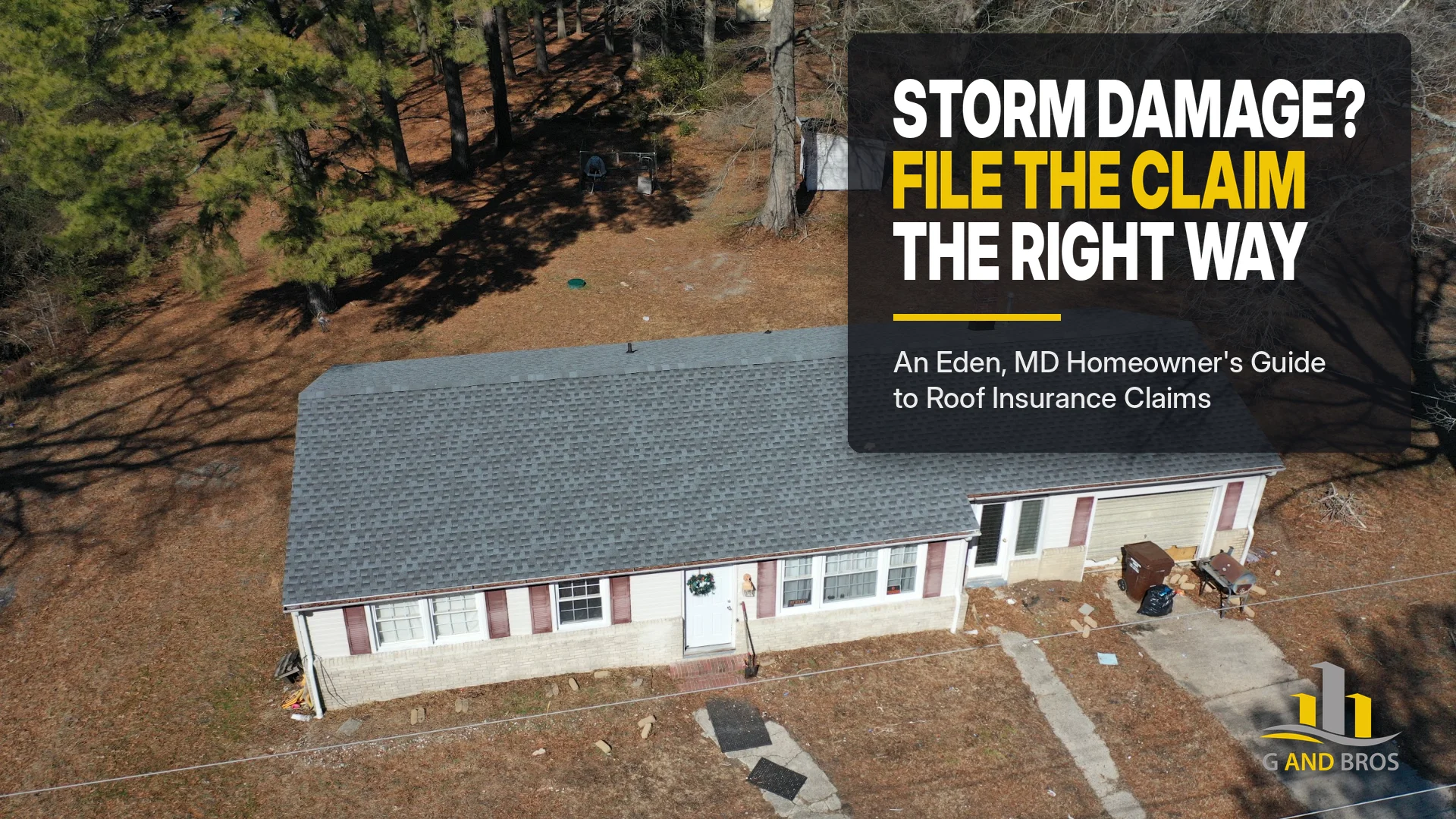
Storm Damage and Your Roof: How to File an Insurance Claim in Eden, MD
Storm Damaged Your Roof? Here Is How the Claim Should Go
After a tropical system or a strong summer thunderstorm moves through Wicomico County, homeowners in Eden, MD often face the same moment: the roof shows damage, the insurance policy is somewhere in a drawer, and nobody is quite sure where to start. A misstep in the first few days can slow a claim down or weaken it. This guide walks through the process from the moment the storm clears to the day the repair or replacement is finished.
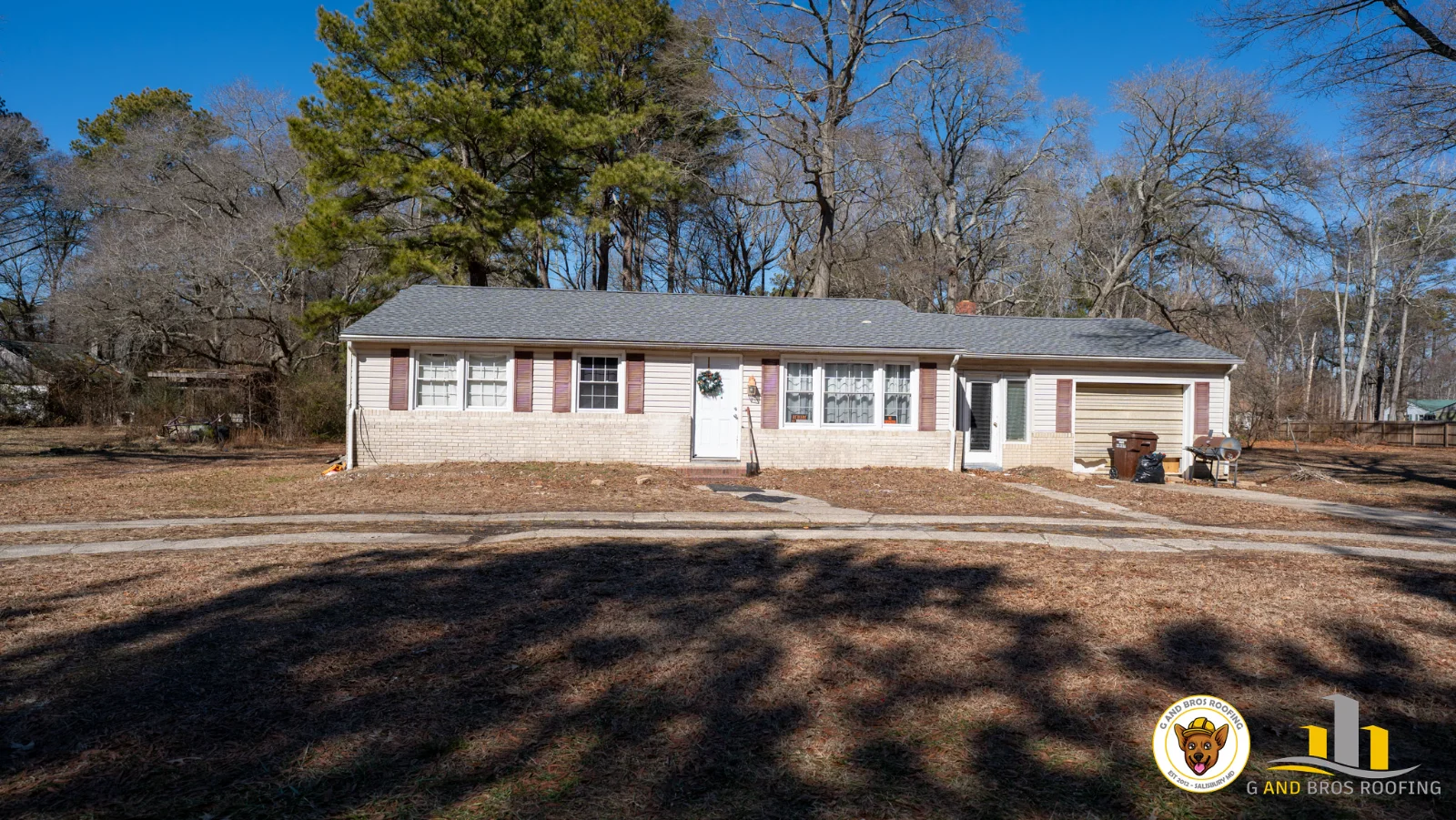
Start With Photos Before Anything Gets Touched
The most useful thing you can do after storm damage is document it before any work happens. Even a tarp changes what an adjuster can see later, so get the evidence first.
Here is what to photograph, all from the ground or from inside the house:
- Missing, lifted or creased shingles and any bent or loose flashing you can see from the yard or an upstairs window
- Your gutters and downspouts, including dents and any piles of shingle granules at the downspout outlets
- Inside the house: ceiling stains, wet insulation in the attic, or water on walls and floors
- Anything else the storm hit: siding, window screens, fences and the outdoor AC unit
Your phone records the date and time of every photo automatically, which helps tie the damage to the storm. Stay off the roof yourself. Wet or damaged shingles are slick, and the photos you can take from the ground are enough to open a claim.
If water is coming in, a tarp to stop further damage is reasonable, and most policies expect you to take that kind of step. Photograph the area before it is covered, and keep receipts for anything you spend on emergency protection.
Do Things in the Right Order
The most common mistake we see after a storm is signing with whoever knocks first and sorting out insurance later. The steps below keep you in control of your own claim.
Document the damage. Photos and short written notes: what you saw, where, and when you first noticed it.
Read your policy and call it in promptly. Policies set their own deadlines for reporting damage. Waiting gives the insurer a reason to question the claim.
Get an inspection from an MHIC-licensed roofer. A written list of what is damaged, with photos, gives you something concrete to compare with the adjuster’s findings.
Meet the adjuster with your documentation ready. Walk them through your photos and the roofer’s findings so nothing gets missed.
Adjusters are professionals, but they are covering a lot of houses after a big storm. When you can show them every damaged area with photos and a written scope from a licensed roofer, it is much harder for anything to be left off.
What Your Adjuster Is Looking For
Most residential roof claims on the Eastern Shore come down to wind or hail. Each leaves different evidence, and the table below shows what an adjuster usually checks for each one.
| Where to look | Wind damage | Hail damage |
|---|---|---|
| Shingles | Missing tabs, creased or lifted shingles, broken seal strips | Round bruises or dark spots where granules were knocked off |
| Metal parts | Bent or pulled-up flashing at chimneys, walls and vents | Small round dents in gutters, vents, flashing and AC fins |
| Pattern | Worst on edges, ridges and the side facing the storm | Impacts spread across multiple slopes, not one spot |
| Around the house | Shingles or debris in the yard, damaged siding | Dented siding, torn screens, marks on decks and cars |
General signs adjusters and roofers check after a storm. Your adjuster decides what is covered under your specific policy.
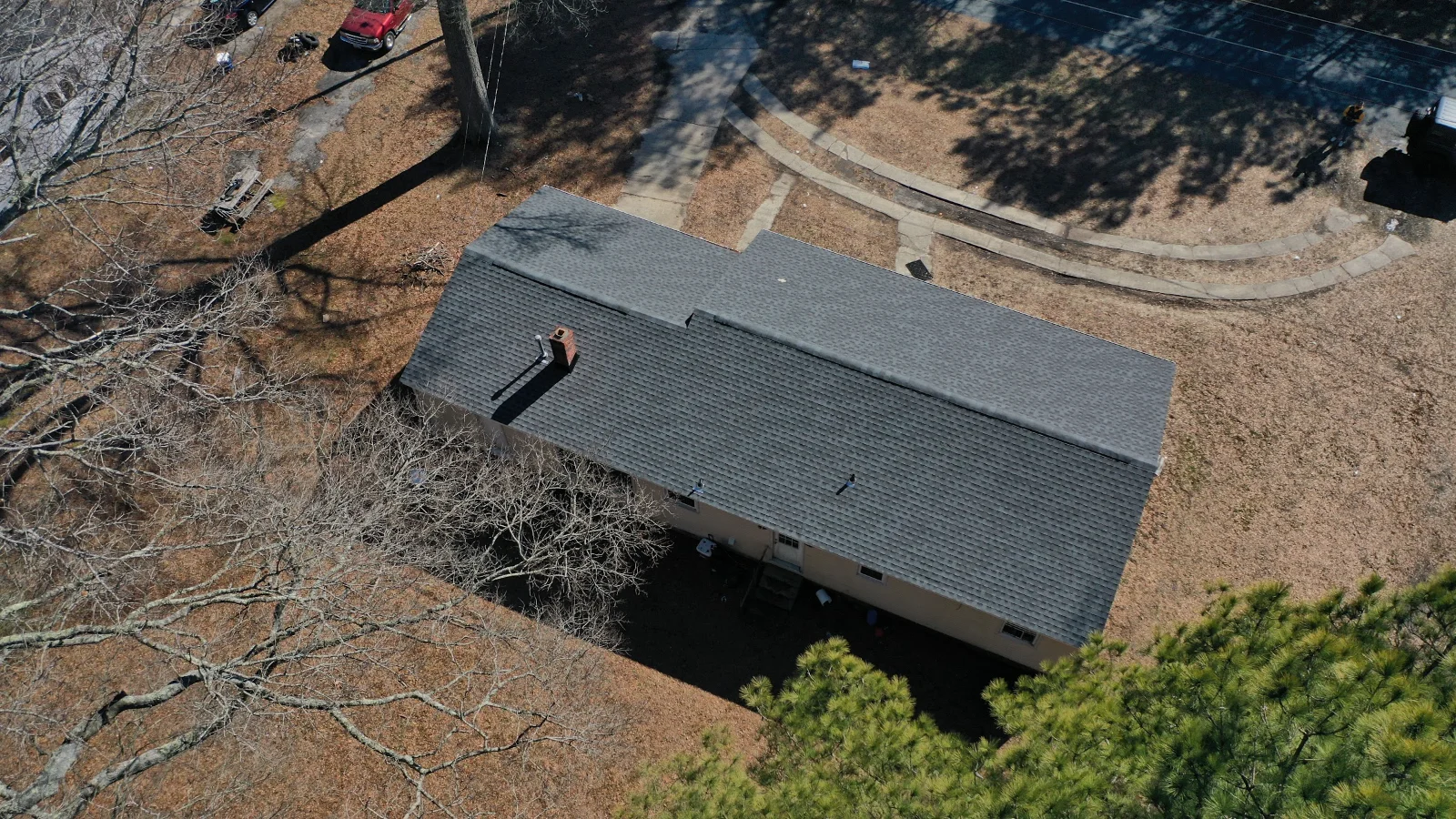
Chimneys, vents and walls are where wind most often works flashing loose, so they deserve a close look after any strong storm. Some insurers now use drone or aerial imagery instead of sending someone up on every roof. If you think something was missed, you can ask your insurer for an in-person inspection.
One thing to know going in: the Maryland Insurance Administration notes that homeowners insurance does not pay for normal wear and tear, and insurers are generally not required to replace an entire roof unless the whole roof was damaged by a covered cause. An honest inspection will tell you which situation you are in.
Why the Contractor You Choose Matters
Maryland requires anyone doing home improvement work to hold a Maryland Home Improvement Commission (MHIC) license, and the license number has to appear on contracts, trucks and advertising. Before you sign anything, ask for the number and look it up in the MHIC’s online license search.
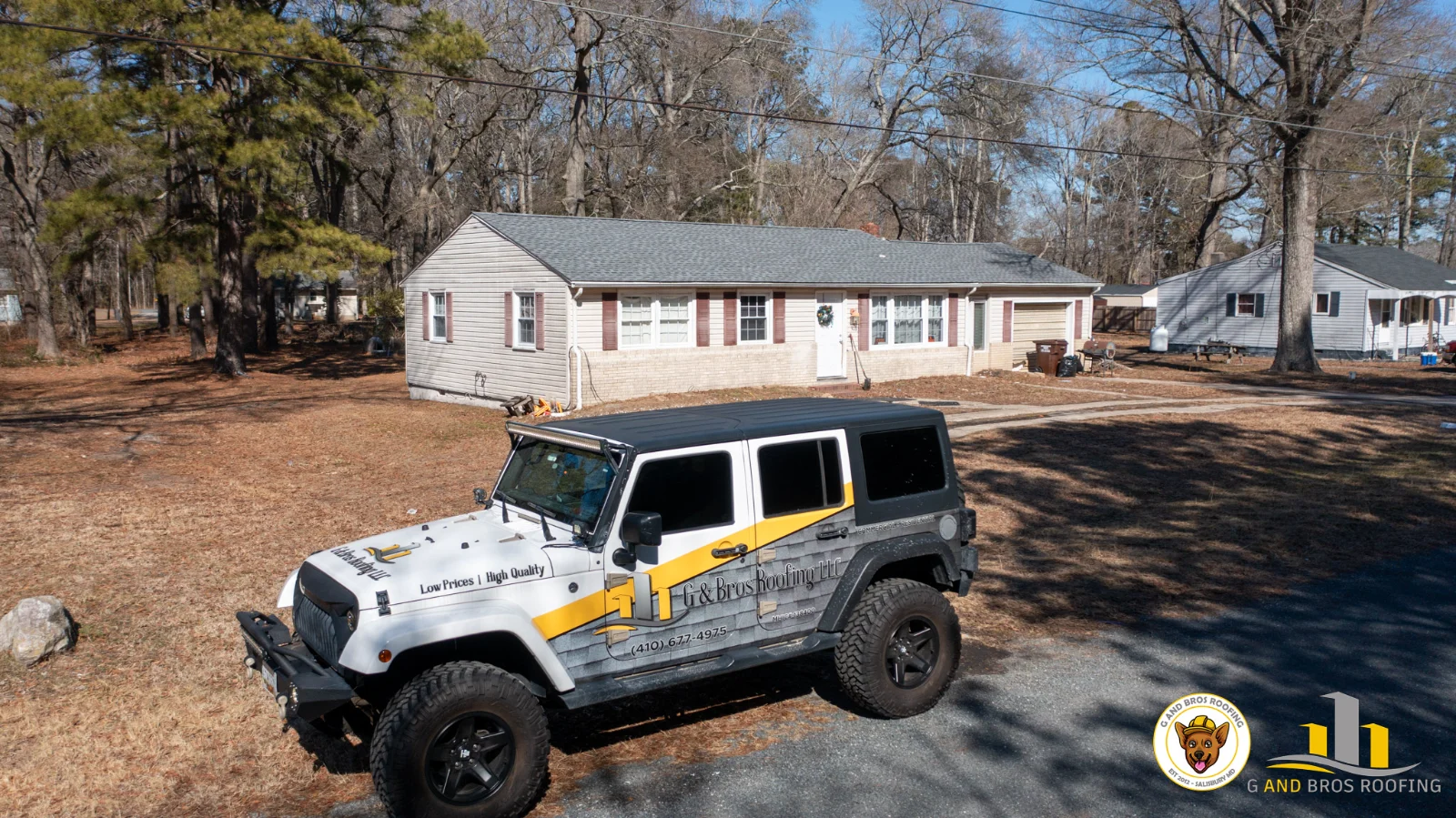
A licensed local roofer gives you a written scope of the damage with photos, which you can share with your insurer. G and Bros is MHIC-licensed, GAF Certified Plus and fully insured. We serve Eden, Fruitland, Salisbury and homeowners throughout Wicomico County.
Protect Yourself From Storm Chasers
After a big storm on the Eastern Shore, out-of-town crews often follow the damage. They knock on doors, offer quick estimates, and sometimes ask homeowners to sign paperwork before the adjuster has even visited. Maryland law covers several of their favorite tactics, so it helps to know the rules before anyone shows up.
What Maryland law says: a contractor offering to pay, cover or rebate your insurance deductible is committing a fraudulent insurance act under Maryland Insurance Article 27-407.2. Only a licensed public adjuster can negotiate a claim on your behalf, so do not sign anything that “assigns” your claim to a contractor. And a Maryland home improvement contract cannot require more than one third of the price when you sign.
Sources: Maryland Insurance Article 27-407.2, Maryland Insurance Administration consumer advisory on roofing offers, Maryland home improvement contract rules.
Other warning signs worth walking away from:
- No MHIC license number, or one that does not show up in the state search
- No local address in Maryland or Delaware you can actually drive to
- Pressure to sign today, before your adjuster has looked at the roof
- A pitch that is all about what insurance will pay rather than what the roof actually needs
If you think a contractor is pushing insurance fraud, you can report it to the Maryland Insurance Administration. A local roofer with a verifiable license, a permanent address and neighbors you can call is the safer choice. G and Bros works out of 109 Clark Street in Salisbury and serves the Eastern Shore year-round, not just after storms.
Frequently Asked Questions
How long do I have to file a roof insurance claim in Maryland?
It depends on your policy. Most homeowners policies require you to report damage promptly after you discover it, and some set specific time limits. Read the “duties after loss” section of your policy and call your agent soon after any major storm, because a long delay can be used to question or reduce a claim.
Will filing a roof claim raise my insurance rates?
It can, depending on your insurer and your claim history. Your agent can tell you how a claim might affect your renewal before you decide to file.
What if my adjuster and my roofer disagree about the damage?
Share your roofer’s photos and written findings with your insurer and ask for the claim to be reviewed or reinspected. Remember that only you or a licensed public adjuster can negotiate the claim itself. A roofer’s job is to document the damage clearly.
What is the difference between ACV and RCV?
Actual cash value (ACV) pays what your old roof was worth after depreciation. Replacement cost value (RCV) pays to replace it with a comparable new roof, minus your deductible. Many replacement cost policies pay in two parts: the depreciated amount first, then the rest once the work is finished and documented. Check your declarations page to see which you have.
Does G and Bros help homeowners after storm damage?
Yes. We inspect the roof, photograph what we find and give you a written scope of the damage to share with your insurer. The claim itself stays between you and your insurance company. Call 410-677-4975 to schedule a storm damage inspection.
Schedule a Storm Damage Inspection
If your roof took a hit and you are not sure where to start, an inspection from a licensed local roofer is the right first step. Learn more about our roof inspections and roof repair, or see our storm restoration page.
G and Bros is GAF Certified Plus, family-owned since 2012, with 25+ years of Maryland roofing experience from our founder. Call 410-677-4975 or contact us online.

Recent Blog Posts