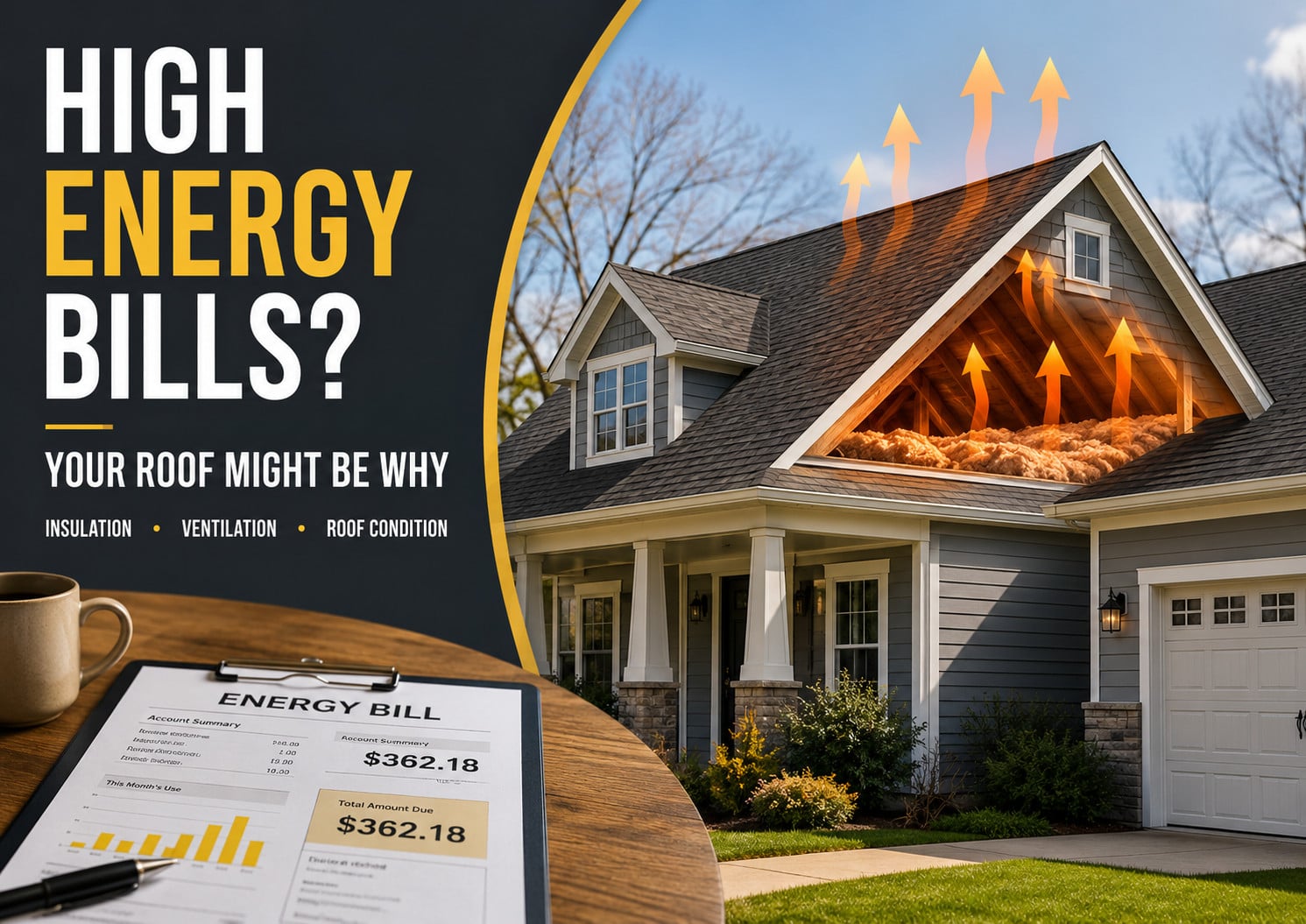
3 Reasons Your Energy Bill Is High (And Why It Might Be Your Roof)
If your heating and cooling bills have crept up year over year without an obvious cause, your roof might be working against you. Most Delmarva homeowners blame their HVAC system or the rising cost of electricity, but the roof and attic system is often the silent culprit. Here are the 3 roof-related issues that drive energy bills up and how to fix them.
1. Poor Attic Insulation
The attic floor (the ceiling of your top-story rooms) should have R-38 to R-49 insulation in our Delmarva climate zone. Many older Eastern Shore homes have R-19 or less, half the recommended value. Heat escapes through the attic in winter; AC-cooled air escapes the same way in summer.
What it costs you: 15 to 30 percent higher heating bills, 10 to 20 percent higher cooling bills. Adding insulation typically pays back in 2 to 4 years through energy savings.
The fix: Add blown-in insulation to your attic to reach R-49. Cost: $1,500 to $3,500 for typical homes. Lasts decades.
2. Inadequate Attic Ventilation
Your attic needs intake vents (soffit) and exhaust vents (ridge) to allow air to flow through. When ventilation is blocked or undersized, hot air gets trapped in the attic in summer (160°F+ is common in unventilated attics). That heat radiates down into your living space, forcing your AC to work overtime.
What it costs you: 10 to 25 percent higher cooling bills in summer. Also shortens shingle life and accelerates ice dams in winter.
The fix: Add ridge vents and confirm soffit vents are unblocked. Cost: $500 to $1,500 depending on roof complexity.
3. Aging or Damaged Roof Allowing Air Infiltration
An aging roof with lifted shingles, cracked flashing, or gaps at penetrations allows conditioned air to escape and outside air to infiltrate. The HVAC system runs constantly to maintain temperature against this air movement.
What it costs you: Hard to measure precisely, but homes with sealed envelopes vs leaky envelopes can see 20 percent differences in HVAC consumption.
The fix: Roof repair or replacement, plus sealing of attic penetrations (around plumbing vents, chimneys, recessed lights, etc.).
Quick Diagnostic: Is Your Roof Costing You Money?
Check these:
- Touch the attic floor on a hot summer afternoon. If it’s warm, your attic is overheating. Ventilation problem.
- Look at the depth of attic insulation. Should be 12 to 16 inches of blown-in cellulose or fiberglass. If you can see the joists clearly, you need more.
- Check upper-story rooms in winter. If they’re significantly colder than the rest of the house, heat is escaping through the roof.
- Look at attic ridge and soffit vents. Confirm they’re not painted over, blocked by insulation, or covered by debris.
The ROI Math
Investments in attic insulation and ventilation typically pay back in 2 to 5 years through reduced energy bills. After that, you’re saving money every month for the next 20+ years. Few home improvements have ROI math this strong.
Frequently Asked Questions
How can I tell if my attic ventilation is working?
On a hot day, attic temperature should be within 10 to 20°F of outside temperature with good ventilation. If your attic is 30+°F hotter than outside, ventilation is failing.
Is it worth adding insulation if I plan to replace my roof soon?
Time it together. Replace the roof, add insulation in the same project, get the energy benefit immediately, and avoid disrupting the attic twice.
Will a new roof actually lower my bills?
If the new roof addresses ventilation and insulation while keeping the shingle surface intact and air-tight, yes. Energy savings won’t pay back the roof cost alone, but they meaningfully offset it.
Get a Free Attic and Roof Assessment
G and Bros inspects attic insulation, ventilation, and roof condition during every free inspection across Salisbury, Ocean City, and the entire Eastern Shore. Call 410-677-4975 or visit gandbrosroofing.com/contact.

Recent Blog Posts