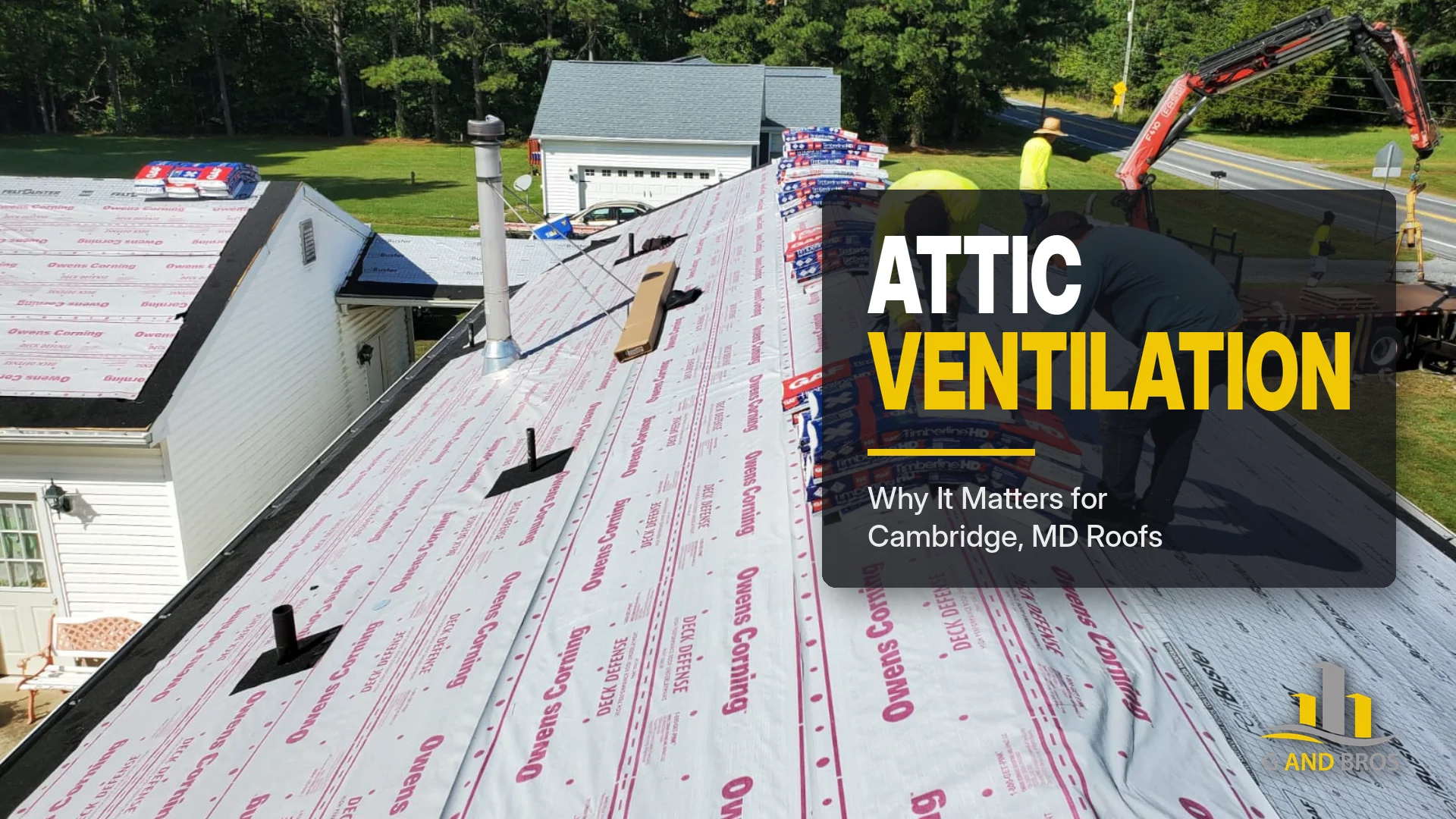
Why Attic Ventilation Matters for Your Roof: A Guide for Cambridge, MD Homeowners
Ask most homeowners what protects their roof and they will say the shingles. That is only half of it. The other half happens out of sight, in the attic. Poor attic ventilation is one of the most overlooked causes of early roof failure on the Eastern Shore, and homeowners in Cambridge, MD and across Dorchester County feel its effects every season.
How a balanced attic ventilation system works
Illustration. Intake at the eaves and exhaust at the ridge keep air moving through the attic.
What Roof Ventilation Actually Does
A roof system is more than the shingles you see from the street. It includes the decking, the underlayment, the insulation and the attic air space. When that air sits still, heat and moisture build up, and both damage the materials holding the roof together.
Ventilation works on a simple idea: cool outside air comes in through soffit vents at the eaves, warms and rises, and leaves through ridge or gable vents near the peak. That steady airflow keeps the attic close to outdoor temperature in winter and carries heat away in summer.
Why the Eastern Shore Climate Makes It Matter More
Delmarva summers are hot and humid. Without good ventilation, an attic can get far hotter than the air outside on a sunny August day. That heat bakes shingles from below and wears out the seal strips and granules that help them resist weather.
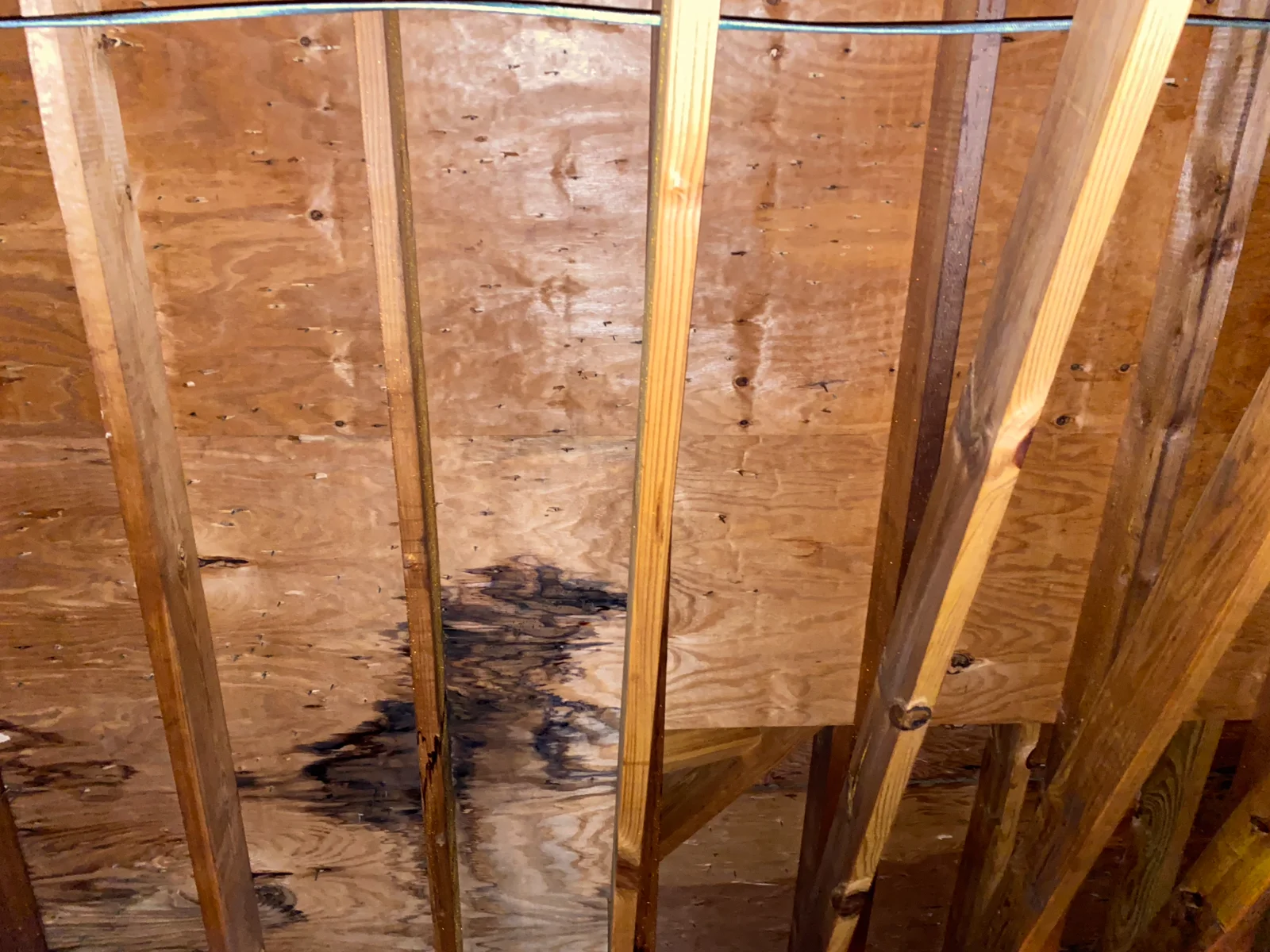
In winter it flips. Warm air from the house rises into a poorly vented attic, hits cold decking and condenses. Over months and years, that moisture rots the decking and can shorten the life of the shingles. For Cambridge homes near the Choptank River, the extra outdoor humidity makes it worse.
Signs Your Attic May Not Be Ventilated Properly
Several clues show up from inside the house or on the roof itself:
- Ice dams along the eaves in winter
- Shingles that curl, crack or lose granules well before their time
- Higher summer energy bills even with decent insulation
- Condensation or frost on attic rafters in cold weather
- A musty smell in upstairs rooms or the attic
If you are seeing any of these, a roof inspection is the right first step. We check the balance between intake and exhaust vents and whether insulation is blocking the soffit vents, a very common problem in older Eastern Shore homes.
The Right Balance: Intake and Exhaust
Ventilation only works when both ends of the system are open. A common building guideline calls for about 1 square foot of open vent area for every 150 square feet of attic floor, or half that with a balanced system and a vapor barrier. Many older homes fall short, especially when past re-roofing jobs covered up the original soffit vents.
The most effective setups pair continuous soffit vents with a ridge vent running the length of the peak. Air moves through on its own, with no moving parts to fail. Powered fans can help in some cases, but they are not a substitute for a balanced passive system.
How Ventilation Connects to Your Roof Warranty
Shingle manufacturers, including GAF, call for proper attic ventilation in their installation requirements. A roof installed over a poorly vented attic can run into warranty problems if the shingles fail early. If you are planning a roof replacement, fixing ventilation at the same time is one of the best-value upgrades you can make.
Frequently Asked Questions
How do I know if my attic has enough ventilation?
Go into the attic on a hot afternoon. If it feels much hotter than outside, or you cannot see a path for air from the soffits to the peak, you likely have a shortfall. A roofer can measure your vent area against the attic size.
Can I add ventilation without replacing my roof?
Often, yes. Soffit vents, gable vents or a ridge vent can usually be added without replacing the shingles. It depends on the roof’s condition and what is already there.
Do ridge vents let rain or snow inside?
A properly installed ridge vent is built to shed water while letting air through, with baffles that turn away wind-driven rain. Leaks from a correctly installed ridge vent are rare.
Is attic ventilation the same as insulation?
No. Insulation slows heat moving between the house and the attic. Ventilation manages the air inside the attic. You need both.
Can poor ventilation raise my repair costs?
Yes. It speeds up shingle wear and decking rot, which can turn a repair into a replacement sooner than expected.
Is your attic ventilation a question mark?
G and Bros is GAF Certified Plus, family-owned since 2012, with 25+ years of Maryland roofing experience from our founder. We work in Cambridge, Salisbury and across Wicomico, Worcester, Dorchester and Somerset counties, plus Sussex County, DE.
Get a Roof Quoteor call 410-677-4975

Recent Blog Posts