Gutter Guards on the Eastern Shore: Do They Actually Work for Maryland Homes?
If you own a home in Salisbury, Cambridge or anywhere on Maryland’s Eastern Shore, your gutters work harder than most. Spring pollen. Pine needles. Heavy oak and sweetgum leaf drop in the fall. Salt in the air near the coast. And summer thunderstorms that can dump a lot of rain in a short time. So when a gutter guard pitch promises you will never clean your gutters again, it is worth a closer look at what that means in this climate.
Why Eastern Shore Gutters Face a Different Challenge
The Eastern Shore puts a specific mix of stress on gutters:
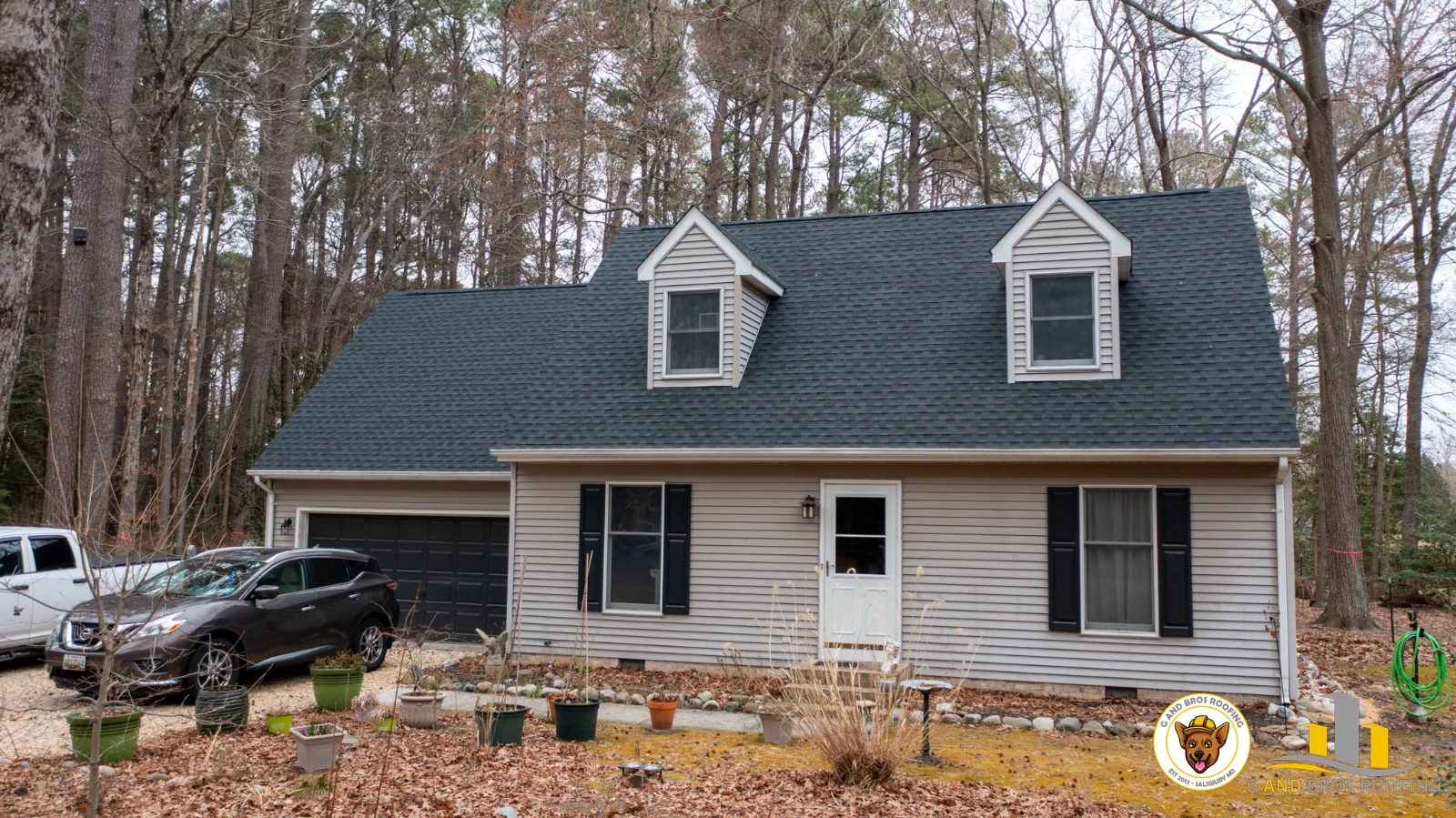
- Loblolly pines. These tall pines drop long, thin needles, heaviest in the fall. Needles slip through coarse screens and mat together inside the gutter channel, where they block water flow.
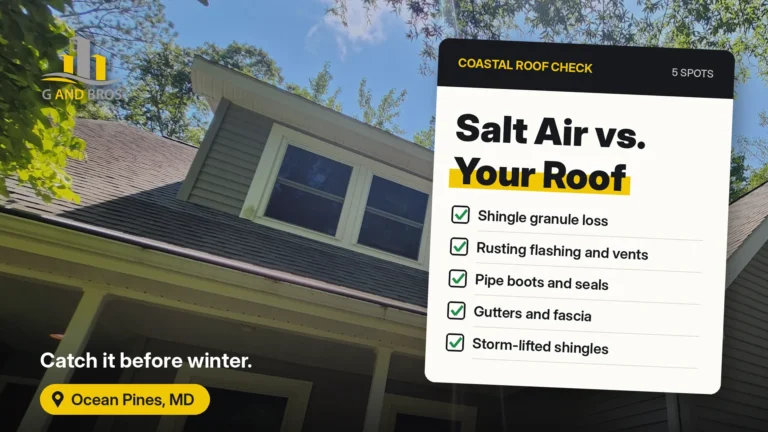
- Salt air. Homes closer to the coast, out toward Ocean City and Berlin, see airborne salt that is hard on metal gutters, fasteners and the hardware in many guard systems.
- Heavy summer storms. A strong thunderstorm can push more water than a clogged or poorly matched guard can take in. When water overshoots the gutter, it can soak the ground at your foundation, wash out landscaping and stain siding.
- Seeds and pods. Sweetgum balls, acorns and maple “helicopters” can lodge in the openings of some guards and hold debris in place.
The Main Types of Gutter Guards and How They Hold Up Here
Micro-Mesh Guards
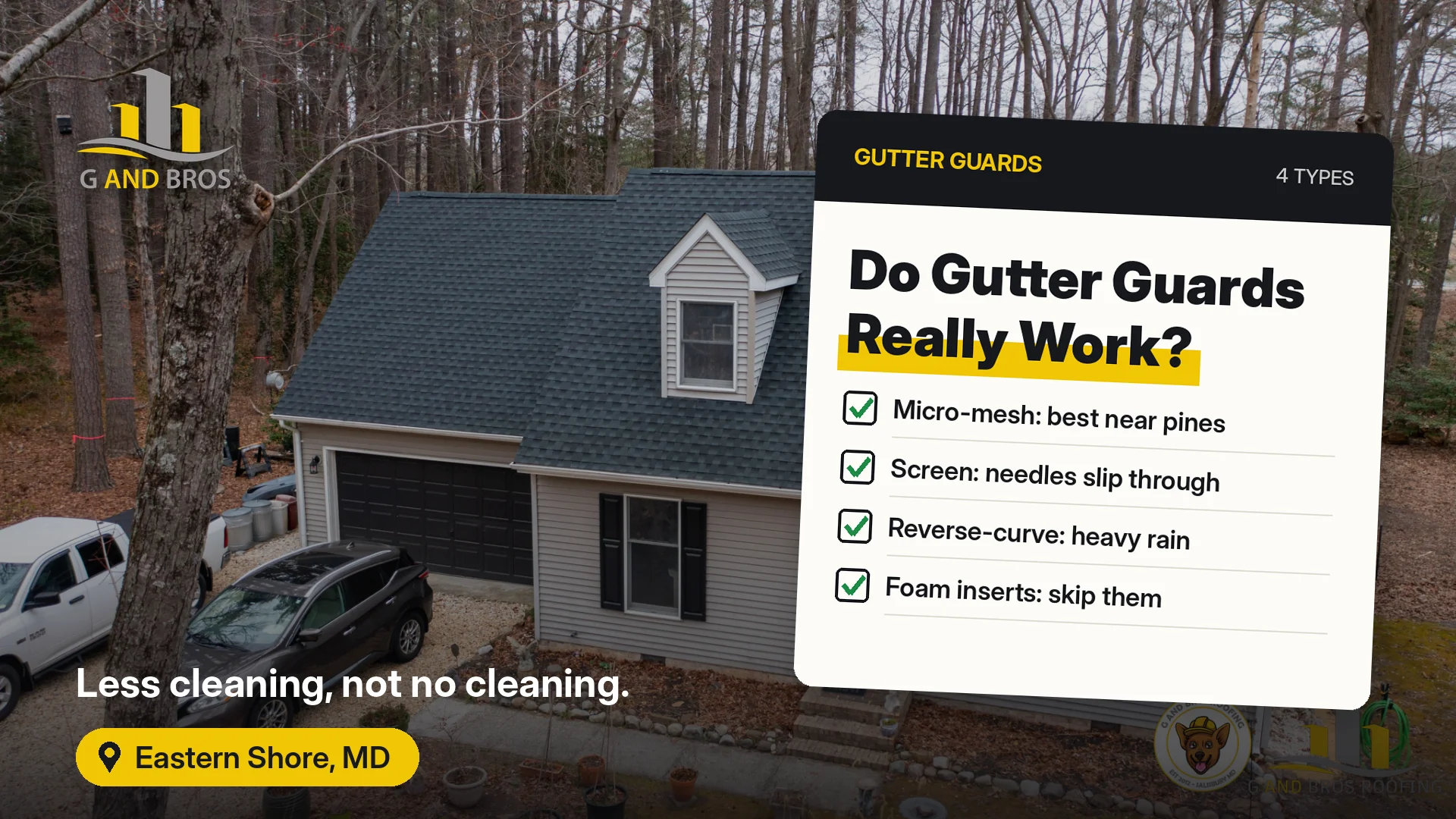
Micro-mesh is usually the best performer for Eastern Shore homes. A fine stainless steel or aluminum mesh filters debris while letting water pass through. Finer mesh stops most pine needles and small seeds that get past coarser guards. It costs more upfront than screen or foam, but it holds up better against pine debris, salt air and heavy rain. It is not maintenance-free. An occasional surface cleaning is still part of the deal.
Screen and Perforated Guards
These are among the most affordable options. They block large leaves well but let thin pine needles, shingle granules and small seeds through into the channel below. Near pines, screen guards can give a false sense of security. The channel clogs where you cannot see it, and you find out when water pours over the edge in a storm.
Reverse-Curve (Surface Tension) Guards
These route water around a curved lip into the gutter while debris is supposed to slide off the edge. They can work on simple rooflines with light tree cover, but in a heavy downpour water can sheet right past the lip. Small debris can also slip into the opening and build up inside where you cannot see it.
Foam and Brush Inserts
These are the cheapest option and, in our view, the least suited to coastal Maryland. Foam holds moisture, can grow algae and gives needles and seeds a place to sprout. Brushes catch needles and leaves and have to be pulled out to clean. In this climate they tend to create more work than they save.
What Gutter Guards Do NOT Do
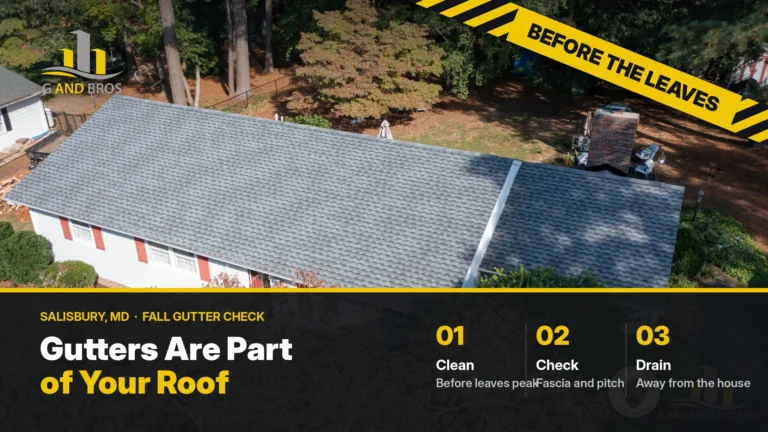
This is the part the marketing usually leaves out. Gutter guards reduce maintenance. They do not eliminate it. Even a good micro-mesh system will eventually collect fine debris, shingle granules, pollen and moss on its surface. If the guard surface itself gets blocked, water runs right over the gutter, which can be worse than having no guard at all.
Homes in Cambridge and other neighborhoods with mature hardwood and pine canopy are the most likely to run into this. A homeowner installs guards, assumes the job is done, and years later a matted layer of old debris on top of the guard has been sending water toward the foundation every time it rains.
The honest takeaway: if you are willing to check and clean the guards about once a year, quality gutter guards are a worthwhile upgrade. If you are hoping to never think about your gutters again, you will likely be disappointed.
Signs Your Gutters Need Attention Right Now
With guards or without, watch for these warning signs on any Eastern Shore home:
- Water pouring over the gutter edge instead of out the downspout when it rains
- Dark staining or mildew streaks on the siding right below the gutter line
- Sagging sections or gaps where the gutter pulls away from the fascia board
- Shingle granules piling up at the downspout outlets, a sign of shingle wear
- Plants or seedlings growing in the gutter or on top of the guards
Any of these is worth a look before the next storm. If your roofline is hard or unsafe to reach, call for a professional roof and gutter inspection.
Frequently Asked Questions About Gutter Guards in Maryland
Do gutter guards work if I have a lot of pine trees?
Fine micro-mesh guards do the best job around loblolly and other pines. Standard screen guards let thin needles through into the channel. Even with micro-mesh, plan on cleaning the top surface at least once a year under heavy pine cover.
How much do gutter guards cost to install in Salisbury, MD?
It depends on the product and the home. Screen guards sit at the low end, and micro-mesh systems cost more because of the material and the installation. The length of your gutters, the height of the roofline and how many corners and downspouts you have all affect the price. Call 410-677-4975 for an estimate for your home.
Can gutter guards handle the heavy summer rain on the Eastern Shore?
Not all of them. Reverse-curve guards in particular can be overwhelmed in a hard downpour. The right guard depends on your roof pitch, gutter size and how much water each section carries, and sometimes the real fix is a bigger gutter or an extra downspout.
Will gutter guards help prevent ice dams in winter?
Only a little. A clear gutter lets meltwater drain instead of backing up, but ice dams are mostly caused by heat escaping into the attic and melting snow on the roof. Attic insulation and ventilation matter much more. If you have had ice dam damage before, a roof repair and assessment is the place to start.
How often should gutters be cleaned if I have guards installed?
Plan on at least one inspection and surface cleaning a year, ideally in late fall after most of the leaves and needles have dropped. Homes under heavy pine cover or close to the coast may benefit from a second check in spring to clear pollen and buildup.
Talk to G and Bros About Your Gutters
Whether you are thinking about adding gutter guards, dealing with a sagging or leaking section, or just want someone to check things before the next storm, we will give you straight answers and a fair estimate with no pressure.
G and Bros is GAF Certified Plus, family-owned since 2012, with 25+ years of Maryland roofing experience from our founder. We are based at 109 Clark Street in Salisbury and serve homeowners across the Eastern Shore and Delmarva. Call 410-677-4975 or contact us online.

Recent Blog Posts