
Not All Roof Stains Are From Your Roof: How to Tell What You’re Actually Looking At
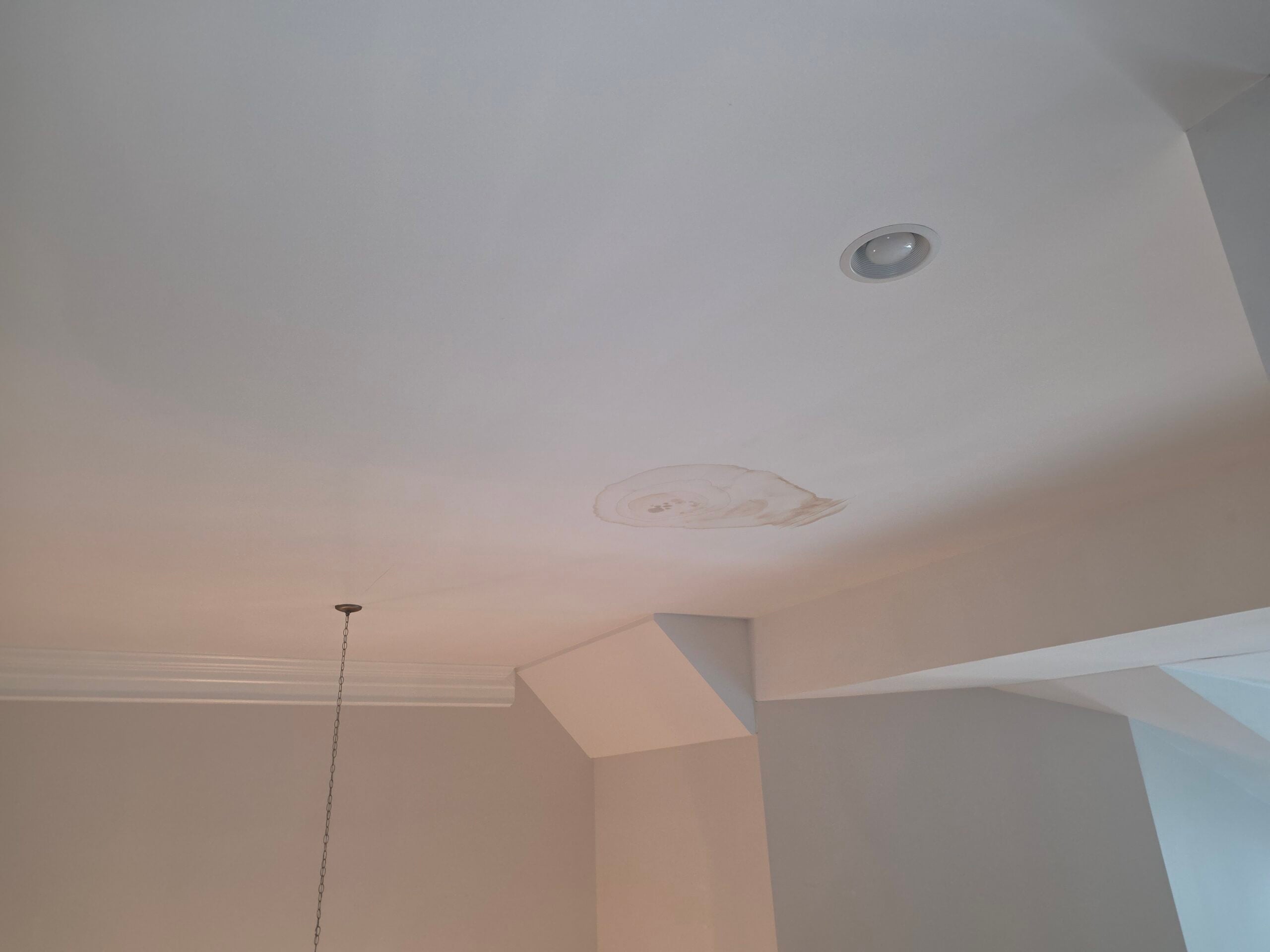
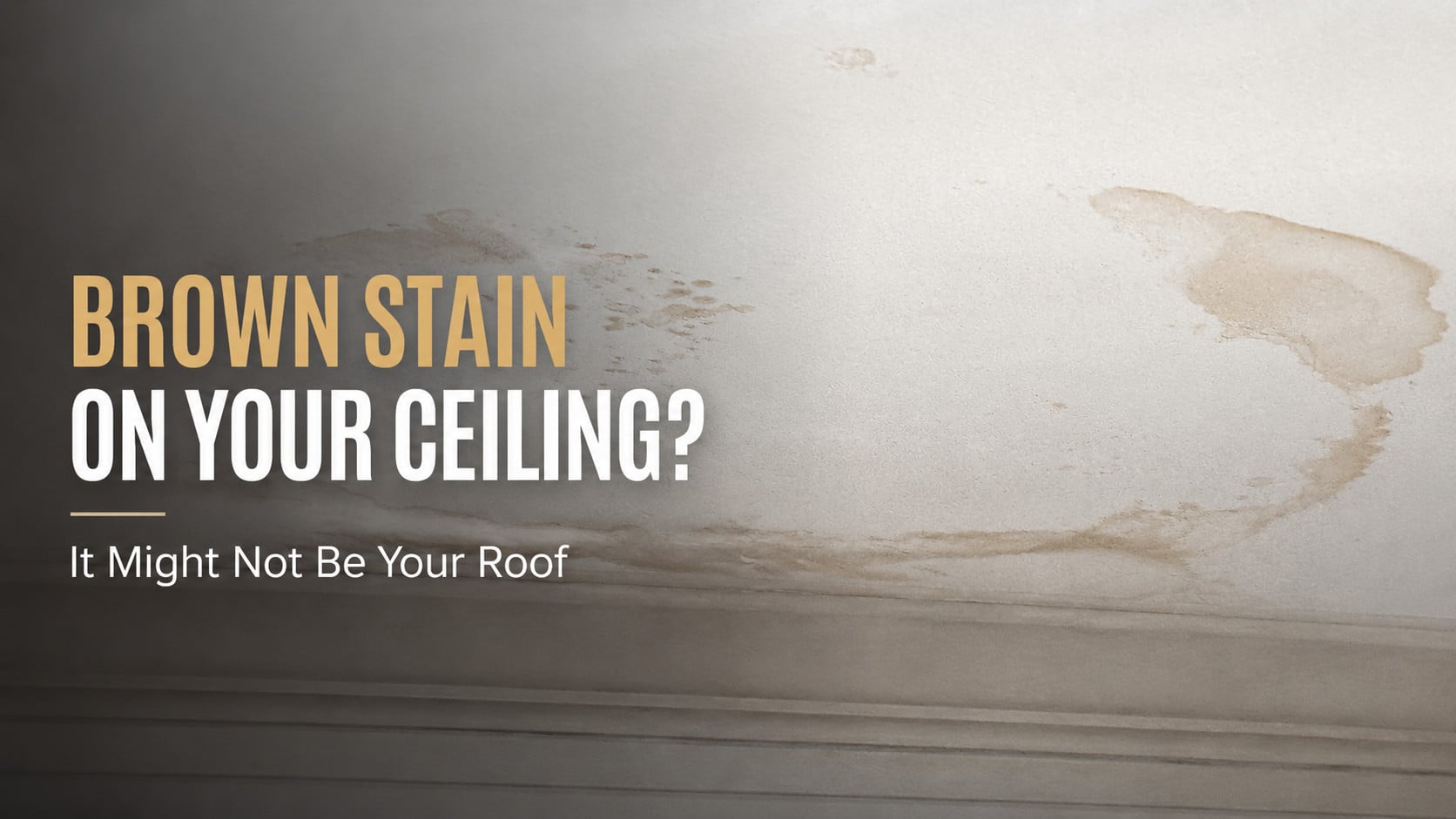
You walk into your living room and spot a brown stain on the ceiling. Your stomach drops. “My roof is leaking.” So you call a roofer, get a repair, and a week later the stain is back. What gives?
Here is something most homeowners do not know: roof stains on your ceiling do not always come from your roof. Sometimes they do, but a surprising number of “roof leaks” we get called out to investigate turn out to be something else entirely. Knowing the difference can save you from paying for a repair that does not fix the problem.
What Roof Leaks Actually Look Like
Real roof leaks have a few telltale signatures:
- They appear during or right after rain (within hours, not days).
- They typically grow over time with subsequent rain events.
- They are often offset from where the actual leak entered the roof because water travels along rafters and decking before showing up at a ceiling drywall seam or fixture.
- They often correlate with attic discoloration visible from inside the attic during the day.
If your ceiling stain matches all four of those descriptions, your roof is almost certainly the source.
5 Common Things That Mimic a Roof Leak
1. Plumbing Leaks
Bathrooms, kitchens, and laundry rooms above a stained ceiling are the most common false-positive cause. A slow drip from a supply line, drain trap, toilet wax ring, or shower pan can stain a ceiling exactly like a roof leak. Tell-tale sign: the stain appears even when it has not rained recently.
2. HVAC Condensation
AC condensate lines that clog or drip can saturate insulation and stain ceilings in a pattern that looks identical to a slow roof leak. Especially common in humid Delmarva summers when AC runs constantly. Check around any ceiling vents or near HVAC closets.
3. Bathroom Vent Fans Without Proper Termination
An exhaust fan that vents into the attic instead of through the roof dumps warm humid air into the attic, where it condenses on the underside of the cold roof deck in winter. That condensation drips back down and stains the ceiling around the fan. It looks exactly like a roof leak. The fix is a proper exterior termination, not roof work.
4. Ice Damming
When snow melts and refreezes at the eaves, ice can back up under shingles and force water inside. That stain shows up days after a snowstorm, not during rain. The solution involves attic insulation and ventilation, not necessarily roof repair.
5. Window or Siding Leaks Traveling Inside the Wall
A failed window seal or a punctured siding board can route water along framing and show up at a ceiling stain that looks like it came from above. Check the wall directly below the stain for moisture or staining as well.
Six Causes of a Ceiling Stain, Side by Side
| Likely cause | Where the stain sits | The giveaway | The actual fix |
|---|---|---|---|
| Actual roof leak | Anywhere, often offset from the entry point | Appears during or right after rain, within hours. Grows with each rain event. | Roof repair |
| Plumbing leak | Under a bathroom, kitchen, or laundry room | Stain appears even when it has not rained recently. | Plumber |
| HVAC condensation | Around ceiling vents or near an HVAC closet | Common in humid Delmarva summers when the AC runs constantly. | HVAC technician |
| Bathroom vent fan | Around the fan itself | Fan vents into the attic instead of outside. Condensation drips back down, mostly in winter. | Proper exterior termination, not roof work |
| Ice damming | At the eaves | Stain shows up days after a snowstorm, not during rain. | Attic insulation and ventilation |
| Window or siding leak | Ceiling stain fed along wall framing | Check the wall directly below the stain for moisture or staining too. | Window or siding repair |
Nothing is highlighted here on purpose. Five of these six are not roof problems, so the point is to work the timing and the room above before assuming.
How to Diagnose Before You Call a Roofer
Three quick tests you can do yourself:
- Track timing. Does the stain only grow during or right after rain? Then it is probably the roof. Does it grow during dry weather? It is something else.
- Check what is directly above. Bathroom? Plumbing or vent fan suspect first. Kitchen? Plumbing. Open attic above the stain? Roof or attic ventilation. HVAC closet? Condensation line.
- Go into the attic on a sunny day. Look for daylight coming through the deck, water staining on rafters, or moisture in the insulation directly above the ceiling stain. Roof leaks usually leave traces above the stain in the attic. Plumbing or HVAC leaks do not.
Frequently Asked Questions
Why does my ceiling stain only appear during dry weather?
Dry-weather stains are almost never roof leaks. The most likely causes are slow plumbing leaks, HVAC condensation, or moisture from a bathroom vent fan venting into the attic. Track when the stain grows and what is in the room above.
What does a real roof leak look like in the attic?
Dark water-staining marks on rafters or the underside of the plywood deck, often in a streaky downward pattern. Wet or matted insulation directly under the stain. Sometimes daylight visible through a small hole or nail penetration.
Should I get the ceiling repainted before calling a roofer?
No. Wait until the leak source is confirmed and fixed. Painting over an active leak just hides the symptom and lets the underlying damage continue.
When to Call G and Bros
If your diagnosis points to the roof or you are still not sure, that is what we are here for. Our inspections find the real source, not just the obvious one. Sometimes that means we tell you it is not actually your roof, and you can call a plumber or HVAC technician instead. We would rather you spend money on the right fix than on a roof repair that does not solve the problem.
Call G and Bros at 410-677-4975 or visit gandbrosroofing.com/contact for a free roof inspection. We serve homeowners across Salisbury, Ocean City, and the entire Eastern Shore.

Recent Blog Posts