How Condensation Can Mimic Commercial Roof Leaks (And Cost You Money on the Wrong Fix)
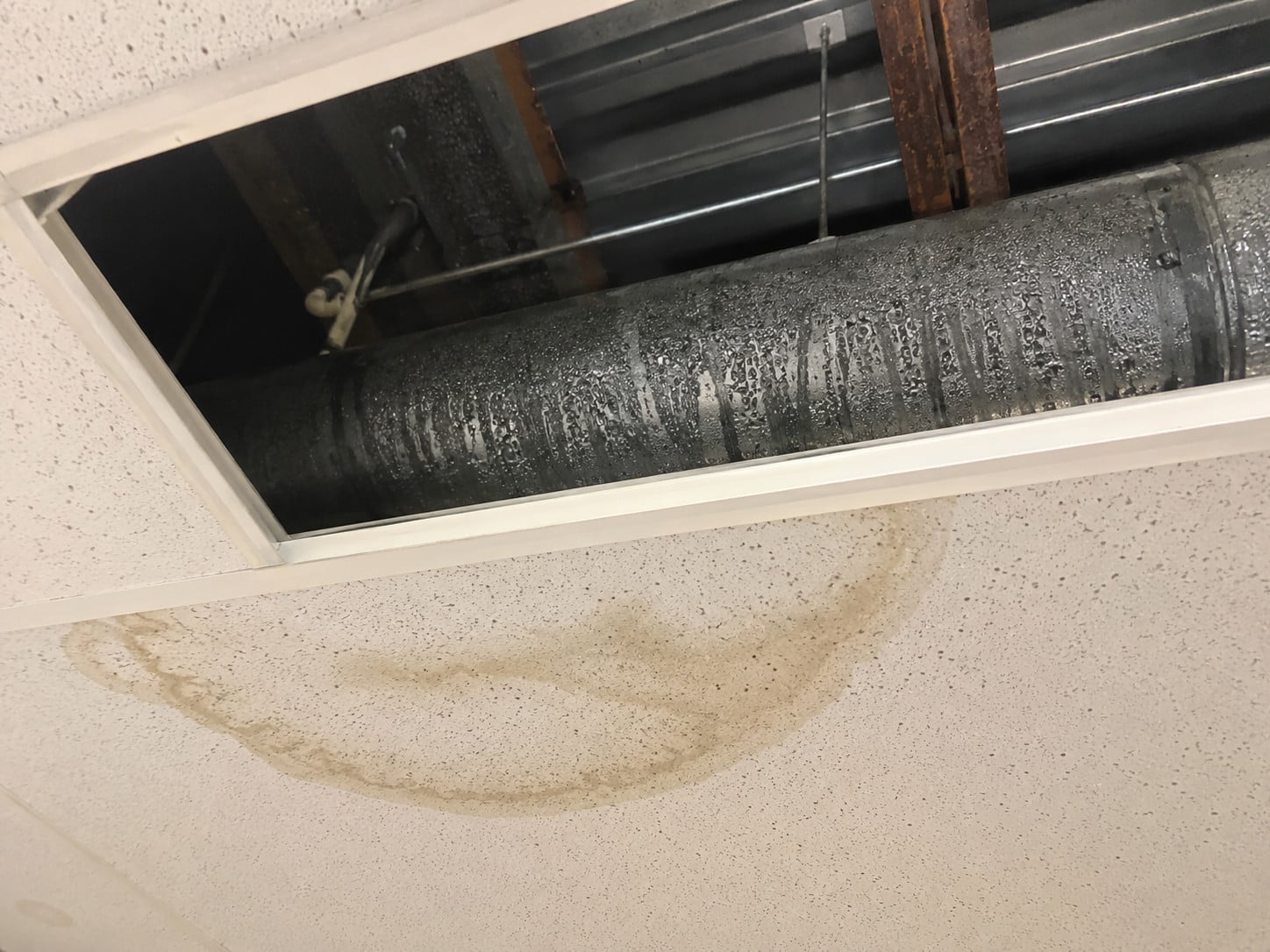
Here is a real scenario we run into several times a year on Delmarva commercial buildings. A property manager calls in a panic about a roof leak. We get up on the roof, find no obvious source. We get inside the building. We find the actual cause: condensation. The “leak” was water dripping off a cold surface inside the building, not water coming through the roof from outside.
Telling the difference matters because the fix is completely different. A roof repair will not solve a condensation problem, and a condensation fix will not repair a real roof leak.
Why Commercial Buildings Get Confused About This
Commercial buildings (warehouses, retail, office buildings) often have:
- Conditioned interior air at 65 to 72°F
- HVAC ductwork running through unconditioned space (above ceiling tiles, near the roof deck)
- Cold rooftop surfaces in winter
- Insulated metal deck or concrete deck systems
When warm humid interior air contacts cold surfaces, water condenses. On Delmarva, where Chesapeake Bay watershed humidity stays high year-round, that condensation can be significant. Sometimes producing more water than an actual roof leak.
4 Telltale Signs You Are Looking at Condensation, Not a Leak
1. The Drip Happens When It Is NOT Raining
This is the clearest tell. Roof leaks correlate with rain. Condensation appears during humid weather, after HVAC cycles, or during temperature swings. If your “leak” gets worse on a sunny humid afternoon, it is condensation.
2. The Stain Pattern Is Concentrated Around HVAC or Ductwork
Condensation forms on cold metal surfaces first. If the ceiling staining clusters around HVAC ducts, refrigerant lines, or RTU (rooftop unit) penetrations, condensation is the prime suspect.
3. The Drip Pattern Changes with HVAC Cycles
Have someone watch the suspected leak area while the AC cycles on and off. If the drip rate changes with AC operation, you have condensation forming on cold surfaces above the ceiling.
4. The Roof Above Shows No Damage
A professional roof inspection finds no membrane damage, no failed flashing, no entry points. Yet interior water keeps appearing. This combination strongly suggests condensation.
Condensation or Roof Leak: A Side-by-Side Check
| What to check | Condensation | An actual roof leak |
|---|---|---|
| Timing | Shows up in humid weather, after HVAC cycles, or during temperature swings. Can worsen on a sunny humid afternoon. | Tracks rainfall. |
| Where the staining sits | Clusters around HVAC ducts, refrigerant lines, and RTU penetrations. | Traces back to a specific entry point on the roof. |
| Response to the AC | Drip rate changes as the AC cycles on and off. | Unrelated to AC operation. |
| What a roof inspection finds | No membrane damage, no failed flashing, no entry points. | Membrane damage, failed flashing, or a clear entry point. |
| What actually fixes it | HVAC and insulation work: insulate ductwork, improve plenum ventilation, repair vapor barriers, dehumidify, re-route condensate drainage. | Roof repair. |
The gold column is the one most people never consider, which is why the wrong fix gets bought. Run all five checks before spending anything.
How to Fix Condensation in a Commercial Building
Condensation fixes are HVAC and insulation work, not roofing work:
- Insulate cold ductwork so warm interior air cannot condense on it.
- Improve attic or plenum ventilation so humid air does not stagnate near cold surfaces.
- Address vapor barriers in the building envelope where they are missing or damaged.
- Manage humidity with dehumidification if interior loads are high.
- Re-route condensate drainage if HVAC pans are overflowing.
Notice none of these involve touching the roof.
When to Call a Roofer Anyway
Even when condensation is the prime suspect, a roof inspection is a useful first step because it definitively rules out a roof source. Spending $0 on a free inspection saves you from spending thousands on HVAC fixes that do not solve the problem because the real issue was the roof.
Frequently Asked Questions
Why does this happen more in winter?
The temperature differential between interior conditioned air and the cold roof deck is largest in winter. Bigger differential equals more condensation. Summer condensation usually comes from AC ducts, not the roof deck.
Can a roof problem and condensation happen at the same time?
Yes, sometimes. A small roof leak adds moisture to the system that then condenses elsewhere. A thorough inspection identifies both sources.
How do I know if I need an HVAC tech or a roofer?
Start with a roof inspection (it is free at G and Bros). If we do not find a roof source, we will point you toward HVAC or insulation specialists who handle the actual fix.
Get a Diagnostic Inspection from G and Bros
If your commercial building has mystery water that does not fit the rain timing, get the roof ruled in or out before spending on the wrong fix. G and Bros provides free commercial roof inspections across Salisbury, Ocean City, and the entire Eastern Shore. Call 410-677-4975 or visit gandbrosroofing.com/contact. Read our full commercial roofing guide.

Recent Blog Posts