Roof Insurance Claims in Maryland: The Timeline and the Documents to Have Ready
When a storm damages a roof in Salisbury, Cambridge or Princess Anne, most homeowners call their insurance company first and start looking for paperwork second. Doing it the other way around makes the whole claim easier.
We already covered what homeowners insurance usually covers for roof damage and how to file a storm damage claim. This post is the practical companion: what happens when, and the documents to have ready at each stage so the claim does not stall.
The Claim Timeline at a Glance
| Stage | When | What you do | What to keep |
|---|---|---|---|
| Storm day | Day 0 | Stay safe, take wide and close photos once it is safe | Photos with dates, storm date and time |
| Stop the leak | First 24 to 48 hours | Tarp or emergency repair to prevent more damage | Receipts, before and after photos |
| Report the claim | As soon as you can | Call or file online with your insurer | Claim number, adjuster name, notes from each call |
| Contractor inspection | First week | Have a licensed roofer document the damage | Inspection report, photos, measurements |
| Adjuster visit | Usually 1 to 3 weeks | Meet the adjuster, point out every damaged area | Adjuster name, date, anything they hand you |
| Estimate and payment | After the adjuster report | Compare the insurer estimate to your contractor estimate | Insurer estimate, contractor estimate, first check |
| Repair and close out | After work is done | Send final invoice if your policy holds back depreciation | Final invoice, completion photos, second check |
Typical order of a residential roof claim. Your insurer and policy set the exact deadlines, so check your policy and ask your claim rep.
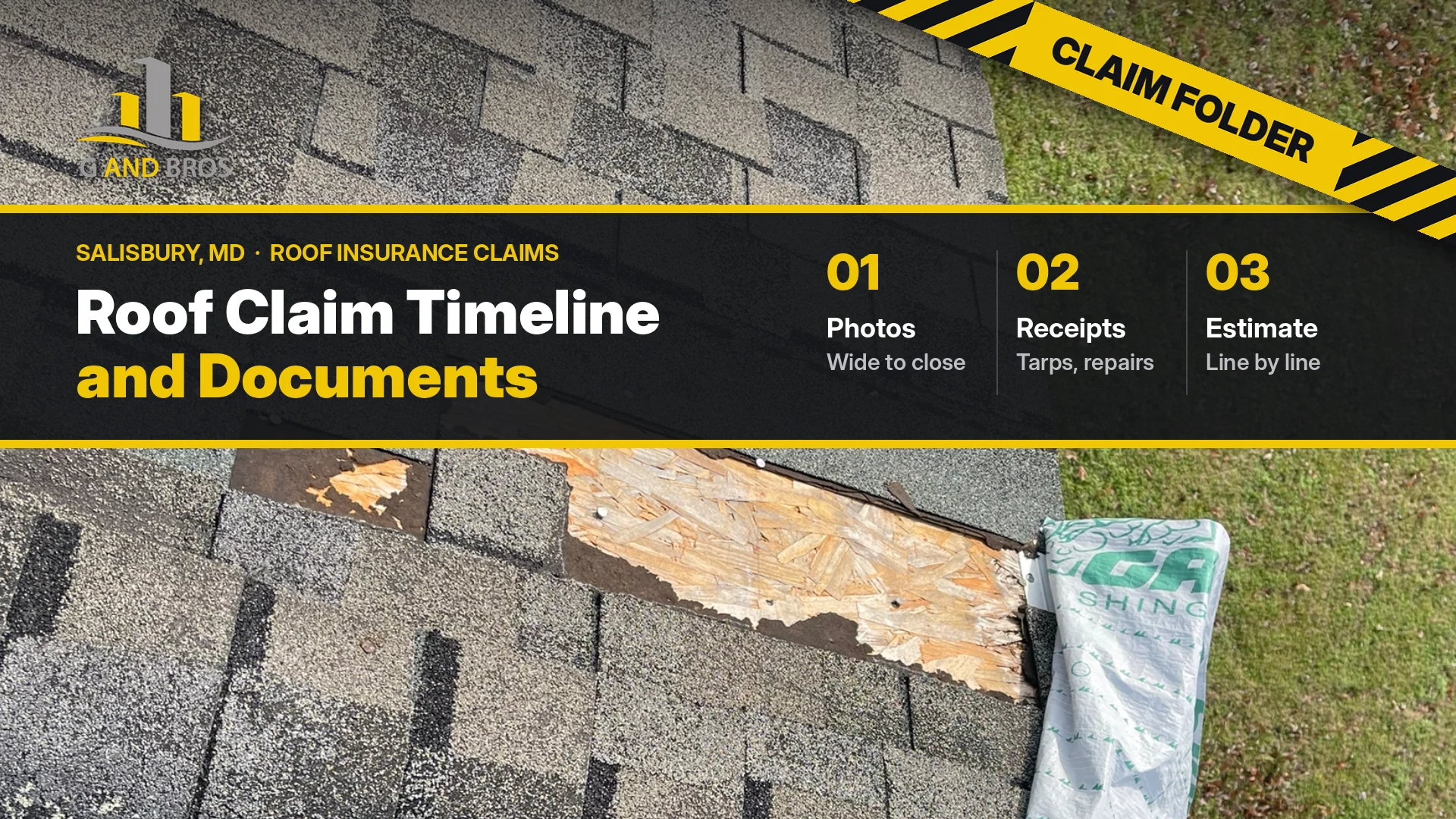
Before You Call: Start a Claim Folder
Make one folder, paper or on your phone, and put everything in it from day one. Adjusters, contractors and mortgage companies will all ask for the same handful of items, and having them in one place saves days of back and forth.
Your roof claim folder
Policy pages. The declarations page, your deductible (some policies use a separate wind or hurricane deductible) and whether you have replacement cost or actual cash value coverage.
Storm details. The date and time of the storm and a screenshot of a local weather report or alert.
Photos and video. Wide shots of every roof slope you can safely see, plus close-ups of damage, gutters, siding and any ceiling stains inside.
Measurements and notes. Rough sizes of damaged or tarped areas and a running log of every call: date, who you spoke with and what they said.
Receipts. Tarps, emergency repairs, hotel stays if the home was unlivable. Keep every one.
Roof history. Install year, past repairs, past inspection reports and any warranty paperwork.
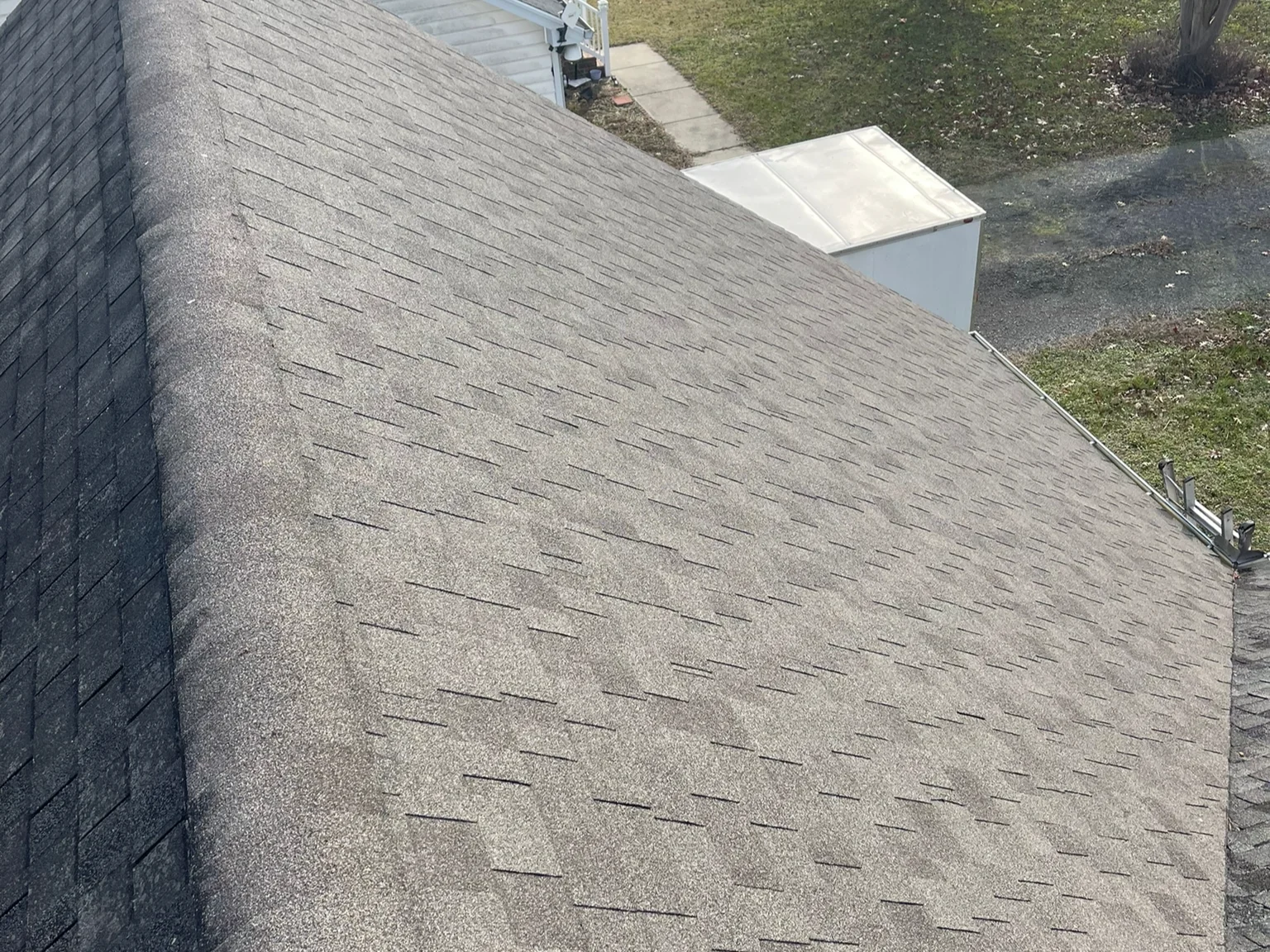
Start with wide shots like this one from a roof in Pocomoke City, MD, so the close-ups have context.
Photos That Actually Help a Claim
A pile of blurry close-ups does not tell the adjuster much. Shoot from wide to close: the whole house from the street, each slope, then each damaged spot. Put something in the frame for scale when you can, and photograph the inside of the home too, including attic stains and wet insulation.
Do not climb onto a wet or damaged roof to get photos. Ground shots and window shots are enough for the first report, and a roofer can document the rest safely.
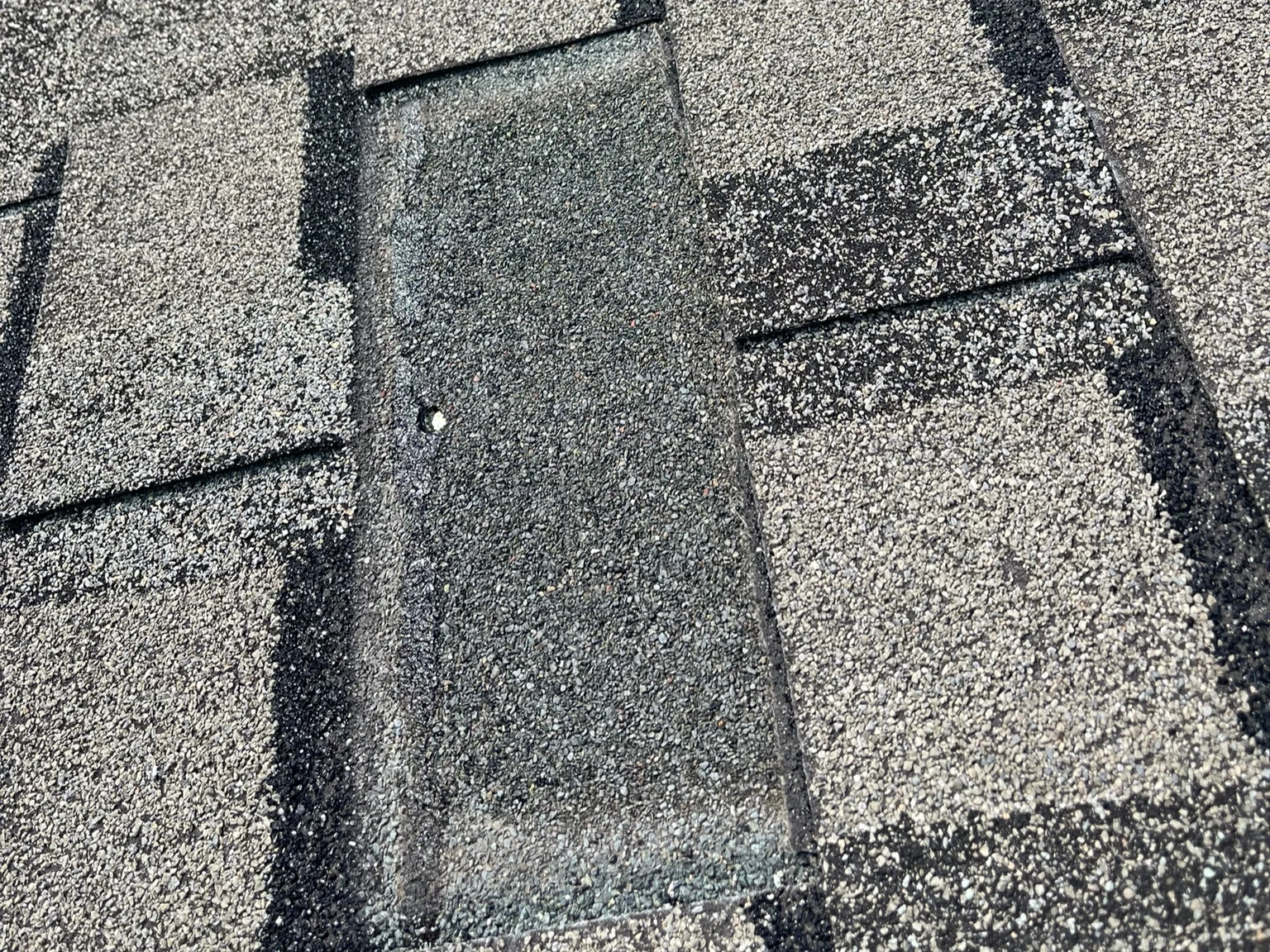
A missing shingle tab documented on a roof in Pocomoke City, MD. Close-ups like this go next to the wide shot of the same slope.

Measurements of damaged areas written down on site. Sizes help the estimate match what is actually on the roof.
The Adjuster Visit
The adjuster works for the insurance company and decides what the policy pays for. Be there for the visit, walk the property with them and point out every area you photographed, including gutters, vents, siding and interior stains. Ask when you should expect the written estimate.
What G and Bros does: we inspect the roof, photograph and measure the damage and give you an itemized estimate you can share with your insurer. We document the damage. We do not negotiate your claim; that conversation stays between you and your insurance company.
When the Estimate Arrives
Read the insurer estimate line by line and compare it to your contractor estimate. Look for missing items such as drip edge, underlayment, ridge cap, vents or pipe boots, and check that the roof size is close. If something is missing, send your photos and the contractor estimate to your claim rep and ask them to review it.
If your policy pays replacement cost, the first check often holds back depreciation. You usually get the rest after the work is done and you send the final invoice, so keep that invoice and your completion photos in the folder too.
Mistakes That Slow Claims Down
- Waiting weeks to report damage you noticed right away
- Throwing out damaged materials or debris before the adjuster sees them
- No photos of the roof before emergency repairs
- Losing tarp and repair receipts
- Signing a contract with a door-to-door crew before your claim is reviewed
- Not checking that your roofer has an active MHIC license
Frequently Asked Questions
How long does a roof insurance claim take in Maryland?
Many straightforward claims wrap up within a few weeks to a couple of months. Bigger storms, disputes or missing paperwork can stretch that. Maryland has rules on how quickly insurers must respond, and the Maryland Insurance Administration can answer questions about them.
What documents does my insurance company need for a roof claim?
Usually your policy number, the date of loss, photos of the damage, receipts for emergency repairs and a contractor estimate. Your insurer may ask for more, so ask for their list when you file.
Should I get a roofer inspection before the adjuster comes?
It helps. A licensed roofer can document damage you cannot see from the ground and give you photos, measurements and an itemized estimate to compare with the insurer estimate.
Can I pick my own roofer for an insurance job?
Yes. You choose the contractor. Make sure they hold an active MHIC license and carry liability and workers comp insurance.
Should I file a claim for small roof damage?
It depends on your deductible and your policy. If the repair costs less than or close to your deductible, a claim may not pay much. Get a repair estimate first, then talk to your agent before you decide.
What if my roof claim is denied?
Ask for the reason in writing, gather your photos and inspection report and ask your insurer about their appeal process. You can also contact the Maryland Insurance Administration with questions.
Need storm damage documented?
G and Bros is GAF Certified Plus, family-owned since 2012, with 25+ years of Maryland roofing experience from our founder. We inspect, photograph and measure roof damage for homeowners in Salisbury, Cambridge, Princess Anne and across the Eastern Shore and Sussex County, DE.
Get a Roof Quoteor call 410-677-4975

Recent Blog Posts