

How to Spot a Roof Leak Before Water Hits Your Ceiling
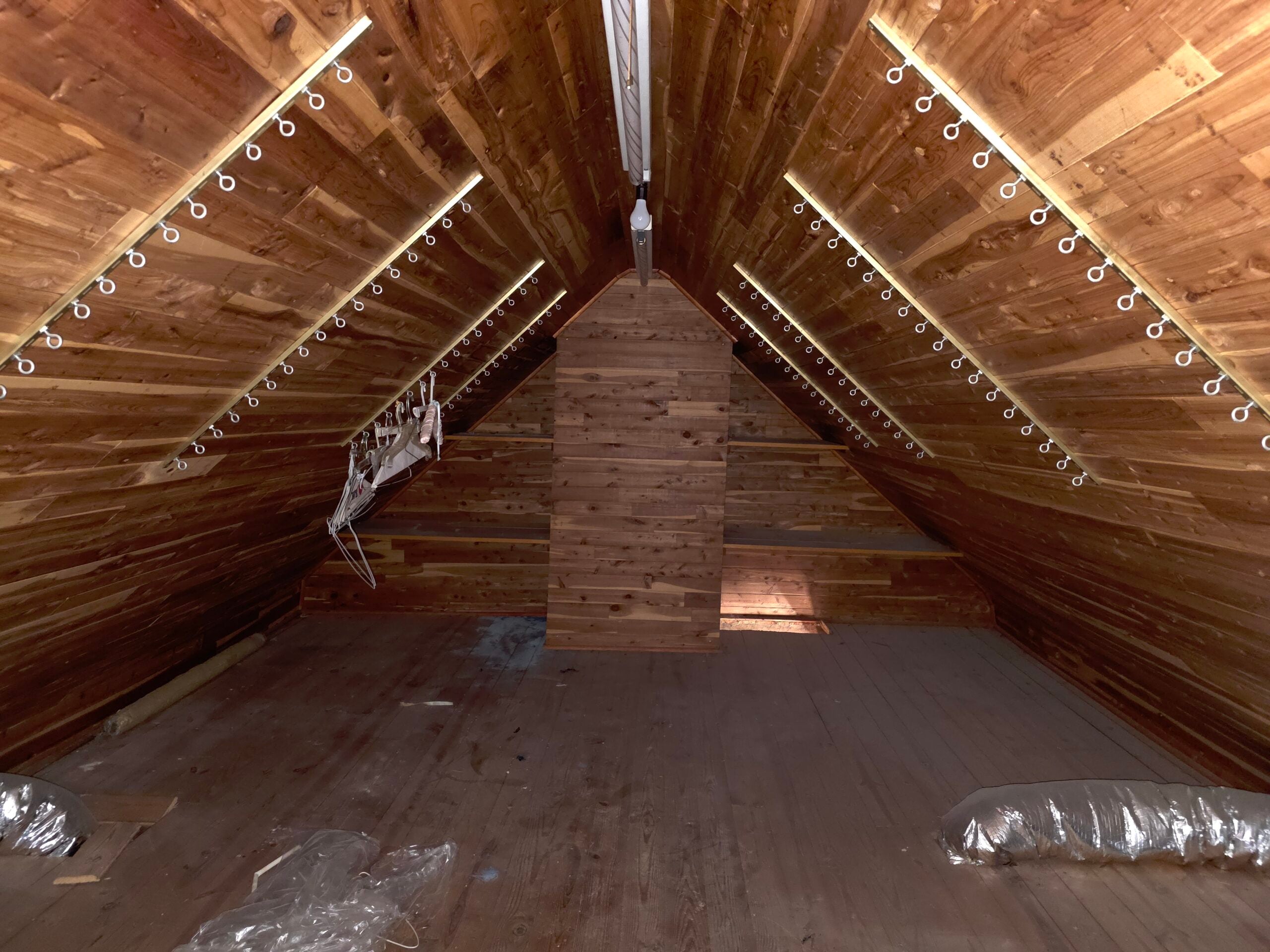
By the time water reaches your ceiling, it has usually been working its way through your roof, attic, and insulation for weeks. Maybe months. The ceiling stain is the very last step in a long process, and by then the damage to your decking, framing, and insulation is already done.
The good news: roof leaks rarely come out of nowhere. They leave a trail of warning signs that, if you know what to look for, you can catch months before they become a problem.
5 Places to Check Outside
Walk around your home a few times a year and look for these from the ground:
- Missing or lifted shingles. Especially after wind events. A single missing shingle exposes the underlayment and the deck below.
- Granules in the gutters. If your gutter cleaning shows a heavy load of dark sand-like granules, your shingles are aging fast and approaching end-of-life.
- Sagging gutters or pulled-away fascia. Both signal that water is pooling somewhere it should not, often because the roof edge is not draining correctly.
- Black streaks on the shingles. Mostly algae (cosmetic on its own), but it tells you moisture is staying on the roof longer than it should.
- Visible flashing damage. Lifted step flashing at chimneys, cracked pipe boots, separated drip edge.
4 Places to Check Inside (Especially in the Attic)
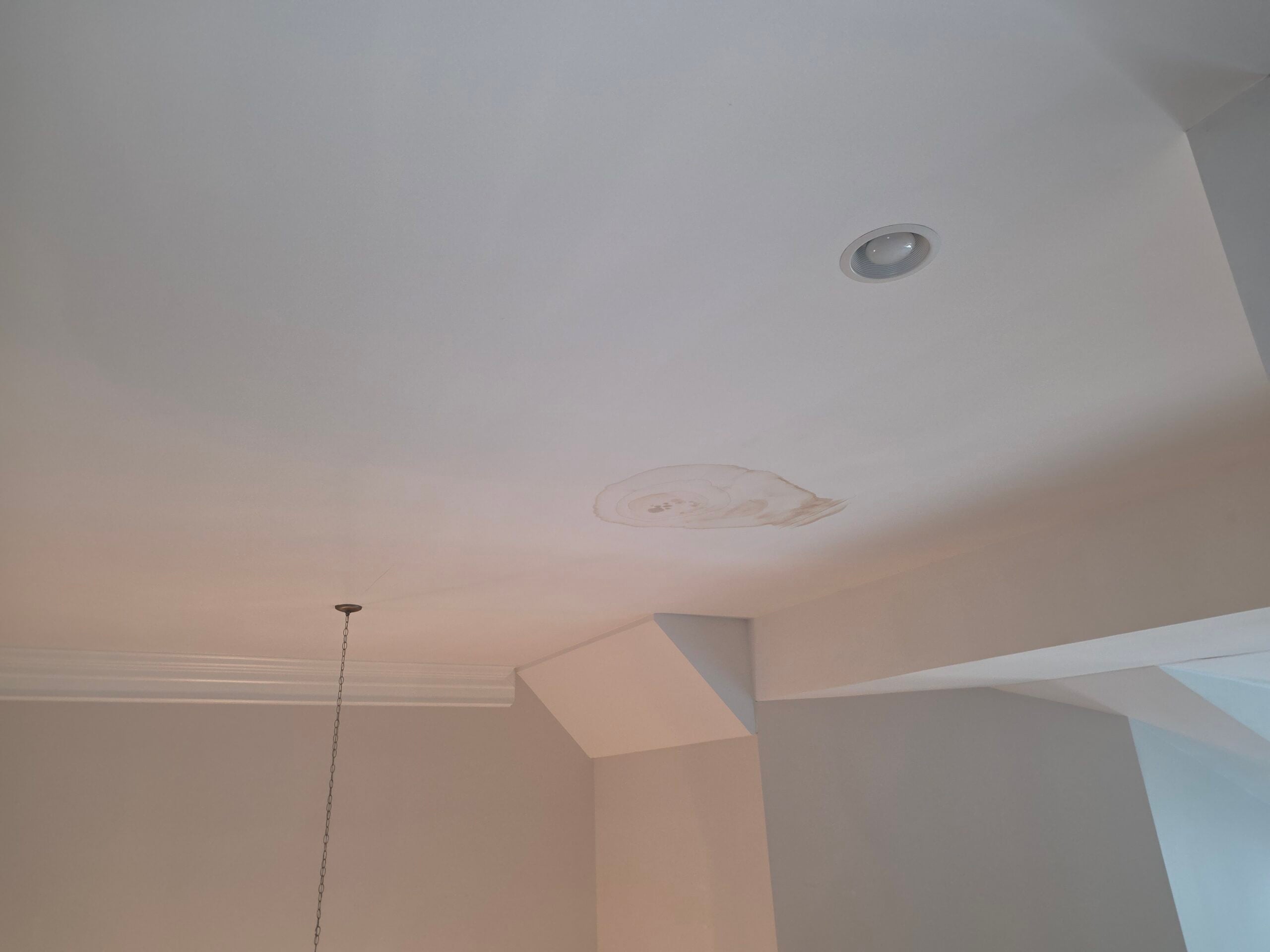
This is where most roof problems show themselves before they reach your ceiling. Go into your attic on a clear sunny day with a flashlight:
- Daylight visible through the deck. Any pinpoints of sunlight where you should see solid wood means a penetration. Mark it and call us.
- Dark water staining on the rafters or deck. Brown or black streaks running down from a high point. This is water tracking after it gets in through the roof. Trace the trail upward to find the entry point.
- Wet, matted, or moldy insulation. Run your hand over the insulation directly under suspect spots. If it is damp or visibly compressed, water has been arriving there long enough to settle.
- Mildew or rust around nails poking through the deck. Roofing nails should appear clean and dry inside the attic. Rust rings or condensation around them tells you moisture is getting in.
The Smell Test
Your nose catches roof problems before your eyes do. A musty or earthy smell in an upstairs bedroom, closet, or attic that was not there last year is often the first sign of moisture in the framing or insulation. Trust the smell. We have caught dozens of small roof issues for homeowners who said “I just noticed it smells different up here.”
When You See One of These, What Should You Do?
None of these signs mean you are about to have a catastrophic leak. They mean something needs attention before it becomes one. Here is the right sequence:
- Document with photos. Camera shots of the suspicious spot, what is above it, and the broader area. This helps you and a roofer figure out what is going on.
- Note the timing. When did you first notice it? Has it gotten worse? Does it correlate with recent rain?
- Schedule a professional inspection. Most roofers (including us) offer free inspections. We bring the trained eye and the ladder so you do not have to climb up there.
- Do not patch and hope. A quick caulk job on a flashing detail can mask a problem long enough that the underlying damage gets much worse. Get the real diagnosis first.
Frequently Asked Questions
How often should I check my attic for leak signs?
Twice a year minimum. Once in spring after winter storms, once in fall before storm season. After any major nor’easter or tropical event, add an extra check.
What if I see a small water stain but it never seems to get bigger?
It still needs investigation. Sometimes a small leak self-seals temporarily (debris blocks the path, dust fills the gap) and resumes weeks later when conditions change. Treat any stain as a real signal, even if it seems quiet.
Can a roof leak come from somewhere other than a hole in the shingles?
Yes, often. Flashing failures, cracked pipe boots, lifted ridge caps, and ventilation issues cause many leaks while the shingle field itself looks fine. That is why a real inspection covers all of it, not just the visible shingles.
Catch It Early With a Free Inspection
If you spotted something concerning on this list (or you just want peace of mind before storm season), G and Bros offers free roof inspections across Salisbury, Ocean City, and the entire Eastern Shore. We walk the roof, check the attic, document everything with photos, and tell you what is real, what can wait, and what needs immediate attention. Call us at 410-677-4975 or visit gandbrosroofing.com/contact to schedule.

Recent Blog Posts