
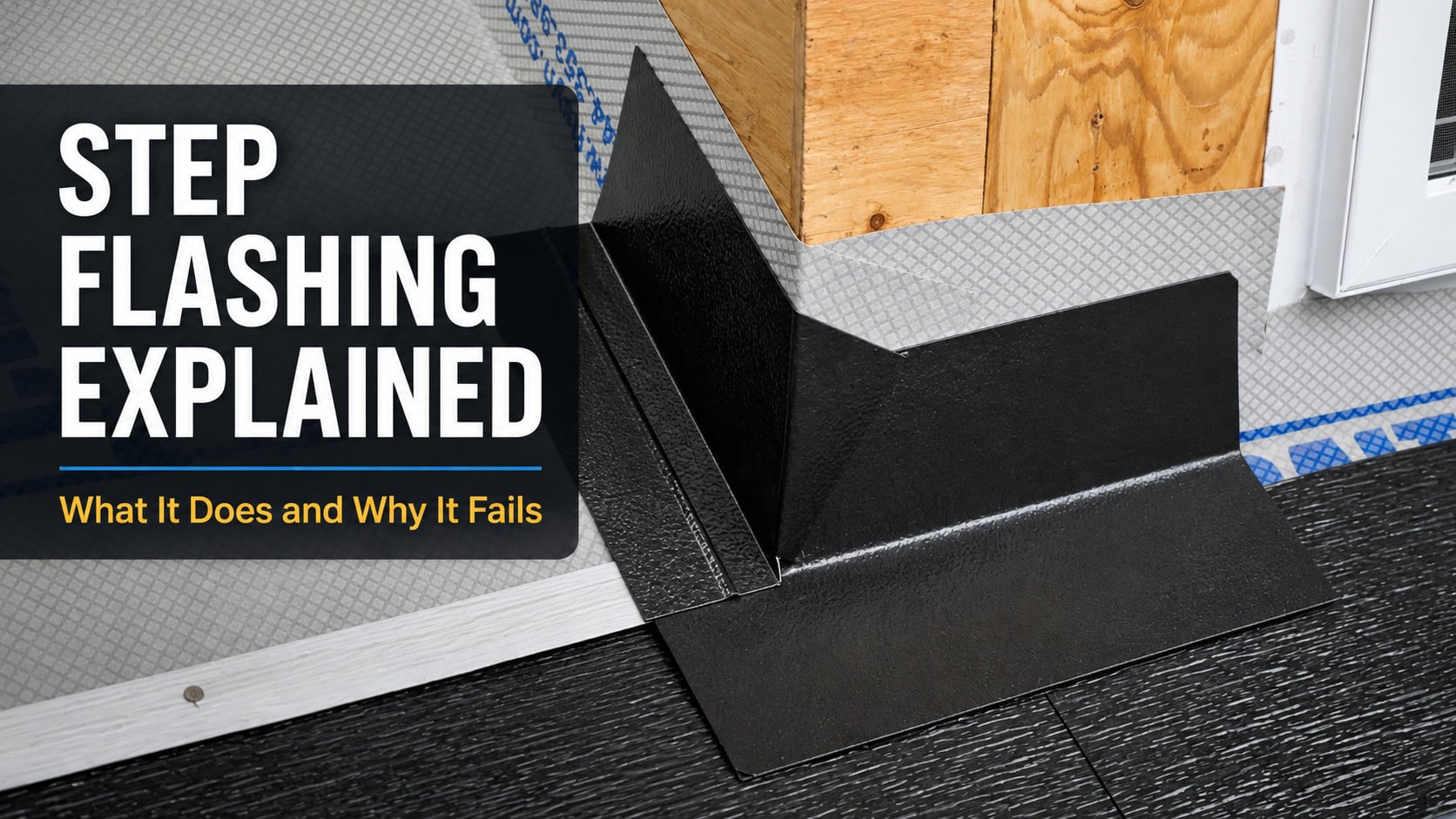
The Importance of Step Flashing: What It Does and Why It Fails
Most roof leaks don’t come from the open shingle field. They come from places where the roof meets something else: a wall, a chimney, a dormer. At those intersections, the critical component is step flashing. It’s small. It’s hidden. Done right, it lasts decades. Done wrong, it’s the number-one cause of recurring leaks. Here’s what you need to know.
What Is Step Flashing?
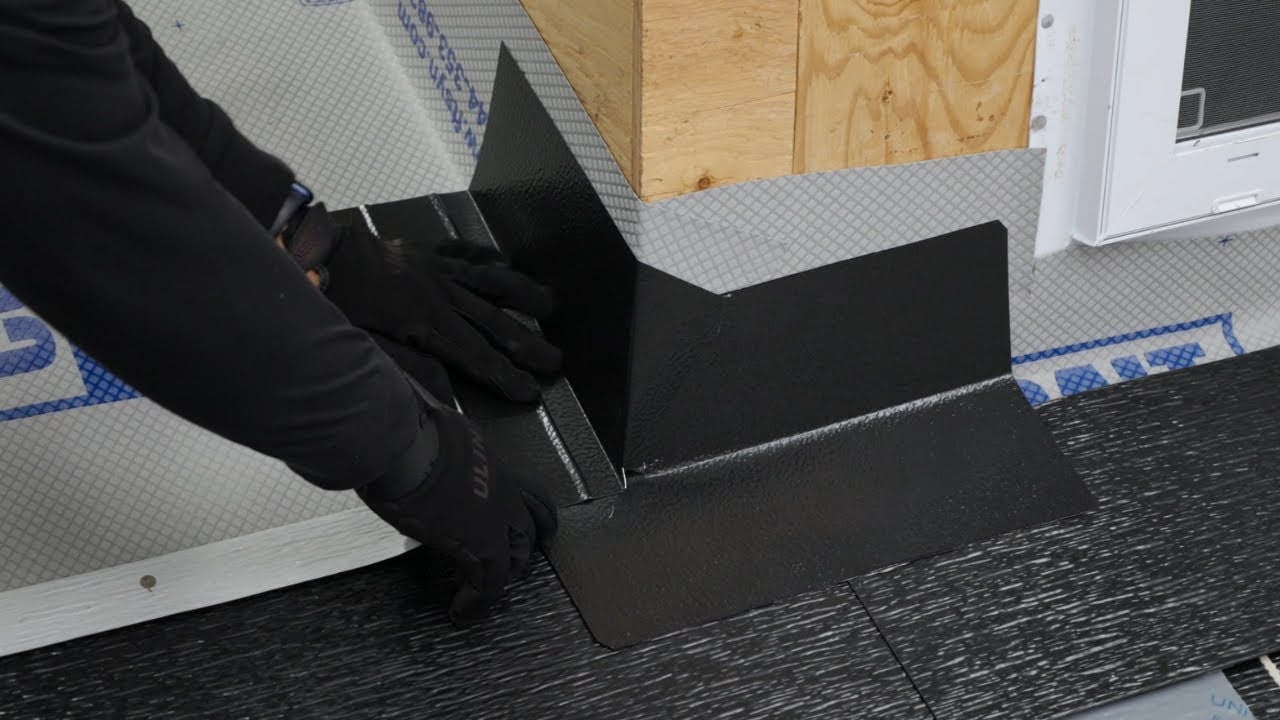
Step flashing is a series of small L-shaped pieces of metal (typically aluminum or galvanized steel) installed where a sloped roof meets a vertical wall. Each piece is roughly 4 to 6 inches per side, bent at 90 degrees. They’re installed in a “stepped” pattern, woven into the shingle courses.
How Step Flashing Works
- The first piece is installed at the eave, with one leg lying flat on the roof and the other leg standing up against the wall.
- The first row of shingles is installed, covering the flat leg of that flashing.
- The next piece of step flashing is laid over the first row of shingles, with its flat leg also overlapping the first flashing piece.
- The next row of shingles is installed, covering the flat leg of the second flashing.
- This pattern continues all the way up the wall.
Result: a continuous water-shedding barrier where any water hitting the wall flows down the wall, lands on a piece of flashing, and is directed away from the joint and onto the next course of shingles below.
Why Step Flashing Matters So Much
Walls and roofs move differently. They expand and contract at different rates. They flex separately in wind. A rigid sealant alone won’t hold up to decades of movement. Step flashing provides a flexible, mechanical water barrier that works even as components shift.
It’s also designed to handle wind-driven rain (common on Delmarva during nor’easters), where water hits the wall horizontally and would otherwise track inside through any gap.
Common Step Flashing Failures
1. Continuous L-Channel Used Instead of Step Pieces
Some lazy installers use a single long L-shaped piece instead of individual step pieces. This works briefly but fails because it can’t accommodate movement. Always insist on proper step flashing.
2. Counter-Flashing Missing or Bad
Step flashing needs counter-flashing (a separate piece that overlaps the step flashing from above, often embedded in masonry or siding). Without counter-flashing, water can run behind the step flashing.
3. Caulk Used Instead of Mechanical Flashing
If your roof-wall intersection looks like a long bead of caulk instead of metal flashing, it’s wrong. Caulk fails. Metal step flashing lasts.
4. Kick-Out Flashing Missing
At the bottom of the wall-roof intersection, water needs to “kick out” into the gutter, not behind the siding. Missing kick-out flashing is a major cause of hidden wall rot.
The Four Failures at a Glance
| Failure | What you would see from the ground | Why it leaks |
|---|---|---|
| Continuous L-channel | One long L-shaped piece running the whole wall instead of individual pieces | Cannot accommodate the different rates at which roof and wall move |
| Missing counter-flashing | Step flashing visible, but nothing overlapping it from above | Water runs down the wall and in behind the step flashing |
| Caulk instead of metal | A long bead of caulk where the roof meets the wall, no metal visible | Caulk dries, cracks, and fails. Metal does not. |
| Missing kick-out flashing | No small diverter at the bottom of the wall-roof intersection | Water goes behind the siding instead of into the gutter, causing hidden wall rot |
What correct looks like: individual metal pieces visible at every shingle course where the roof meets the wall. If you cannot see metal, something in this table is happening.
How to Check Your Step Flashing
From the ground, look at where rooflines meet walls. You should see metal step flashing pieces visible at each shingle course. If you see only caulk, or if shingles butt directly against the wall with no metal visible, you have a problem.
Frequently Asked Questions
How often does step flashing fail?
Properly installed step flashing lasts the life of the roof. Failures usually trace to original installation errors, not aging.
Can step flashing be replaced without redoing the roof?
Yes, by an experienced roofer. The shingles in the affected courses need to be lifted and reinstalled, but you don’t need to redo the entire roof.
What’s the difference between step flashing and counter-flashing?
Step flashing sits under the shingles; counter-flashing sits over the step flashing and against the wall (often inserted into a reglet cut in masonry).
Concerned About Your Flashing?
G and Bros inspects and repairs step flashing across Salisbury, Ocean City, and the entire Eastern Shore. Call 410-677-4975 or visit gandbrosroofing.com/contact.

Recent Blog Posts