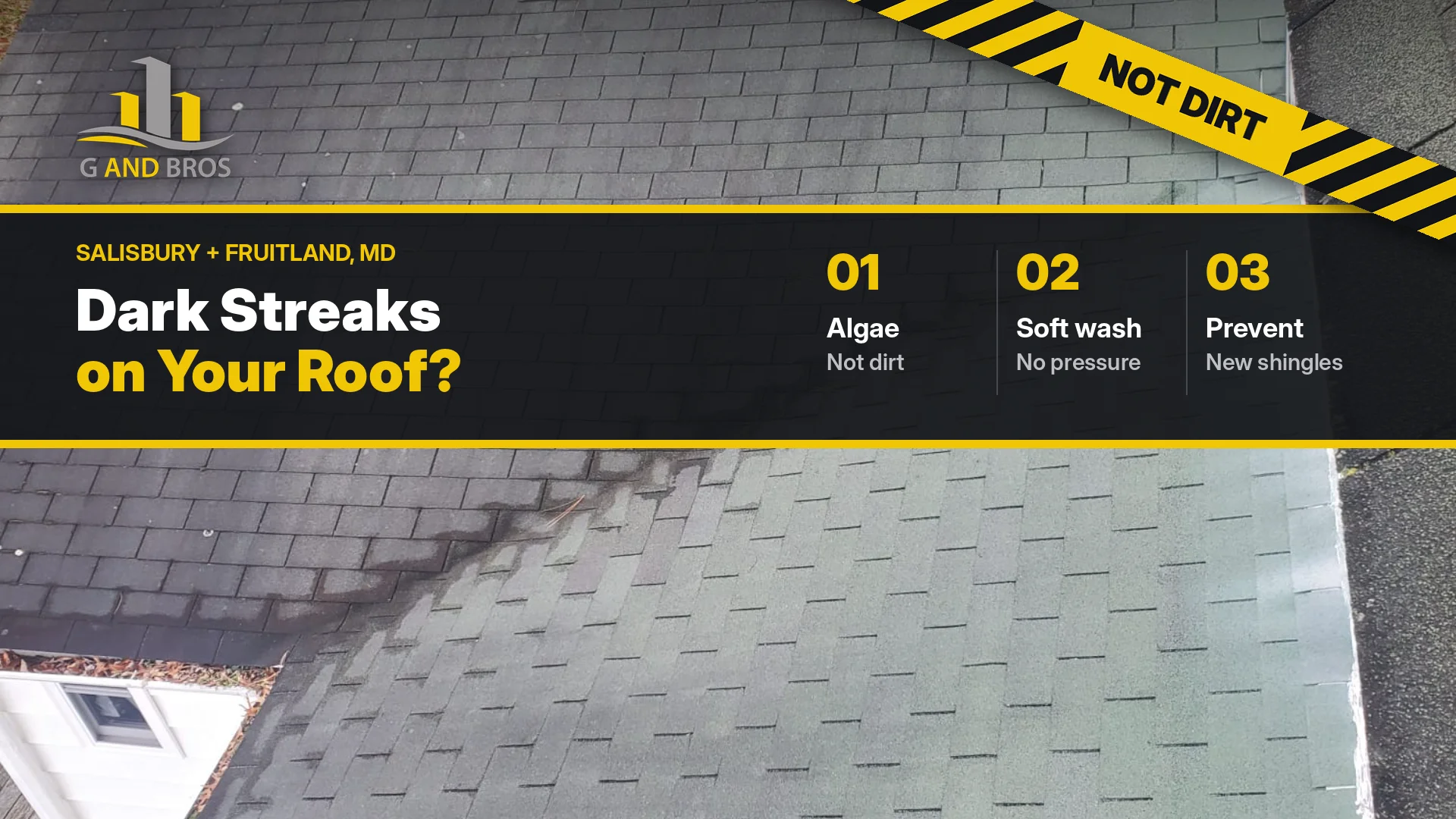
What Are the Dark Streaks on My Roof? A Guide for Salisbury and Fruitland, MD Homeowners
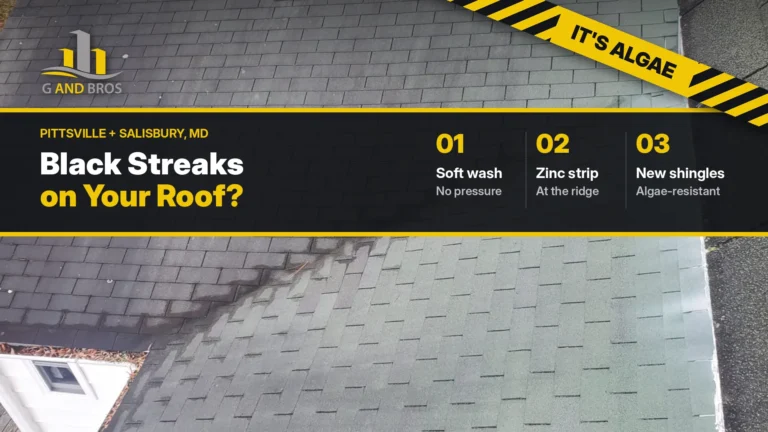
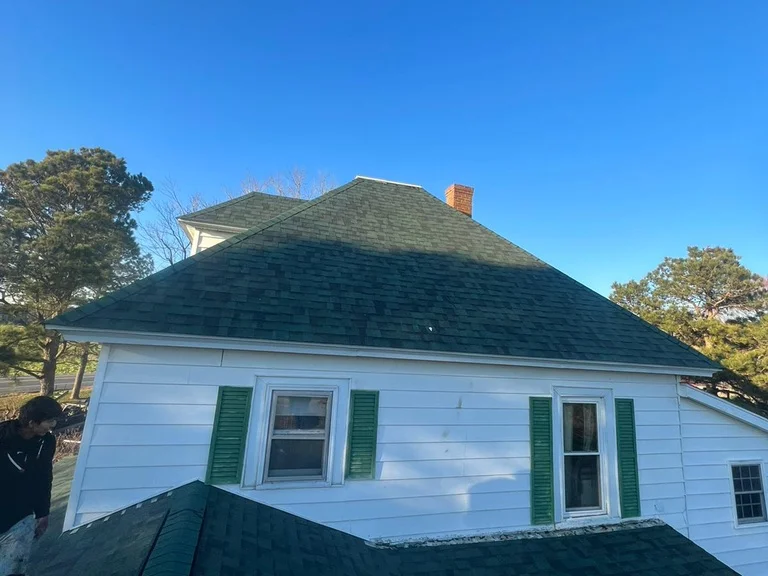
If you have noticed dark gray or black streaks running down your roof, you are probably not looking at dirt. On asphalt shingles, those streaks are most often caused by a type of algae called Gloeocapsa magma, which feeds on the limestone filler in the shingles. It is one of the most common roof issues on the Eastern Shore, and most homeowners do not notice it until the streaks are hard to miss.
The good news: roof algae is treatable. The less good news: left alone, it opens the door to bigger problems. Here is what Salisbury and Fruitland homeowners should know.
Why the Eastern Shore Is Prime Territory for Roof Algae
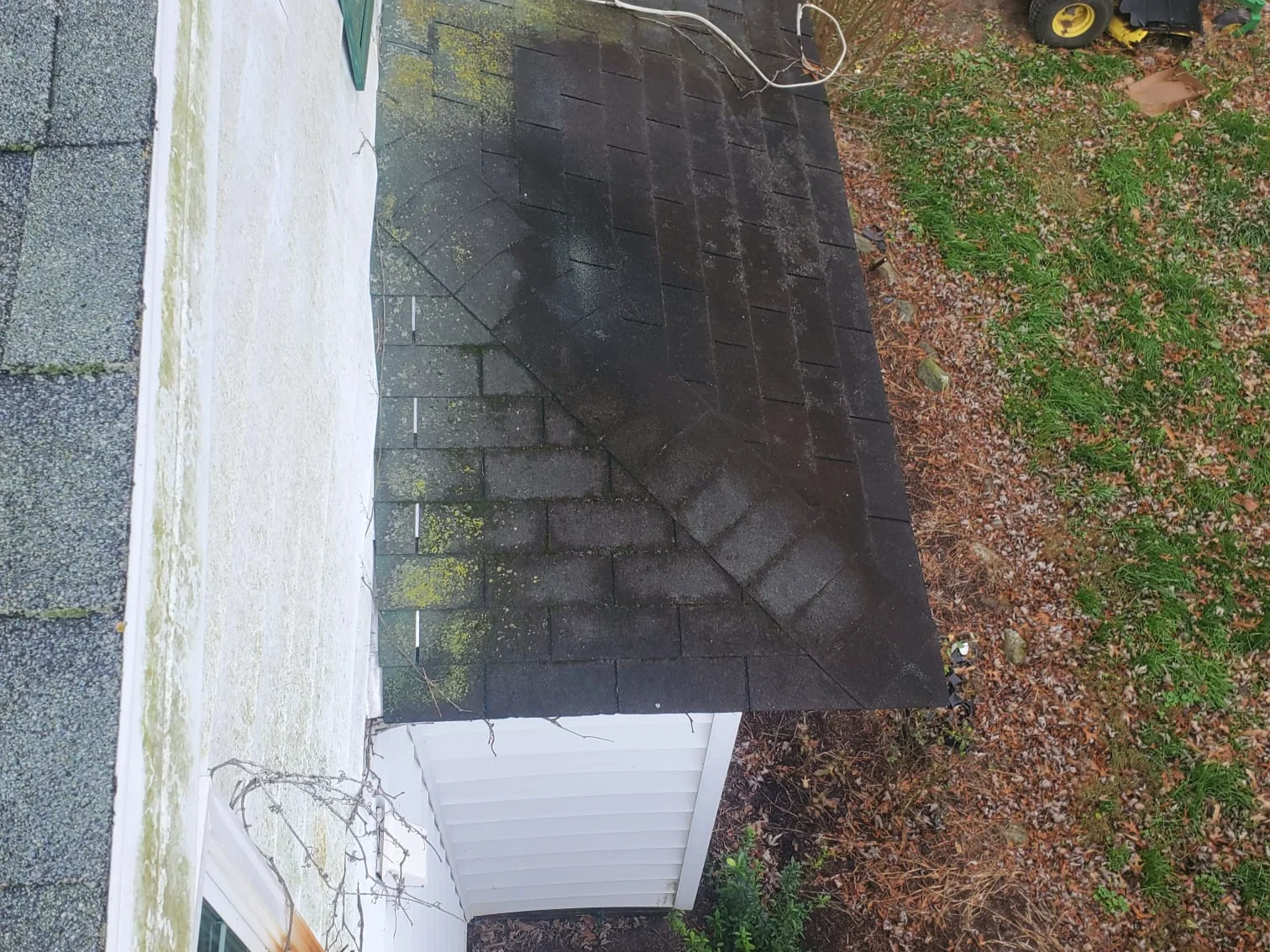
Roof algae thrives in warm, humid conditions, and the Delmarva Peninsula delivers both. From late spring through early fall, high humidity, salt air from the Bay and the ocean, and afternoon shade from nearby trees create close to perfect conditions for algae to take hold and spread.
Roofs that face north, sit under trees or stay damp longer after rain usually streak first. If your neighbor’s roof looks clean while yours has streaks, the difference is often just sun exposure and how long moisture sits on the surface.
Quick check: streaks that start near the top of the roof and run down the slope in a fan or stripe pattern are usually algae. Uniform dark patches with bare spots can mean granule loss instead, which is worth an inspection.
Is Roof Algae Actually Dangerous?
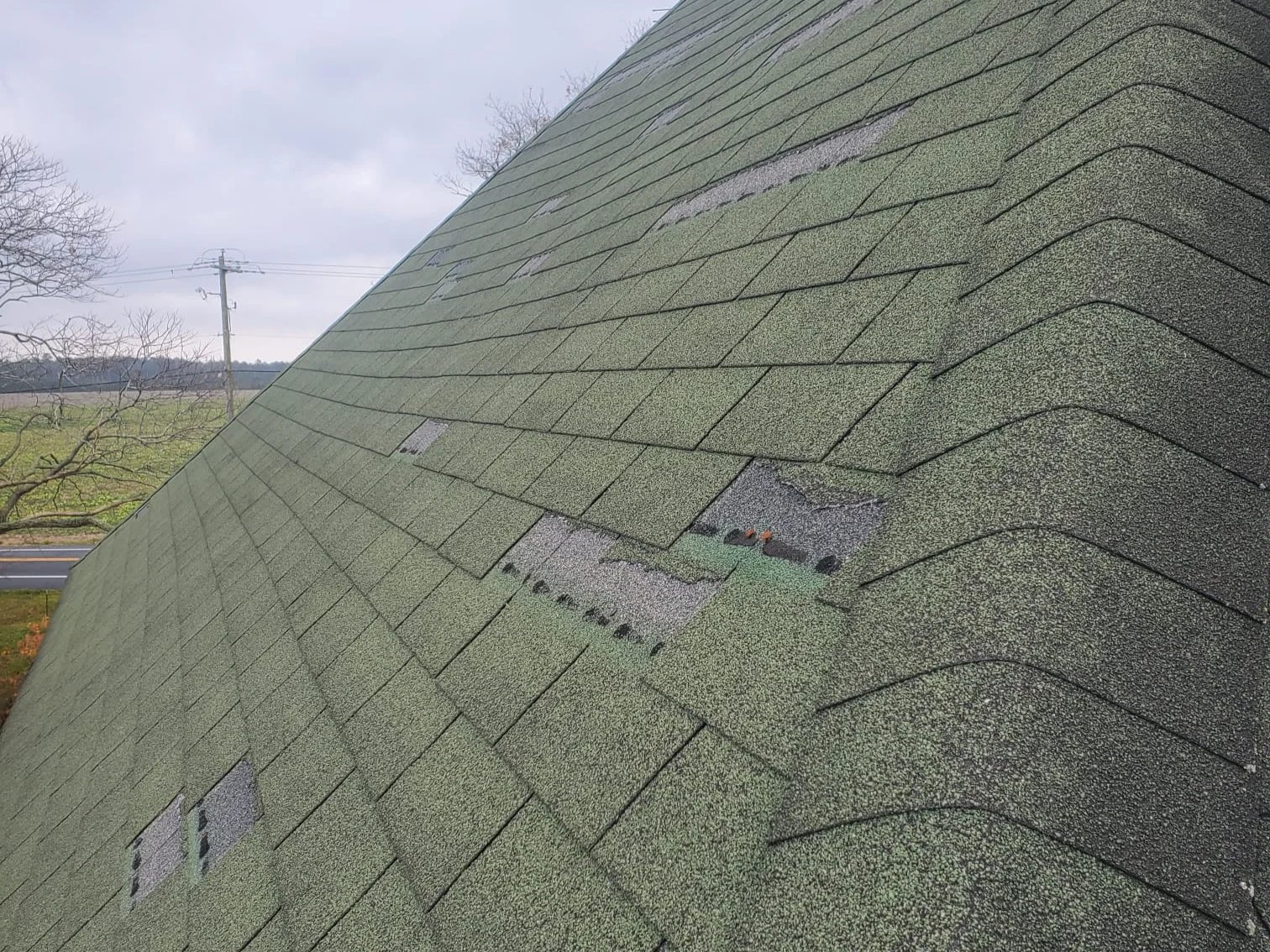
Early on, roof algae is mostly cosmetic. The shingles underneath are still doing their job. Left untreated for a year or two, though, the algae holds moisture against the shingle surface, which speeds up granule loss and shortens the life of the roof. Granules are the coating that protects shingles from the sun; once they wash off, the shingles wear out faster.
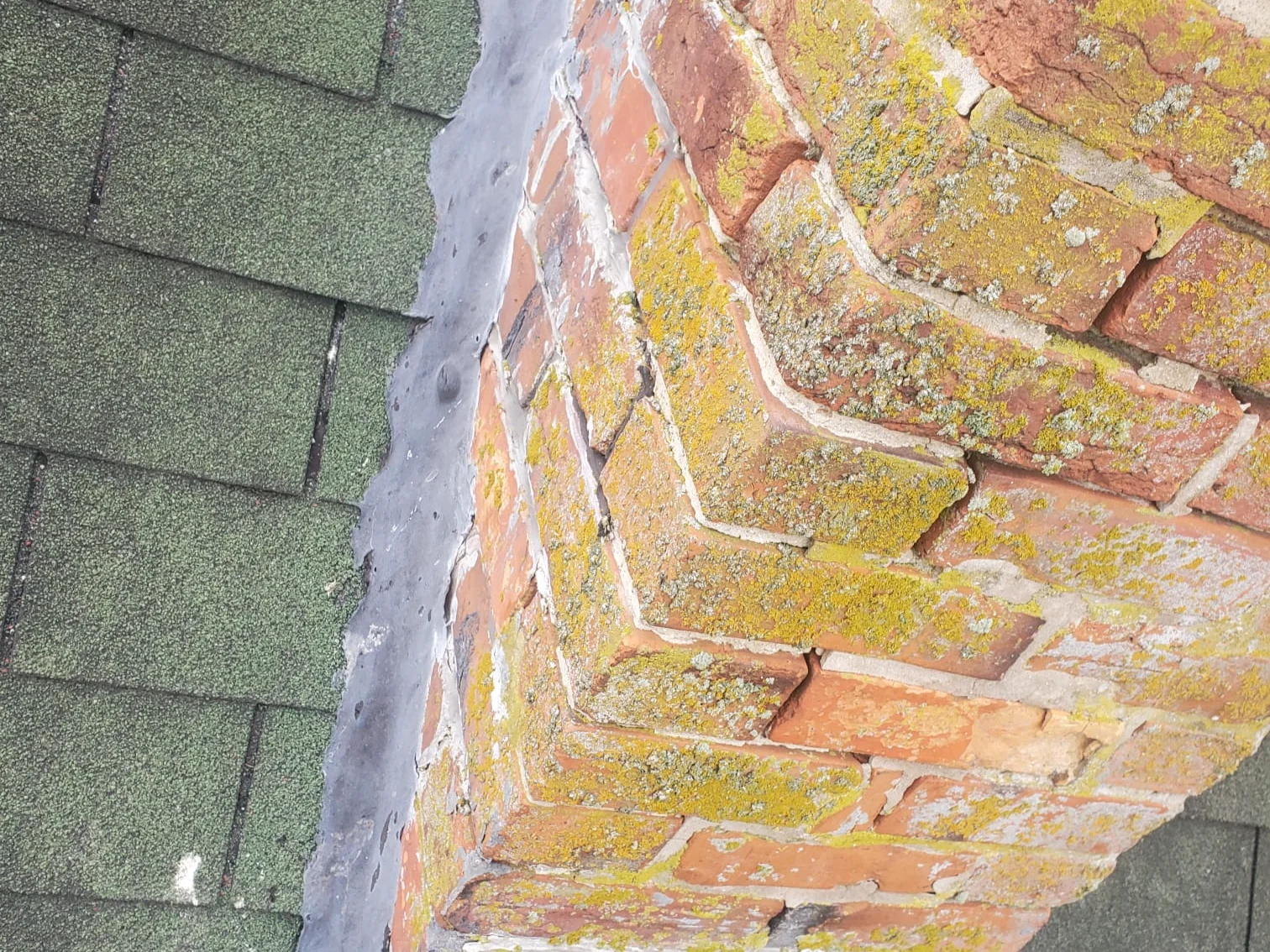
Algae can also lead to moss and lichen, especially on shaded sections and around chimneys. Moss is more aggressive. It lifts and separates shingle edges, letting water get underneath. What starts as a cosmetic problem can quietly become a roof repair within a few seasons.
What Not to Do: Pressure Washing
The first instinct for many homeowners is to rent a pressure washer and blast the streaks off. We strongly advise against it. High-pressure water strips granules off asphalt shingles the same way algae does, only much faster. It also does not solve the problem: spores stay on the roof and growth usually comes back within a season.
Skip the pressure washer. A pressure washer can do in one afternoon what algae takes years to do to your shingles.
The Right Approach: Soft Washing
Roof algae is normally treated with soft washing: a low-pressure application of a cleaning solution that kills the algae without stripping granules, followed by a gentle rinse. Results show up quickly, and the treatment typically holds for a few years in our climate.
This is not a DIY job for most homeowners. A wet, algae-covered roof is slippery and dangerous, and the solution has to be mixed and applied carefully to protect plants and landscaping. Before any cleaning, a roof inspection makes sure there is not a bigger problem hiding under the streaks.
Long-Term Prevention: Algae-Resistant Shingles
If your roof is near the end of its life, or you are planning a roof replacement, it is a good time to choose algae-resistant shingles. GAF Timberline HDZ shingles with StainGuard Plus use copper-containing granules to fight the streaks caused by algae, and GAF backs that with its own algae-resistance warranty. For many Eastern Shore homes, the upgrade is worth the small difference in cost.
We can help you decide which shingle makes sense for your home’s orientation, tree cover and budget.
Frequently Asked Questions
Are dark streaks on my roof covered by homeowners insurance?
Usually not. Insurance covers sudden damage from storms, fire and similar events. Algae is treated as a maintenance issue and is typically excluded from standard policies.
How long does it take algae to damage my shingles?
Noticeable granule loss from untreated algae usually takes a few years. On shaded or coastal roofs on the Eastern Shore, where moisture sits longer, it can happen faster.
Can zinc or copper strips prevent roof algae?
They can help. Strips installed near the ridge release trace metals when it rains, which slows algae growth below them. They work best on a clean roof as prevention, not as a fix for heavy growth.
Can algae spread from a neighbor’s roof to mine?
Algae spores travel on the wind and on birds, so homes close together often streak around the same time. If the houses around you are streaking, keep an eye on your own roof.
Should I get a roof inspection before having it cleaned?
Yes. A roof that looks like it only needs cleaning sometimes has cracked flashing, worn underlayment or soft decking underneath. A quick inspection first makes sure you are not paying for a surface fix when the real problem is below.
Streaks on your roof?
G and Bros is GAF Certified Plus, family-owned since 2012, with 25+ years of Maryland roofing experience from our founder. We work with homeowners in Salisbury, Fruitland and across Wicomico and Worcester counties.
Get a Roof Quoteor call 410-677-4975

Recent Blog Posts