Black Streaks on Your Roof? What Eastern Shore Homeowners Near Pittsville and Salisbury, MD Need to Know
If you have noticed dark streaks running down your shingles, you are not alone. It is one of the most common questions we hear in Pittsville, Salisbury and across Wicomico County. Those stains are not dirt or normal wear. They are algae, and the Eastern Shore’s humid climate makes your roof an easy place for it to grow.
The good news: it is a problem you can deal with. The key is knowing what you are looking at before it turns into something more expensive.
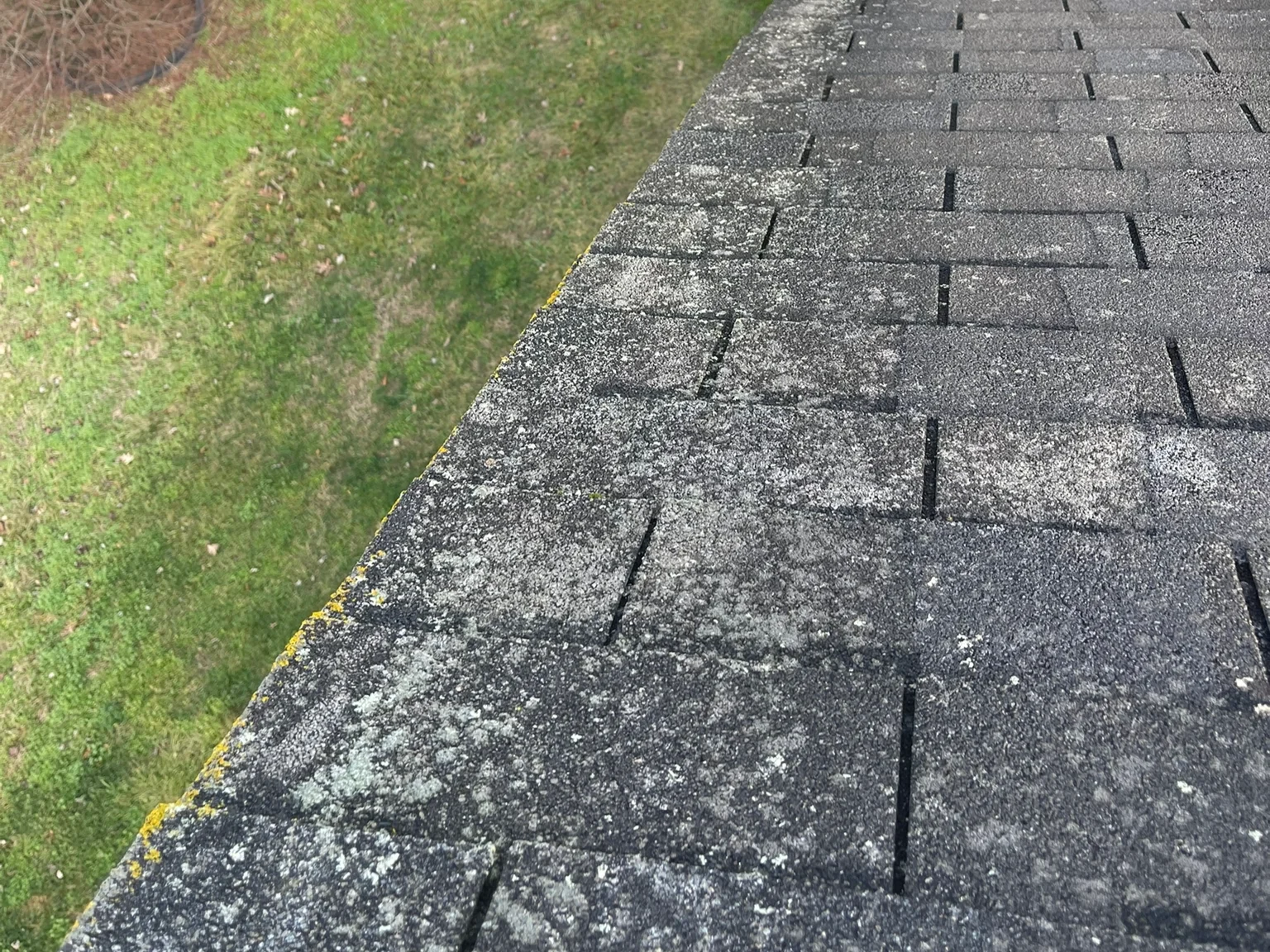
Algae and lichen along a ridge on a roof G and Bros inspected in Pocomoke City, MD.
Why Eastern Shore Roofs Get Algae Faster
The Shore stays damp most of the year, thanks to the Chesapeake Bay, the Atlantic and the rivers and wetlands in between. Around Pittsville, wooded lots add shade. That moisture settles on the roof and stays, especially on north-facing slopes and under trees where the sun cannot dry things out.
The black streaks come from Gloeocapsa magma, a type of blue-green algae that feeds on the limestone filler in asphalt shingles. It spreads by airborne spores, so once one house on a street has it, the neighbors often follow within a few years.
Moss is different. It is a plant that takes hold once algae has softened the surface, and it grows in thick green patches. It does more harm because it holds water and lifts shingle edges.
A few conditions speed up growth around Wicomico County:
- Heavy shade that keeps shingles from drying between rains
- Low-slope roofs that drain slowly
- Poor attic ventilation that keeps the deck cool and damp
- Older shingles that have lost their granules
- Nearby water: rivers, ponds and creeks
Does Algae Actually Damage Your Roof?
Early on, algae is mostly cosmetic. Left alone for years, it holds moisture against the shingles and slowly breaks the surface down, which can take years off the roof’s life.
Moss is a bigger deal. Because it holds water and wedges under shingle edges, it opens a path for water to reach the decking. If you see moss, schedule a roof inspection before the next wet season.
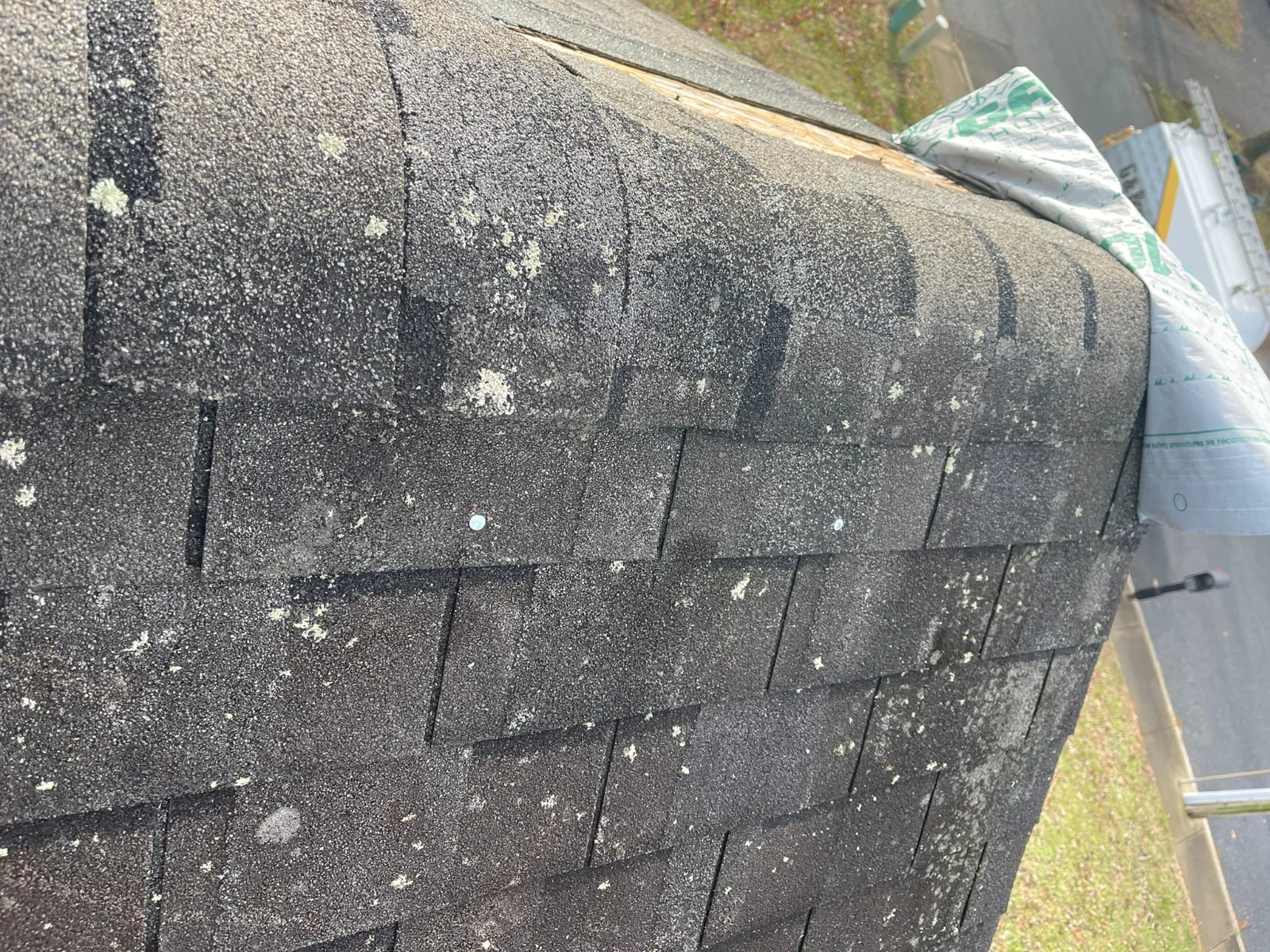
Spotted, weathered ridge cap on an older roof G and Bros inspected in Pocomoke City, MD.
What You Can Do About It
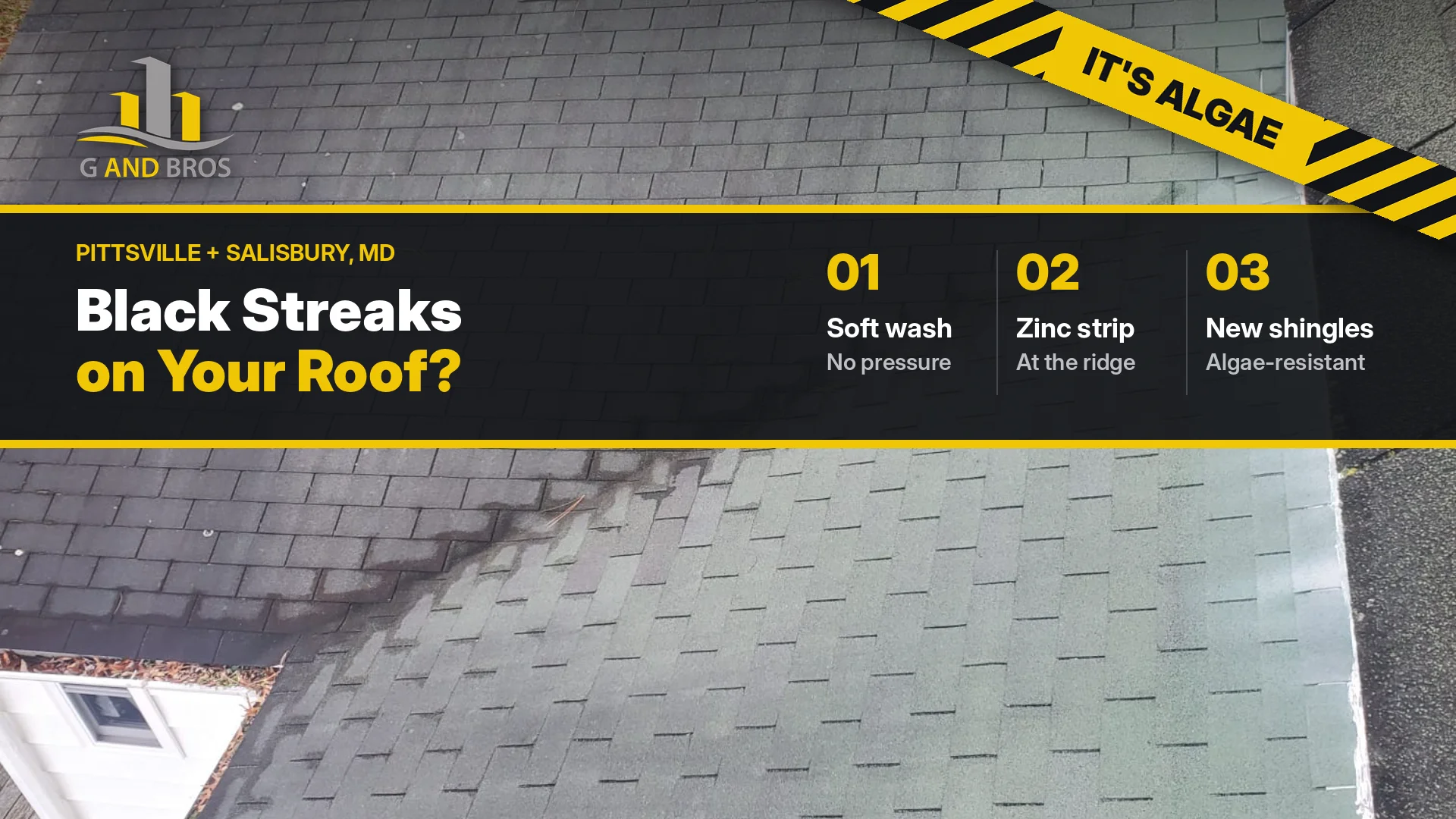
Three ways to deal with roof algae
Soft wash, never pressure wash. A diluted cleaning solution applied at low pressure kills algae and moss without stripping the granules. Pressure washing tears the granules off, shortens shingle life and can affect manufacturer warranties.
Add zinc or copper at the ridge. After a cleaning, thin metal strips near the ridge release trace amounts of zinc or copper every time it rains, which slows regrowth. It is a low-cost add-on.
Choose algae-resistant shingles at replacement. Many GAF shingles use copper-treated granules made to resist algae streaking. For shaded lots around Pittsville, the upgrade is worth asking about.
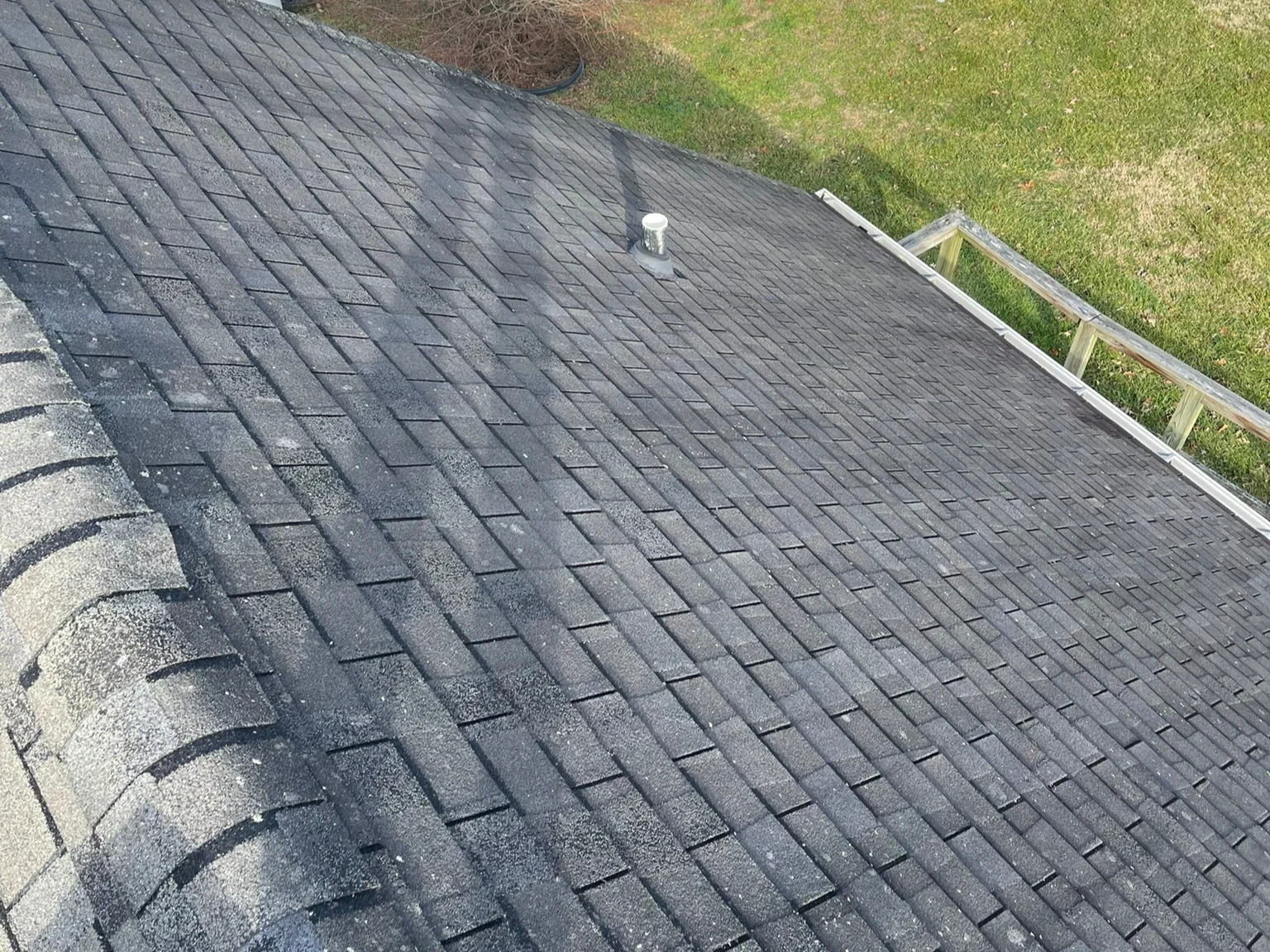
Dark streaking across an older shingle slope G and Bros inspected in Pocomoke City, MD.
When to Call a Roofer
You can clean a roof yourself, but it means working up high on wet, slippery shingles with chemicals. If you are not comfortable with that, it is not worth the risk. More important, if you see more than discoloration (soft spots, bare granules, curling shingles or ceiling stains), cleaning is not the right first step. An inspection tells you whether it is a surface issue or something that needs a repair.
For more on telling algae, moss and real damage apart, see our guide to dark streaks on roofs in Salisbury and Fruitland. We work on homes in Pittsville, Salisbury, Fruitland and throughout Wicomico County.
Frequently Asked Questions
Are the black streaks harmful to my family?
No. The algae is not toxic to people or pets. It is a cosmetic and roof-life concern, not a health hazard inside the home.
Can I pressure wash my roof?
It is not recommended. Pressure washing strips the granules from asphalt shingles, speeds up wear and can affect manufacturer warranties. A soft wash is safer and works better.
How often should I clean a shaded roof on the Eastern Shore?
Every 3 to 5 years is typical for shaded roofs here. Zinc or copper strips can stretch that out. A quick look each spring and fall helps you catch new growth early.
Will algae-resistant shingles stop algae completely?
They slow it down a lot, but no shingle is fully immune. In heavy shade and high humidity, some maintenance may still be needed.
Did the algae spread from my neighbor’s roof?
Very likely. Gloeocapsa magma spreads by airborne spores, so one affected roof often leads to more on the same street.
Not sure what is growing on your roof?
G and Bros is GAF Certified Plus, family-owned since 2012, with 25+ years of Maryland roofing experience from our founder. We look at roofs in Pittsville, Salisbury, Fruitland and across Wicomico County and tell you whether it is cosmetic or something that needs attention.
Get a Roof Quoteor call 410-677-4975

Recent Blog Posts