What to Do After Storm Damage to Your Roof in Salisbury, MD
A fast-moving storm can leave Salisbury, MD homeowners with missing shingles, bent flashing and one big question: what do I do now? Doing the right things, in the right order, keeps more water out of the house and puts you in a stronger position if you file an insurance claim.
Here is a plain-English checklist for the first days after storm damage on the Eastern Shore.
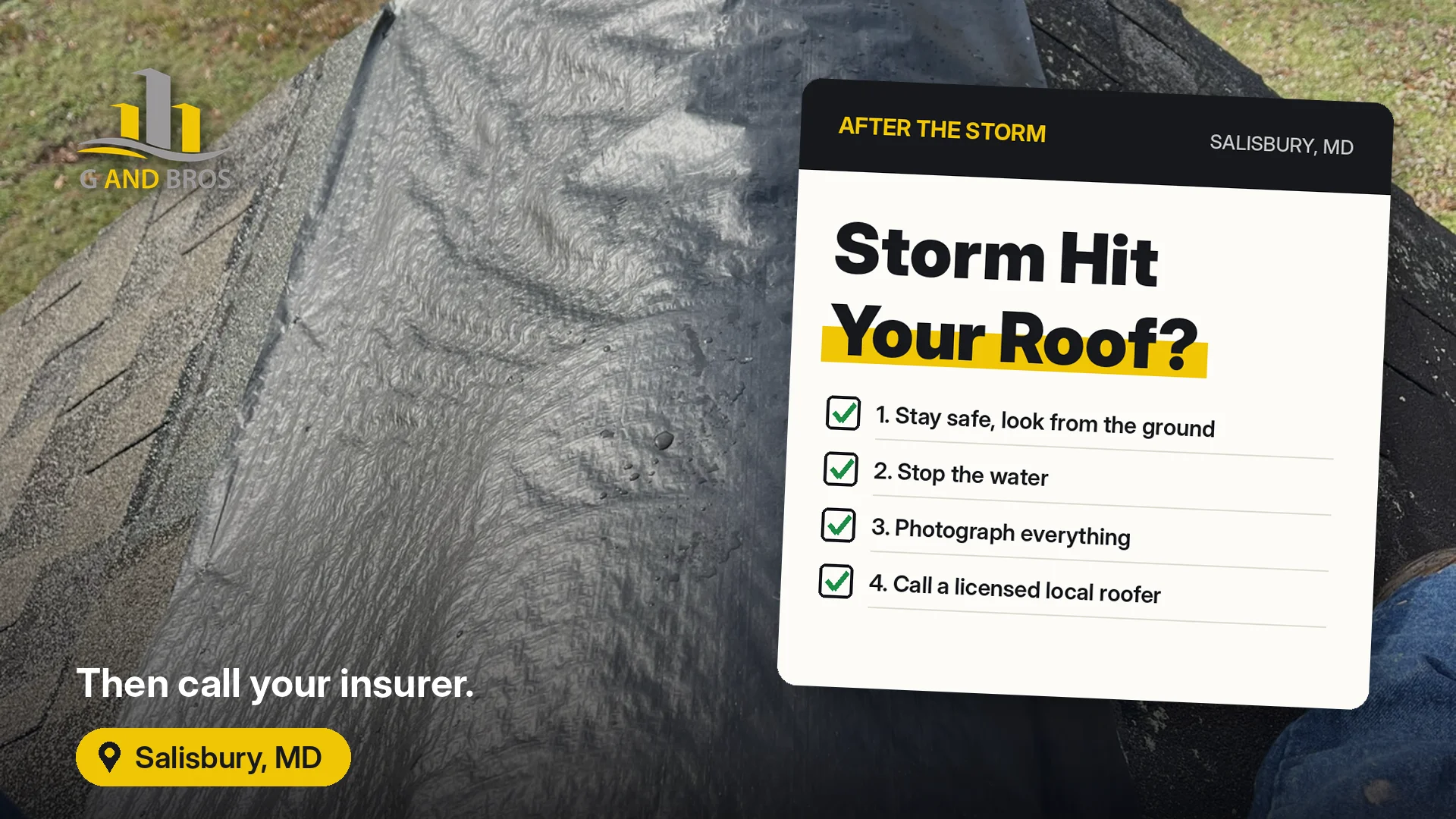
After a storm, in this order
Stay safe. Look from the ground. Do not climb onto a wet, damaged roof.
Stop the water. Catch active leaks inside and get the roof tarped if it is open.
Document everything. Photos, video, the date and time of the storm.
Call a licensed local roofer. Get a written damage assessment, not a door-knocker’s promise.
Contact your insurer. Open the claim with your photos and the roofer’s report in hand.
Step 1: Stay Safe and Look From the Ground
Your first instinct may be to climb up and look. Don’t. Wet decking and broken shingles make a roof slippery and dangerous right after a storm. Walk the yard instead and look for:
- Shingles in the lawn, the gutters or against the foundation
- Granules (dark grit) piled up at the downspouts
- Gaps, lifted tabs or curled corners on the roof
- Dents in aluminum gutters or the A/C unit, a sign of hail
- Bent or pulled-away flashing at the chimney, vents or skylights
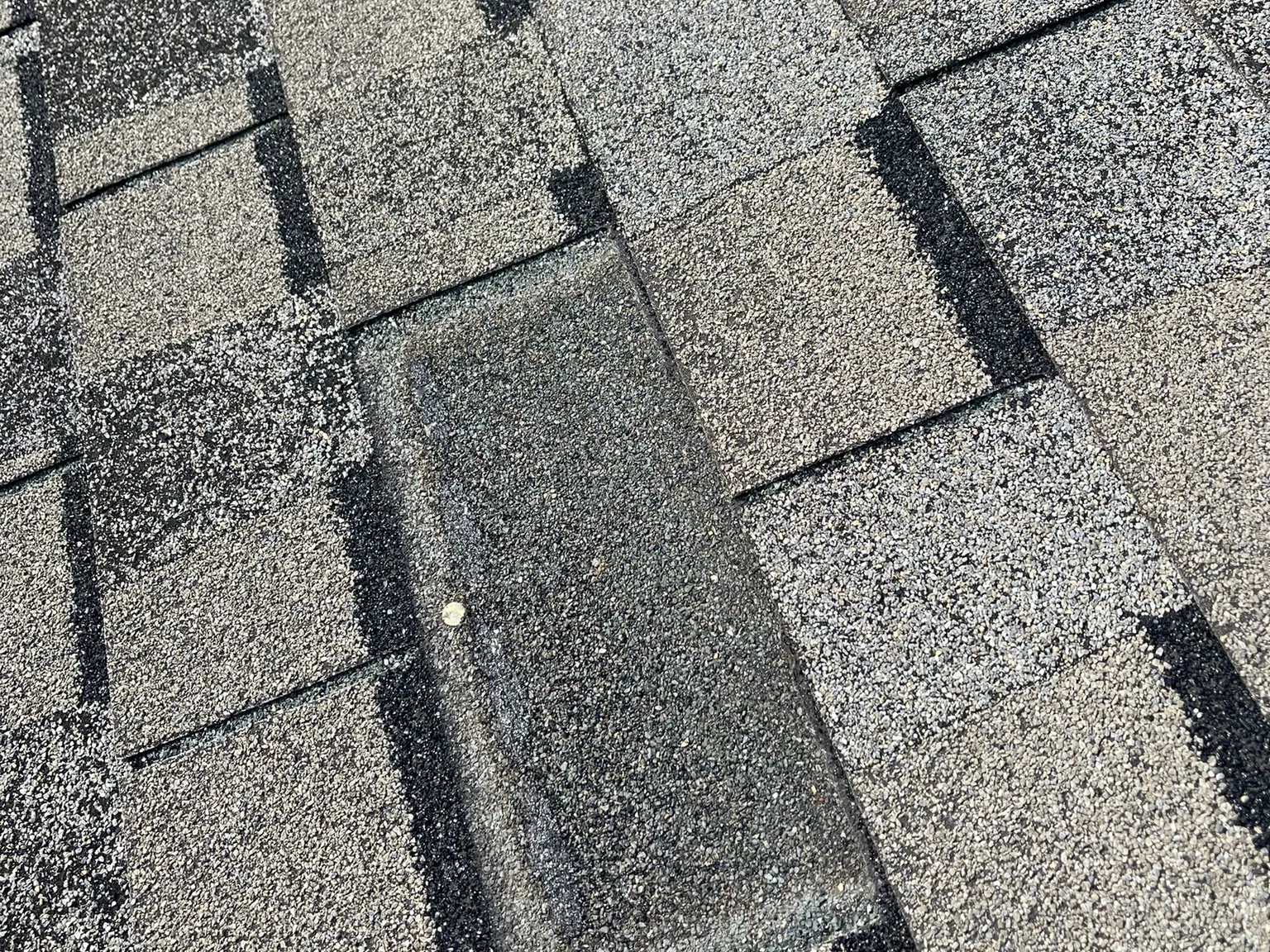
A patched shingle on a storm-damaged roof G and Bros inspected in Pocomoke City, MD. Earlier storm repairs are part of the roof’s history too.
Step 2: Stop the Water
If water is coming in, put a bucket under it, move belongings out of the way and call us at 410-677-4975. An active leak can soak insulation, stain drywall and reach wiring within hours. If part of the roof is open, a temporary tarp keeps the weather out until permanent repairs can be made.
Step 3: Document Everything Before Cleanup
Before any cleanup or temporary repairs, take photos and video of everything you can safely see: the roof from the ground, the gutters, any ceiling stains inside and the storm debris around the yard. Write down the date and time the storm hit, and save any National Weather Service warning for it. A good photo record makes a claim much harder to dispute.
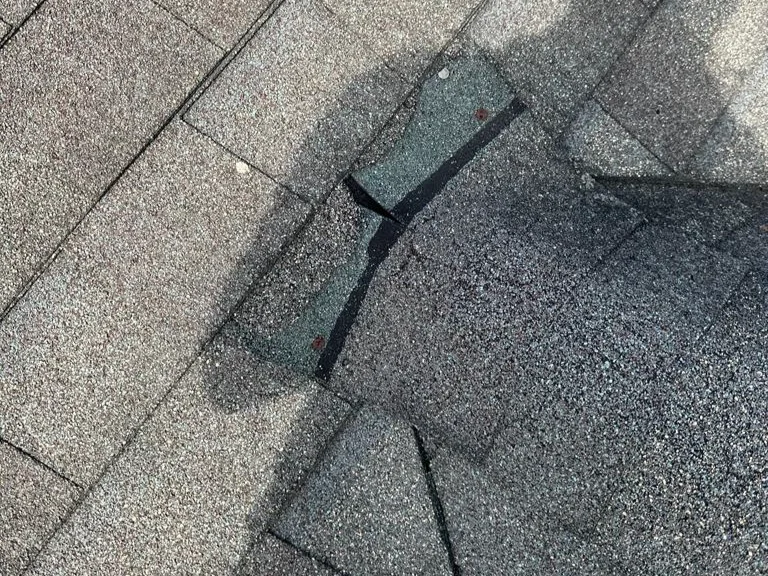
A cracked shingle found during a G and Bros inspection in Delmar. Damage like this is easy to miss from the ground.
Step 4: Call a Licensed Local Roofer, Not a Storm Chaser
After a big storm, out-of-town contractors show up looking for quick sign-and-go contracts. Many are gone by the time a problem surfaces, leaving homeowners with no one to call and no workmanship warranty. Before you sign anything, check for an active MHIC license (Maryland Home Improvement Commission), a local address and real local reviews.
G and Bros is GAF Certified Plus, MHIC licensed and family-owned since 2012, with 25+ years of Maryland roofing experience from our founder. After a storm, we document the damage in writing with photos so you have an itemized record for your insurer. We also serve Fruitland, Cambridge, Princess Anne and communities across the Eastern Shore. Learn more about our storm restoration work.
Step 5: Open Your Insurance Claim
With photos and a written assessment in hand, contact your insurer. Here is how it usually goes:
- Report it promptly. Most policies require timely notice, and waiting weeks can complicate coverage.
- Have the roofer’s report when the adjuster visits. Adjusters can miss items, and a written scope gives you something to compare.
- Know whether you have ACV or RCV coverage. Actual Cash Value takes depreciation off. Replacement Cost Value pays to replace. On an older roof, the difference is big.
- Ask about anything that was missed. If the adjuster’s scope leaves out damage, your roofer can document it so you can raise it with your insurer.
One firm rule: be wary of any contractor who offers to waive or cover your deductible or promises a roof paid for by insurance. That is a red flag, and it can put you on the wrong side of your policy. G and Bros documents damage for homeowners but does not negotiate claims on their behalf.
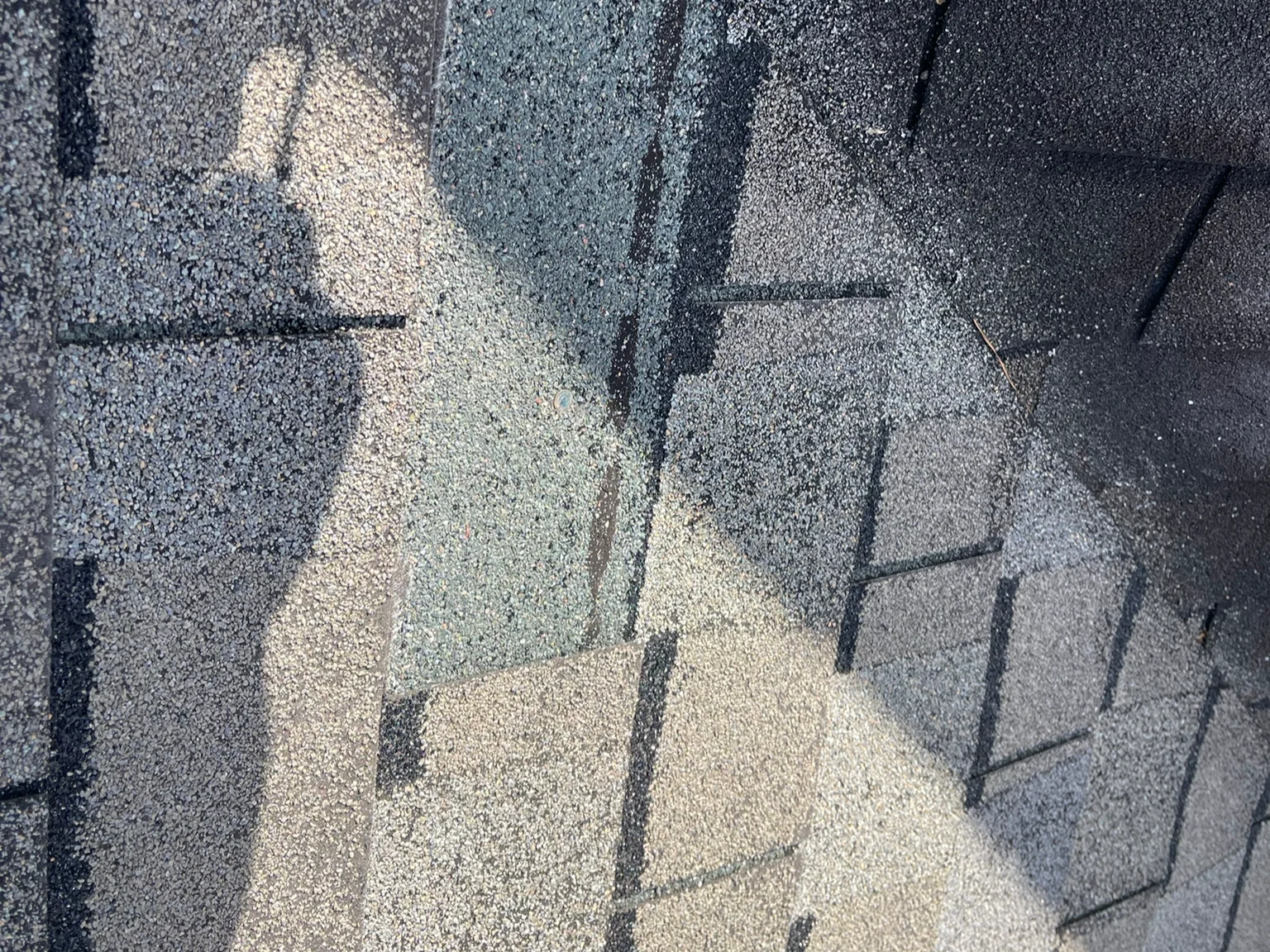
Storm-worn shingles on a roof G and Bros inspected in Pocomoke City, MD.
Eastern Shore Storms and Your Roof
The Eastern Shore gets a specific mix of weather. Nor’easters bring long stretches of wind and driving rain that lift shingles at the ridges and rakes. Summer thunderstorms can drop short bursts of hail that bruise shingles and knock granules loose. Coastal towns like Ocean City and Berlin see more wind year-round, so materials there should be rated for coastal conditions.
Frequently Asked Questions
How soon should I call a roofer after storm damage?
Within a day or two, once it is safe. The sooner you have a written report, the stronger your documentation and the sooner any leaks get stopped.
Will homeowners insurance cover storm damage to my roof in Maryland?
Most standard policies cover sudden wind, hail and falling-debris damage. What you get depends on your policy type (ACV or RCV), your deductible and the age and condition of the roof. Review your policy before storm season.
How do I spot a storm chaser?
No Maryland MHIC license number, pressure to sign on the spot, an offer to cover your deductible and no local address. Verify credentials before signing anything.
Do I need a permit for storm repairs?
Small repairs like replacing a few shingles usually do not need one. A full replacement often does. Your contractor should know the local rules.
Does G and Bros work outside Salisbury after a storm?
Yes. We cover Wicomico, Worcester, Dorchester and Somerset counties in Maryland and Sussex County in Delaware.
Storm hit your roof?
G and Bros is GAF Certified Plus, family-owned since 2012, with 25+ years of Maryland roofing experience from our founder. We do storm damage inspections across Salisbury and the Eastern Shore, with photos and a written report you can give your insurer.
Get a Roof Quoteor call 410-677-4975

Recent Blog Posts