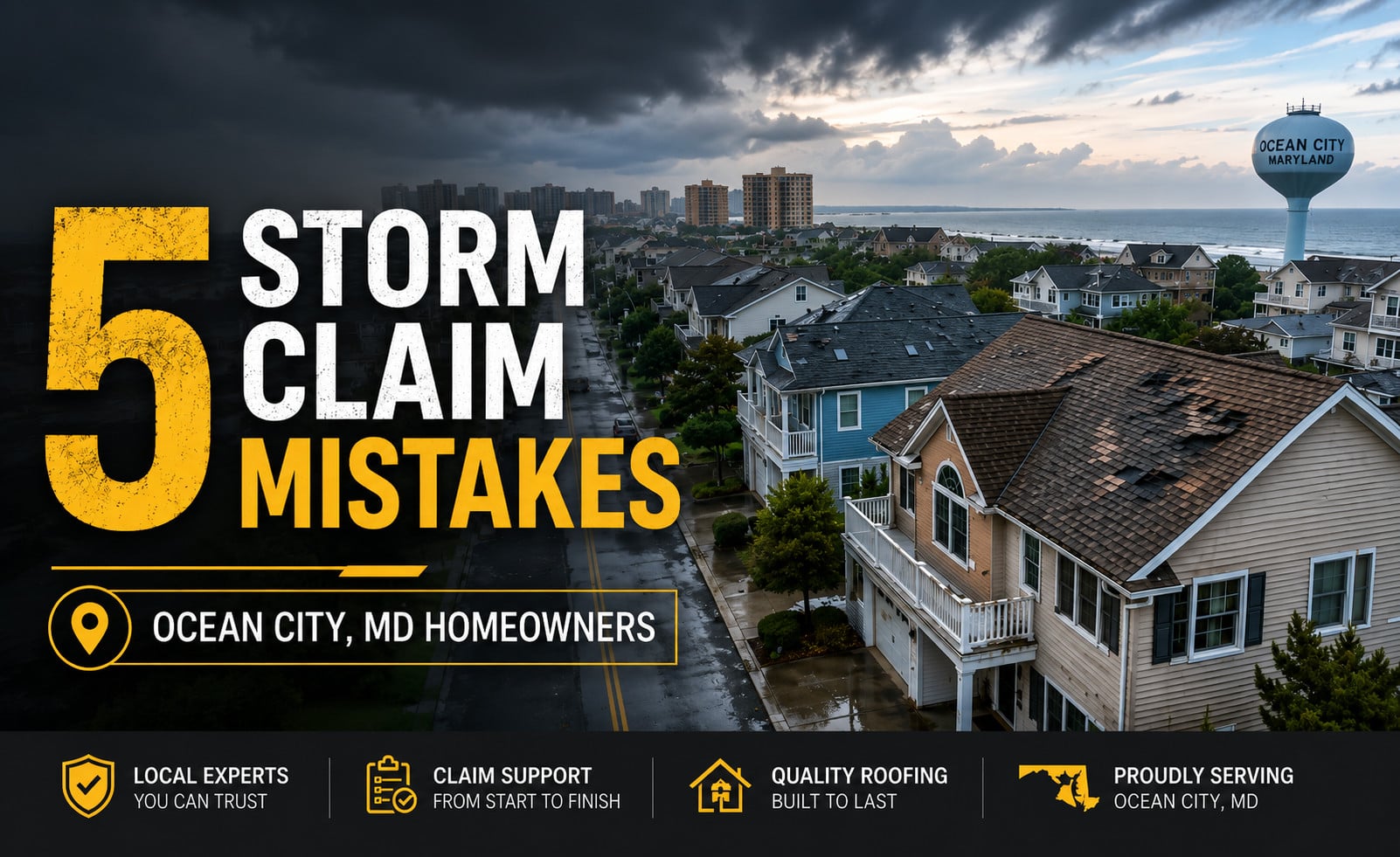
5 Common Mistakes Maryland Homeowners Make With Roof Storm Damage Claims (And How Ocean City Homeowners Can Avoid Them)

After a major storm rolls through Ocean City or anywhere on Maryland’s Eastern Shore, the damage can be overwhelming. High winds, heavy rain, and hail can strip shingles, crack flashing, and leave your home exposed (sometimes without you even noticing right away).
The good news? Most homeowner’s insurance policies cover storm-related roof damage. The bad news? Most homeowners make at least one of the same five mistakes during the claims process, and those mistakes can delay your payout, reduce your settlement, or get your claim denied entirely.
Here are the five most common roof storm damage claim mistakes we see across the Eastern Shore, and how to avoid them.
Mistake 1: Climbing on the Roof Before It Is Safe
The first instinct after a storm passes is to climb up and see how bad it is. Resist that urge. Wet shingles are dangerously slick, hidden structural damage can collapse under your weight, and downed power lines may still be live nearby.
Do a careful visual inspection from the ground instead. Here is what to look for:
- Missing or curled shingles (often blown off by high winds)
- Granules in your gutters or yard (a sign shingles are degrading)
- Dented or damaged vents, flashing, or gutters
- Water stains on ceilings or walls inside your home (a telltale sign of leaks)
- Fallen branches or debris resting on the roof surface
If you notice any of these warning signs, it is time to call a professional. G and Bros offers storm damage inspections throughout Maryland and Delaware, including Ocean City, Cambridge, Princess Anne, and beyond. Visit our storm restoration page to learn more.
Mistake 2: Cleaning Up Before Documenting the Damage
Before you move a single shingle or clean up debris, document the damage thoroughly. This step is critical for your insurance claim, and once cleanup happens, your evidence is gone.
- Take clear photos and videos of your roof, gutters, siding, and any interior water damage
- Note the date and time of the storm
- Save weather reports or local news coverage of the storm event
- Write down a detailed description of what you observed and when
The more documentation you have, the stronger your claim will be. Insurance adjusters rely on this evidence to determine the payout. Date-stamped photos taken before any cleanup are gold during a claim dispute.

Mistake 3: Waiting Too Long to File the Claim
Most homeowner’s insurance policies require you to report storm damage within a set window, often 30 to 60 days. Wait longer than that and your claim can be denied outright, regardless of how legitimate the damage is.
When you call your insurer, have the following ready:
- Your policy number
- The date of the storm
- A brief summary of the damage you observed
- Your photo and video documentation
Ask your insurance company about their timeline and what documentation they will need from your roofing contractor. Get a claim number you can reference, and ask when an adjuster can be on-site.
Mistake 4: Relying Solely on the Insurance Adjuster’s Assessment
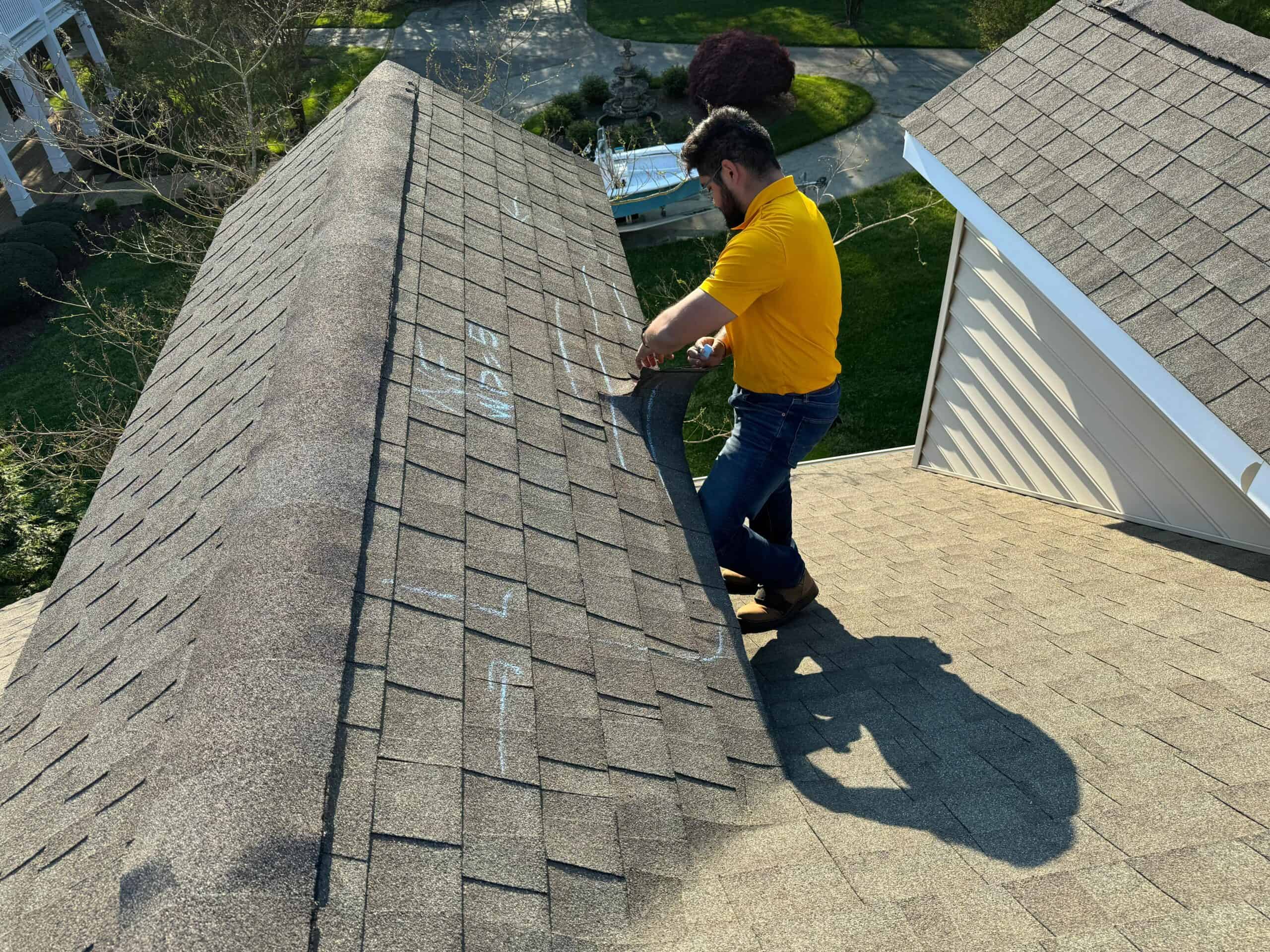
Here is where things get critical: do not rely solely on the insurance adjuster’s assessment. Adjusters work for the insurance company. They may not catch all the damage, especially issues that are not visible from the ground or require a trained eye to identify.
That is why having a trusted local contractor like G and Bros inspect your roof before or alongside the adjuster visit is so valuable. We provide a detailed written estimate of all damage, which you can submit as part of your claim.
Our team has extensive experience with storm damage restoration across Maryland’s Eastern Shore and Delaware’s Sussex County. We know what storm damage looks like, and we know how to make sure nothing gets missed. Visit our storm restoration page to get started.
Mistake 5: Signing Anything Before Understanding Your Policy
Before repair work begins, take time to understand your insurance policy. Signing a contractor’s agreement (or an Assignment of Benefits) without understanding your coverage can cost you thousands.
Three terms every Maryland homeowner should know:
- Deductible: The out-of-pocket amount you pay before insurance kicks in. Know this number before you sign anything.
- ACV vs RCV: Actual Cash Value (ACV) pays for your roof minus depreciation. Replacement Cost Value (RCV) covers a new roof at current prices, a much better deal for homeowners. Most RCV policies pay ACV first, then release “recoverable depreciation” after the work is completed and documented.
- Exclusions: Some policies exclude gradual wear and tear but do cover sudden storm damage. Review your policy carefully and ask your agent to clarify any gray areas.
A red flag to watch for: any contractor who offers to “waive” your deductible. Deductible waiving is insurance fraud under Maryland law and can void your claim. Walk away from any contractor who suggests it.
If anything in your policy is unclear, ask your insurance agent to walk you through it. You can also check our FAQ page for answers to common roofing and insurance questions.
Bonus: Choose a Contractor Who Actually Understands Insurance Work
Not all roofing contractors are equally equipped to handle insurance-related repairs. After a big storm, out-of-state “storm chasers” flood the Eastern Shore. They sign homeowners up quickly, do questionable work, and disappear long before any warranty issues arise.
Look for a local contractor who:
- Provides detailed, itemized written estimates
- Communicates directly with your insurance adjuster when needed
- Completes work that meets insurer requirements and local building codes
- Never pressures you to sign contracts before your claim is approved
At G and Bros, we work with homeowners throughout Ocean City, Cambridge, Princess Anne, Salisbury, Bethany Beach, and the entire Eastern Shore and Sussex County, Delaware. We guide you from initial inspection to final repair, and we are here to answer questions every step of the way. Learn more on our residential roofing page.

Frequently Asked Questions
How long do I have to file a roof storm damage claim in Maryland?
Most Maryland homeowner’s insurance policies require you to report storm damage within 30 to 60 days of the event. Some policies allow longer, but waiting weakens your claim. File as soon as you have documented the damage safely.
Is it illegal for a roofer to waive my deductible?
Yes. Waiving a homeowner’s insurance deductible in exchange for roofing work is considered insurance fraud under Maryland law. Any contractor who offers this is a red flag, and accepting their offer can void your claim entirely.
What is the difference between ACV and RCV on my roof claim?
ACV (Actual Cash Value) is what your roof is worth today after depreciation. RCV (Replacement Cost Value) is the full cost to replace it with new materials. Most policies initially pay ACV and release the depreciation difference (the “recoverable depreciation”) once you complete the repairs and submit final invoices.
What if my claim is denied?
You have options. Request a written denial explanation, get an independent inspection and estimate from a local roofer, and ask your insurer about the appraisal process. If you still disagree, you can file a complaint with the Maryland Insurance Administration or hire a public adjuster to negotiate on your behalf.
Should I let the insurance company choose my roofing contractor?
No. In Maryland, you have the right to choose your own licensed contractor. Insurance companies may suggest a preferred vendor, but you are not obligated to use them. Choosing your own local contractor often results in better workmanship and a stronger advocate during the claim process.
Do Not Let One Mistake Cost You Your Claim
A storm damage roof claim does not have to be a battle. Avoid these five common mistakes, choose a local contractor who knows the process, and you give yourself the best shot at the full, fair settlement your policy entitles you to.
Ready to get your storm-damaged roof inspected and your claim started the right way? Contact G and Bros today for a free estimate. Call us at 410-677-4975 or visit gandbrosroofing.com/contact.

Recent Blog Posts