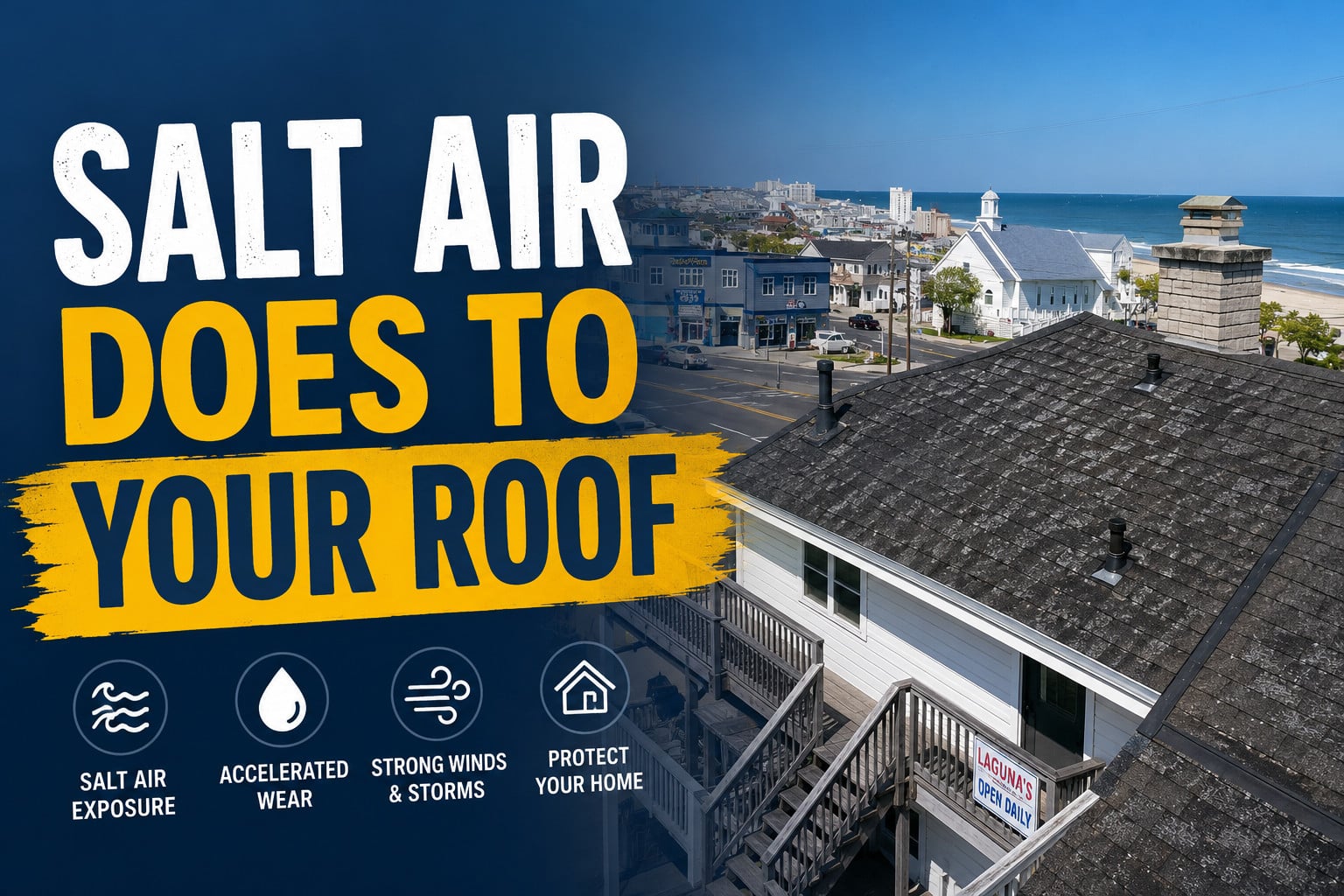
What Salt Air Does to Your Roof: A Coastal Eastern Shore Homeowner’s Guide
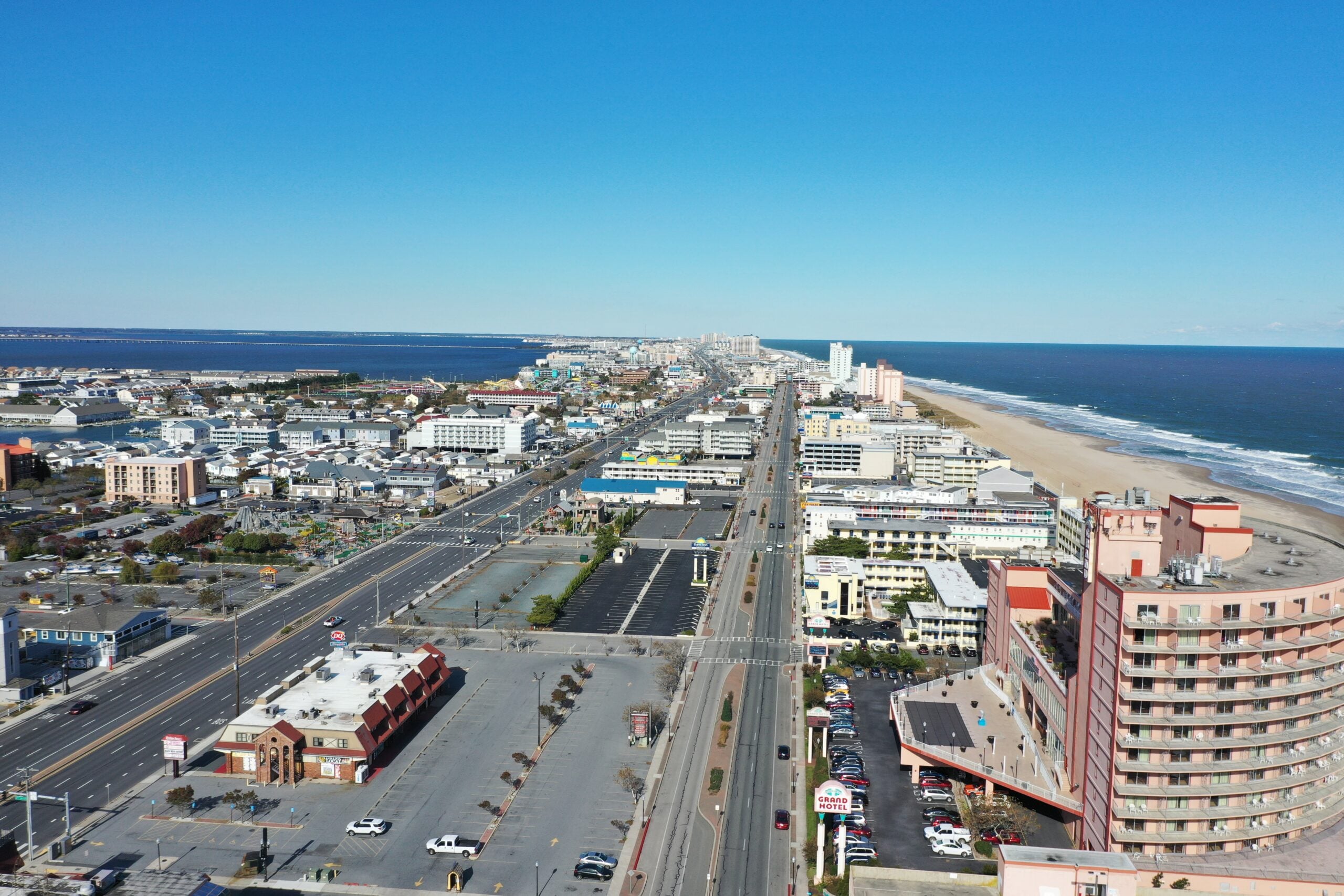
If you live within a few miles of the Atlantic or the Chesapeake Bay, your roof is aging on a different timeline than a home 30 miles inland. Ocean City and the surrounding coastal communities face a combination of salt air, high humidity, and wind that accelerates wear in ways most homeowners never see until a problem is already underway.
This guide covers what salt air does to your roofing system, where the damage shows up first, and what Eastern Shore coastal homeowners can do to catch issues before they compound.
How Salt Air Accelerates Roof Aging
Salt does not attack your roof all at once. It works through repeated moisture cycles, and the damage accumulates in three main places.
What Salt Does to Asphalt Shingles
Asphalt shingles rely on their granule coating to block UV and shed water. Salt air carries microscopic particles that embed into the granule layer over time, speeding up granule loss and exposing the asphalt mat underneath to UV and heat. Homes within a half mile of the shoreline in Berlin and along Coastal Highway often show granule depletion 3 to 5 years earlier than comparable homes in Salisbury.
A sign to watch for: heavy amounts of gritty, sand-like material accumulating in your gutters each season. That is accelerated granule shedding, and it is worth a professional look.
What Salt Does to Metal Flashing and Fasteners
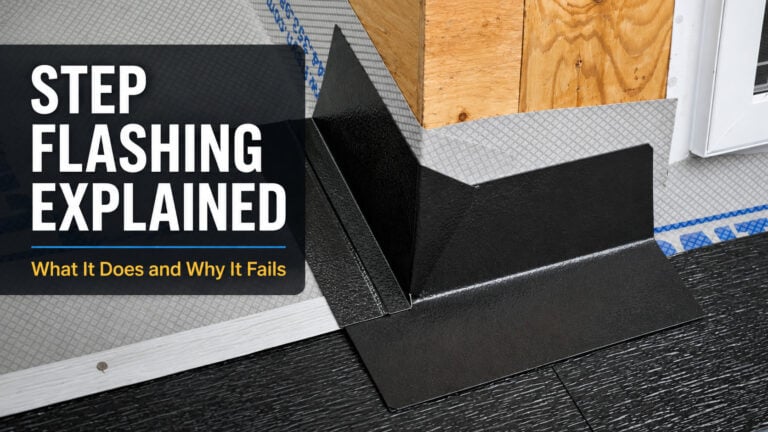
Flashing seals the joints around your chimney, vents, skylights, and roof edges. Standard galvanized flashing corrodes faster in salt air because salt acts as an electrolyte that accelerates oxidation, creating rust and gaps that let water under your shingles. It is one of the most common repair calls we handle from Ocean Pines and the communities south of the Route 50 bridge.
The same applies to roofing nails and ridge cap fasteners. Coastal homes benefit from stainless steel or hot-dipped galvanized fasteners rather than standard electrogalvanized ones, but many older roofs were not installed with coastal conditions in mind.
Why Gutters and Fascia Boards Fail First
Gutters and the fascia boards behind them take the biggest hit because they face outward and trap moisture in their joints. Even aluminum gutters develop oxidation in high-salt environments. Wood fascia boards absorb moisture and eventually rot, and once the fascia fails, the gutter has nothing solid to anchor to.
How Close Is Too Close to the Water?
Salt air exposure does not stop at the shoreline. As a general guide for Eastern Shore homeowners:
- Within a quarter mile of the ocean or bay: High-impact zone. Plan for shorter shingle life cycles (15 to 20 years instead of 25 to 30) and inspect the roof every year.
- A quarter to 2 miles inland: Moderate exposure. Annual inspection still recommended, especially after nor’easters and tropical weather events.
- 2 to 5 miles inland: Lower salt exposure, but coastal humidity and wind loads are still elevated compared to inland Maryland.
Bethany Beach and Fenwick Island in southern Delaware sit directly on the Atlantic, squarely in the high-impact zone. Many homes there are vacation rentals or second residences that do not get the routine attention a primary home would, and deferred maintenance tends to surface all at once.
What to Inspect on a Coastal Roof Every Year
A coastal home needs annual roof attention, not just when something goes wrong. Here is what a qualified inspection covers on Eastern Shore properties:
- Granule coverage: bare or thin spots developing on shingle slopes
- Flashing condition: rust, separation, or cracking at chimneys, vent pipes, and valleys
- Fascia and soffit: soft spots or discoloration behind the gutters
- Ridge cap integrity: lifting, missing pieces, or cracked sealant at the roof’s highest point
- Attic ventilation: coastal humidity from May through September holds moisture against the roof deck if airflow is poor, accelerating mold and rot from the inside out
- Gutter condition: rust streaks, separated seams, or pulling away from the fascia
A professional roof inspection from a local contractor covers all of these in one visit and provides a written record that matters for insurance claims and future buyers.
Roofing Materials That Hold Up Better Near the Coast
If your coastal roof is due for replacement, material choice has a direct impact on how long the next roof lasts.
Wind-Rated Architectural Asphalt Shingles
Not all shingles are equal for coastal exposure. Look for GAF products rated for 110 mph or higher wind uplift with a Class 4 impact designation. G and Bros installs GAF-certified systems that qualify for enhanced warranty coverage, including the GAF System Plus warranty on qualifying projects, which matters on a coastal home where wind events are a recurring reality.
Standing Seam Metal Roofing
Metal roofing eliminates the granule-loss issue entirely, handles salt air significantly better than asphalt, and carries a service life of 40 to 70 years. The upfront cost is higher, but for a beach house or second home where maintenance is harder to stay on top of, the long-term math often favors it.
If you are weighing options, our roof replacement team can walk through the cost-per-year comparison for your specific property.
Frequently Asked Questions: Coastal Roofing on the Eastern Shore
How often should I have my coastal roof inspected?
Once a year is the baseline for any home within 5 miles of the water. If your home is within a quarter mile of the shoreline, consider twice a year, especially after hurricane season ends in November.
Does homeowner’s insurance cover salt air damage?
Typically no. Salt air damage is gradual deterioration, not a sudden event, so most standard homeowner’s policies will not cover it. This is exactly why documented inspections matter: they help you separate covered storm damage from ordinary aging when a claim comes up.
My beach house sits empty most of the year. How do I stay on top of my roof?
Empty homes carry higher risk because nobody catches early warning signs. Schedule a professional inspection each spring before beach season and ask a neighbor or property manager to check for visible damage after any significant storm.
Should I get metal roofing or asphalt shingles for my coastal home?
Wind-rated asphalt shingles are appropriate for most coastal homes and cost significantly less upfront. Metal is worth the investment for properties held long-term, direct-waterfront homes, or rentals where routine monitoring is difficult. We are happy to run the numbers for your specific situation.
Can I spot coastal roof damage from the ground?
Some issues, yes: missing shingles, rust streaks on flashing, or dark granule-loss patches on slopes. But flashing separation at chimney bases, soffit rot, and attic moisture are invisible from the ground. A professional inspection gets you the full picture in about 45 minutes.
Get a Coastal Roof Inspection from a Team That Knows the Eastern Shore
G and Bros serves Ocean City, Berlin, Ocean Pines, and the surrounding Maryland coastal communities, along with Bethany Beach and Fenwick Island in Delaware. We understand what salt air and Delmarva weather do to a roofing system because we work on these homes every season.
If it has been more than a year since your coastal roof was last looked at, or if you have never had a formal inspection, call us at 410-677-4975. We will take a look and tell you exactly what we see.

Recent Blog Posts