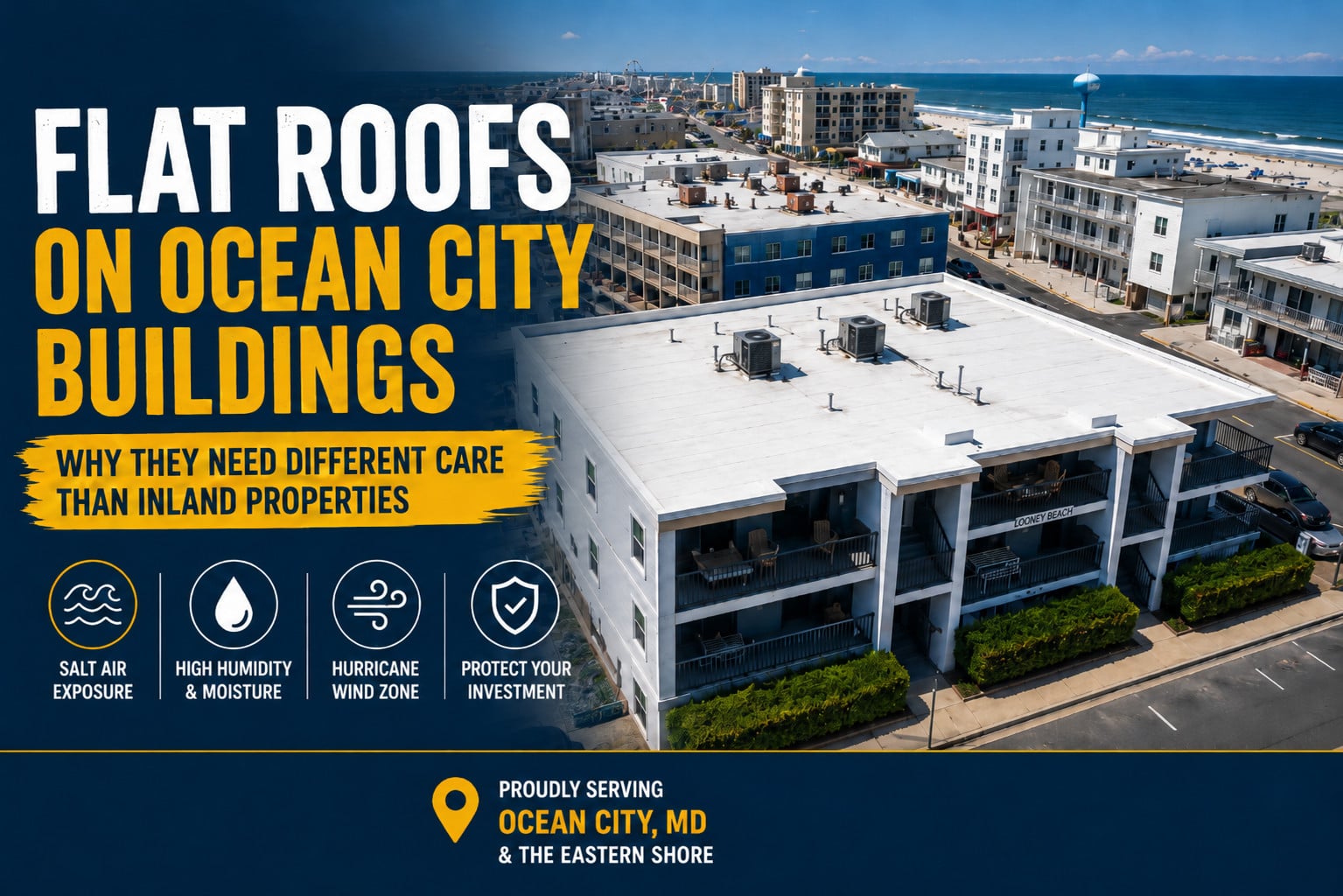
Flat Roofs on Ocean City Buildings: Why They Need Different Care Than Inland Properties
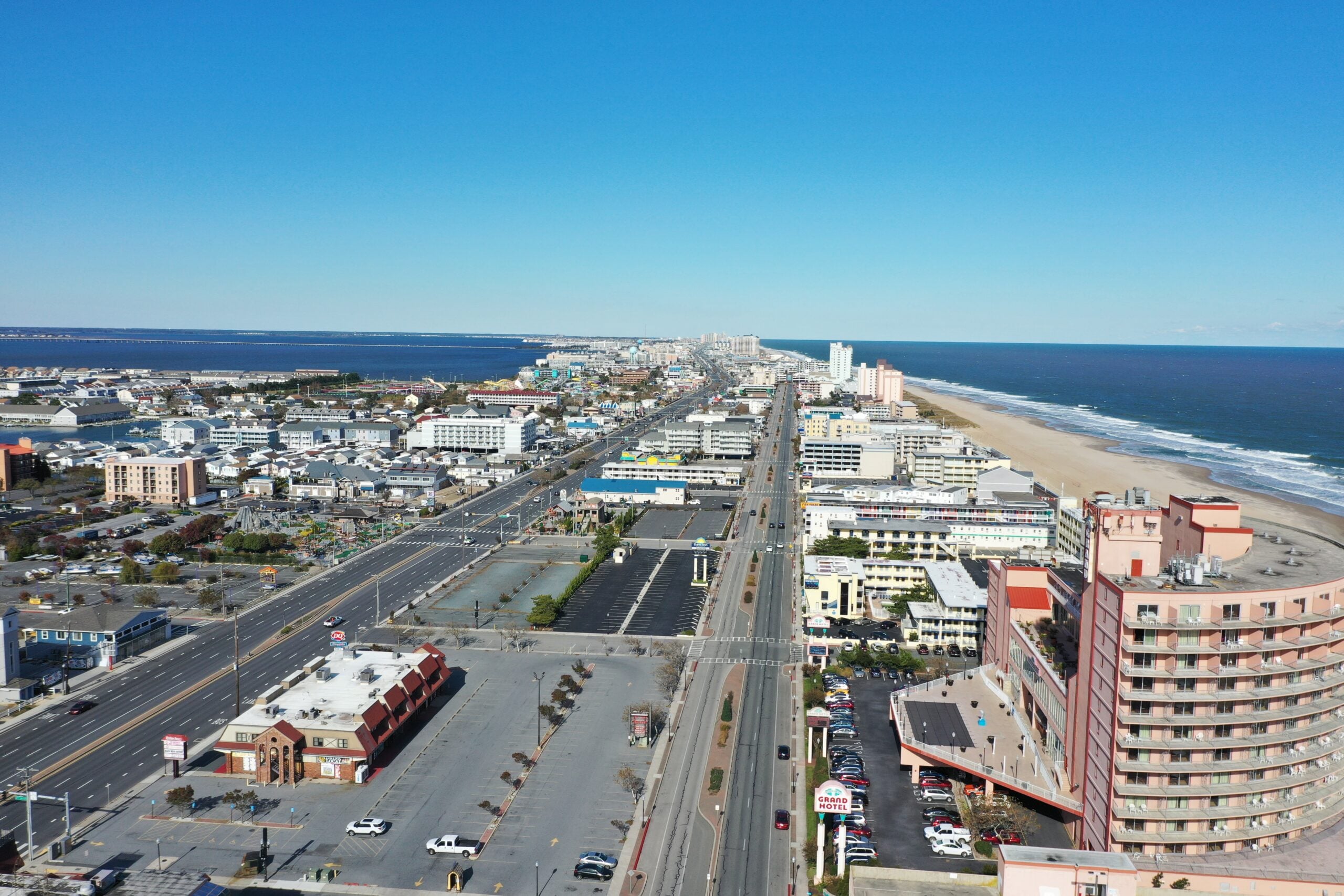
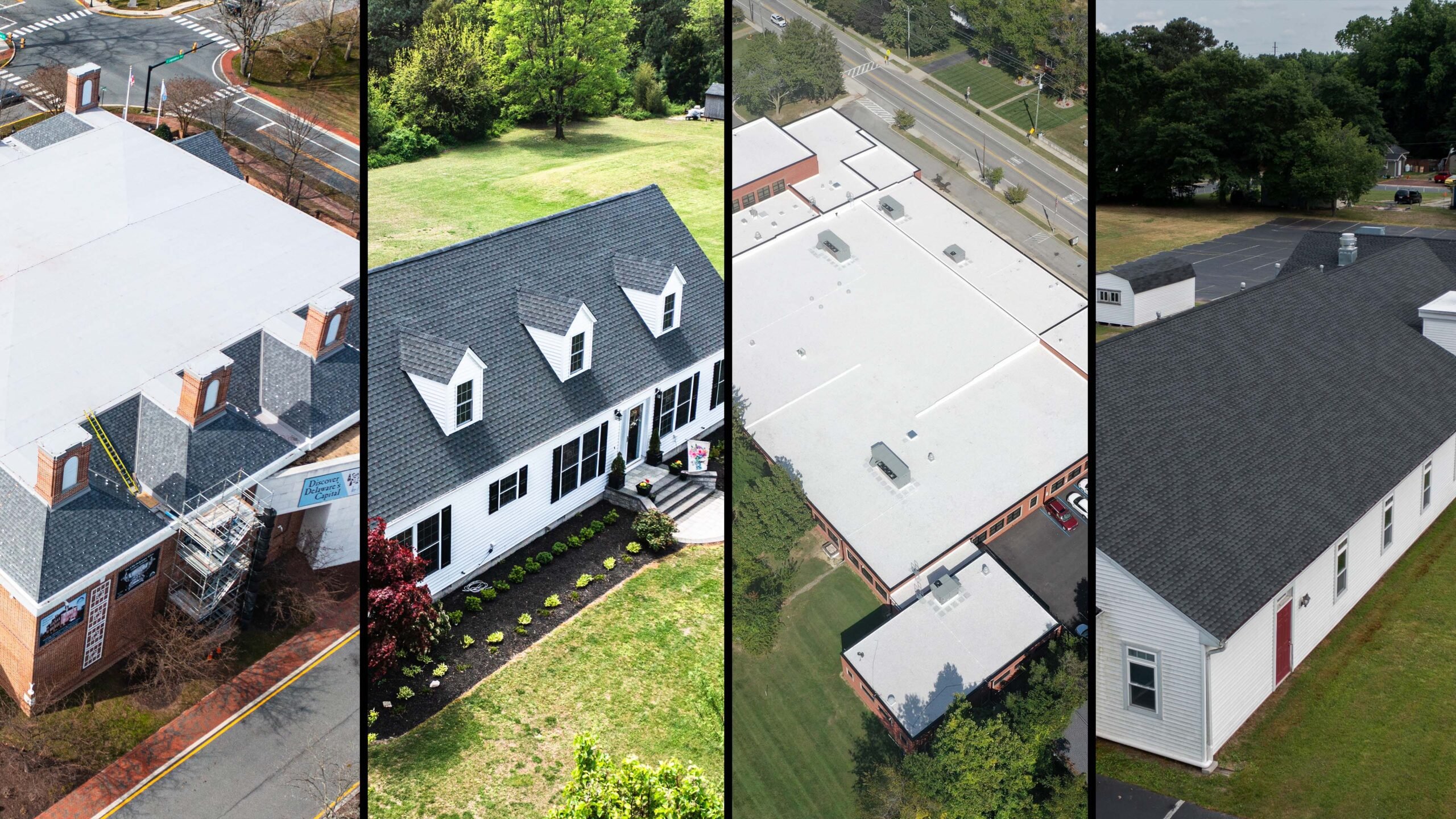
Walk through Ocean City and look up. Most of the commercial buildings, condos, hotels, restaurants, and even many residences have flat or low-slope roofs. The architecture is partly aesthetic (modern coastal look) and partly practical (flat roofs handle ocean wind better than steep pitches). But those flat roofs need a level of attention that flat roofs 50 miles inland do not.
Here is what every Ocean City property owner should understand about the flat roofs on their building.
3 Reasons Ocean City Flat Roofs Are Different
1. Salt Air Eats Standard Materials
Onshore winds carry salt several miles inland. Salt corrodes standard galvanized fasteners, eats metal flashing, and accelerates UV breakdown of standard membranes. Materials rated for inland use have shorter lives in Ocean City.
2. Hurricane Corridor Wind Exposure
Ocean City sits in a hurricane and nor’easter corridor. Flat roofs handle wind better than sloped roofs structurally, but every seam, flashing detail, and edge termination has to be rated for high-wind events. Cheap installs come apart in 100+ mph wind.
3. High Humidity and Year-Round Moisture
Chesapeake Bay watershed humidity stays high year-round. Wet roof surfaces age faster than dry ones. Combine with reduced drainage on a flat roof and you have conditions that destroy membranes faster than inland.
The Most Common Flat Roof Types in Ocean City
TPO (White Single-Ply)
Most common new install. Reflective white surface reduces summer cooling costs. Heat-welded seams handle wind well. Lifespan in Ocean City: 18 to 25 years with proper maintenance.
PVC (Premium White Single-Ply)
The gold standard for coastal commercial. Better salt and chemical resistance than TPO. Premium upfront cost. Lifespan in Ocean City: 25 to 30 years.
EPDM (Black Rubber)
Still common on older Ocean City buildings. Holds up to UV and cold, but black surface absorbs heat in summer (higher AC costs). Lifespan in Ocean City: 18 to 25 years.
Modified Bitumen
Multi-layer asphalt-based system. Found on older buildings. Increasingly being replaced with single-ply membranes during reroofs.
What Ocean City Flat Roof Owners Should Watch For
- Rust streaks at fasteners or flashing. Sign that standard galvanized hardware is corroding. Should be replaced with stainless or galvalume.
- Membrane shrinkage at the edges. Coastal UV and salt accelerate this. Pulling away from parapets is a system end-of-life signal.
- Ponding water after storms. Salt-water ponding is worse than freshwater because salt deposits accelerate breakdown.
- Salt deposits on the membrane. White crystalline residue after wind events. Rinse off with fresh water if possible.
- HVAC corrosion accelerating roof damage. Rooftop units corrode faster on Ocean City buildings, and HVAC service traffic can damage membranes nearby.
The Right Maintenance Cadence for Ocean City
Standard inland recommendation is twice-yearly inspections. For Ocean City buildings, we recommend three times per year minimum:
- Spring (March to April): Post-winter assessment. Salt damage check.
- Late summer (August): Pre-hurricane season check. Drainage confirmation.
- Late fall (November): Post-season check. Storm damage assessment.
Plus visual inspection after any named storm event.
Frequently Asked Questions
How long do flat roofs typically last in Ocean City?
15 to 30 years depending on material and maintenance. Coastal-spec installs at the top of the range, standard inland-spec installs at the bottom.
What is the best flat roof material for an Ocean City condo or hotel?
PVC for premium long-term value (best salt resistance). TPO for budget-conscious projects with good performance. EPDM only on shaded buildings (the black surface gets very hot in summer).
Do Ocean City flat roofs need different drainage than inland buildings?
Same drainage principles, but more frequent cleaning required because of higher rainfall plus salt deposits that build up over time.
Get an Ocean City Flat Roof Assessment
If you own or manage a building in Ocean City with a flat roof, G and Bros provides free coastal-aware assessments. We know what salt air, humidity, and hurricane corridor wind do to flat roofs because we work on them every week. Call 410-677-4975 or visit gandbrosroofing.com/contact. Read our Ocean City flat roof installation guide or the complete commercial roofing guide.

Recent Blog Posts