Storm Damage Roof Repair in Pocomoke City, MD: What Can Be Fixed After a September Storm
September is the busiest stretch of hurricane season, and Pocomoke City sits right in its path: low, flat ground along the Pocomoke River in southern Worcester County, with open fields and marsh that let wind build before it reaches a roof. When a tropical storm or a hard line of thunderstorms comes through, the question we hear most is simple: can my roof be repaired, or is this a bigger job? This guide to storm damage roof repair in Pocomoke City walks through what usually can be fixed, what usually can not, and how a repair actually happens.
If you want the broader picture first, we have written about the types of storm damage we find on Lower Shore roofs and what to do in the first days after a storm. This post stays on the repair itself.
Why September Storms Hit Pocomoke City Roofs
The Atlantic hurricane season runs June through November, and the National Hurricane Center places its peak around mid-September. Even storms that never make landfall nearby can push gusty bands across the Lower Shore for a day or more. Add the afternoon thunderstorms that still pop up in late summer and you get the two kinds of wind that do most of the roof damage we see: long, steady gusts and short, violent bursts.
Many homes in and around Pocomoke City are older, with roofs that have been through a lot of seasons. Shingles that have lost their seal strip grip are the first to lift, crease and blow off. A newer roof can still take damage, but it usually shows up as a few tabs, not whole sections.
Where Wind Gets Under Shingles First
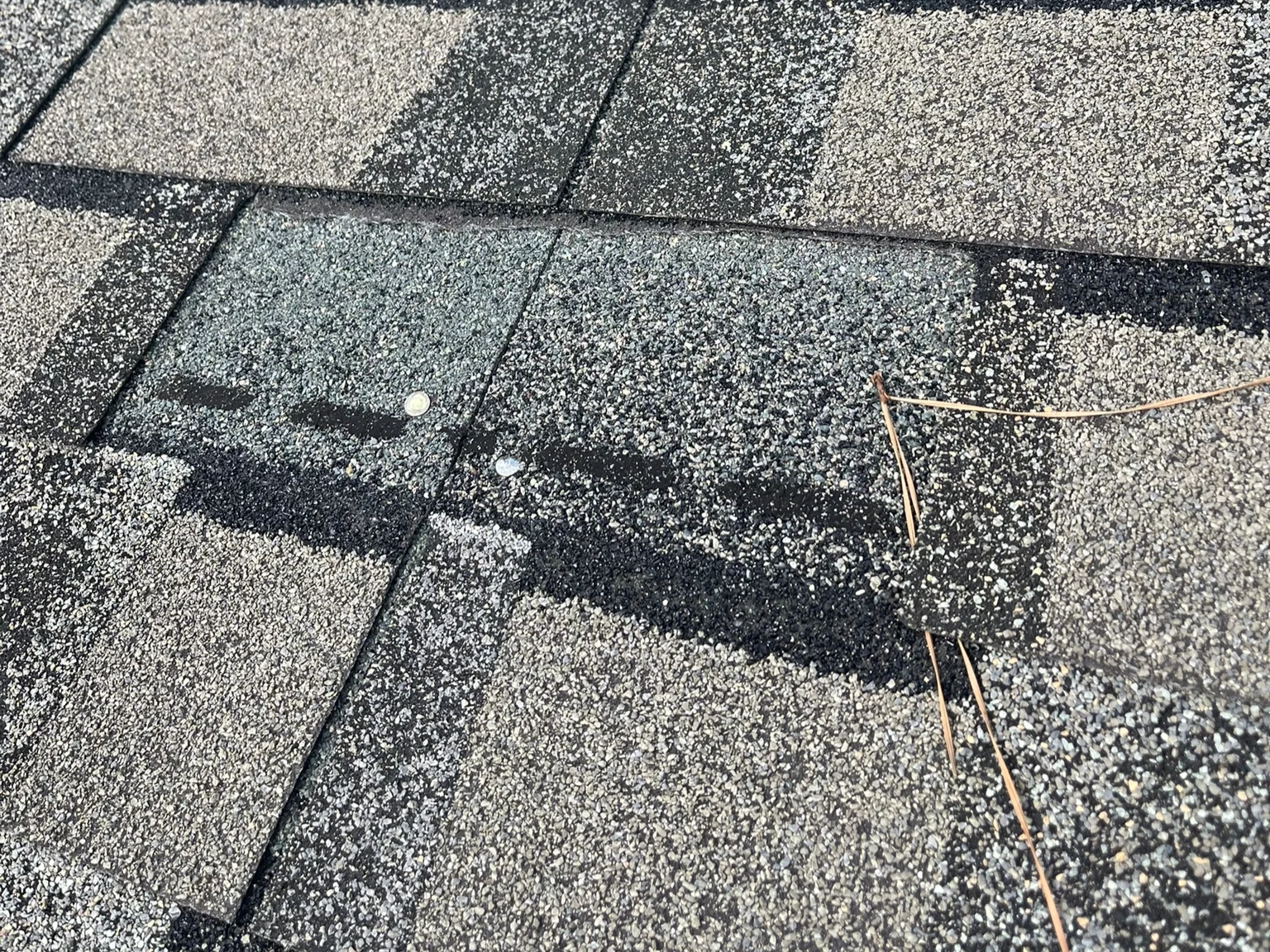
Wind rarely peels shingles from the middle of a slope. It starts at the edges, where air can get underneath, and works inward. That is why we start every storm inspection at the ridge, the rakes and the eaves before walking the field of the roof.
Where wind damage usually starts on a gable roof
Illustration. Edges, corners and the ridge take the strongest uplift, which matches what we find on storm inspections across the Lower Shore.
Repair or a Bigger Job? How We Decide
Most storm damage we see in Worcester and Somerset counties can be repaired. The table below is the rough line we use. Every roof is different, so treat it as a starting point, not a verdict.
| What we find | Usually a repair | Usually a bigger job |
|---|---|---|
| Missing shingles | A handful in one or two spots | Whole sections, several slopes |
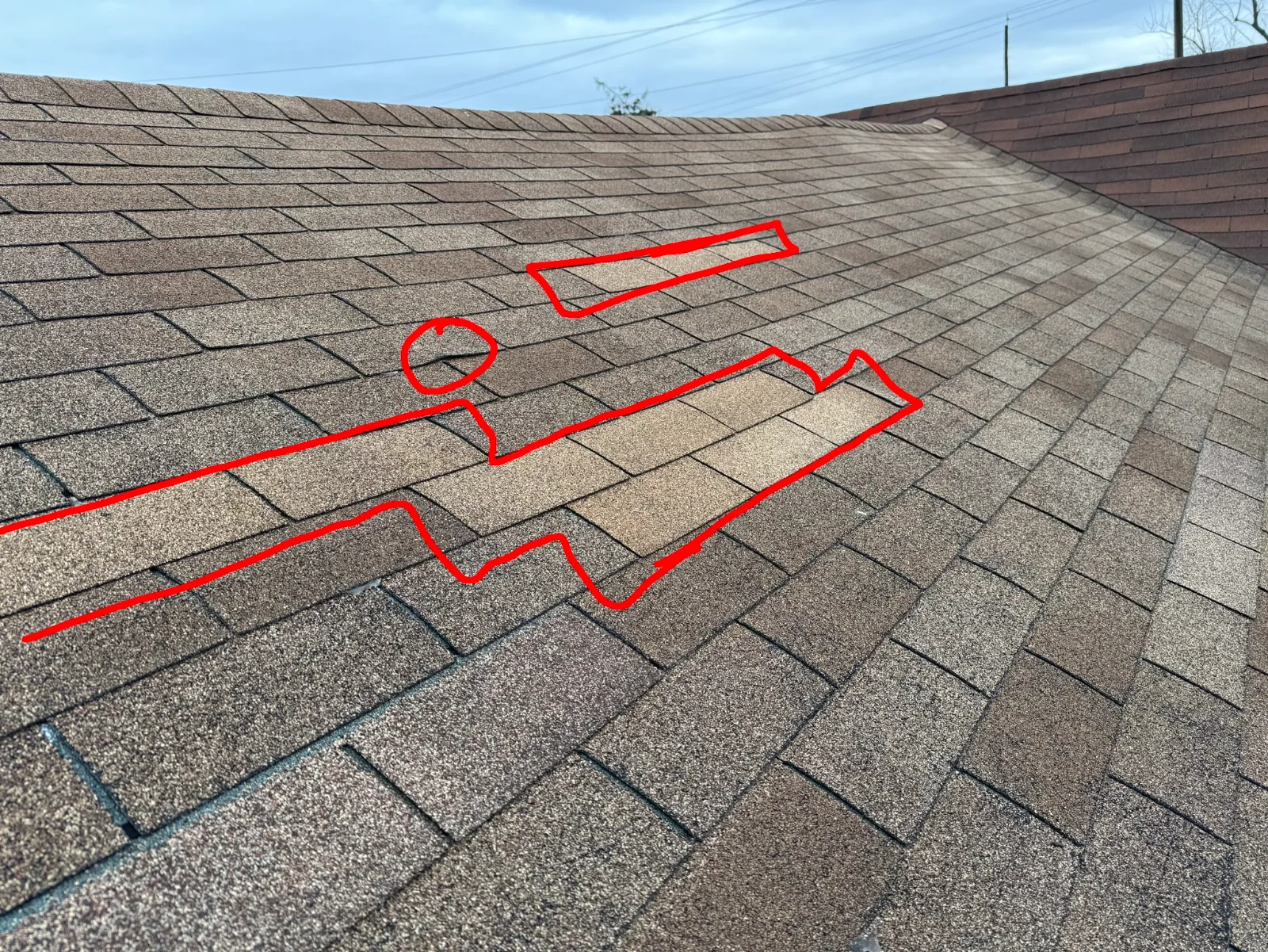
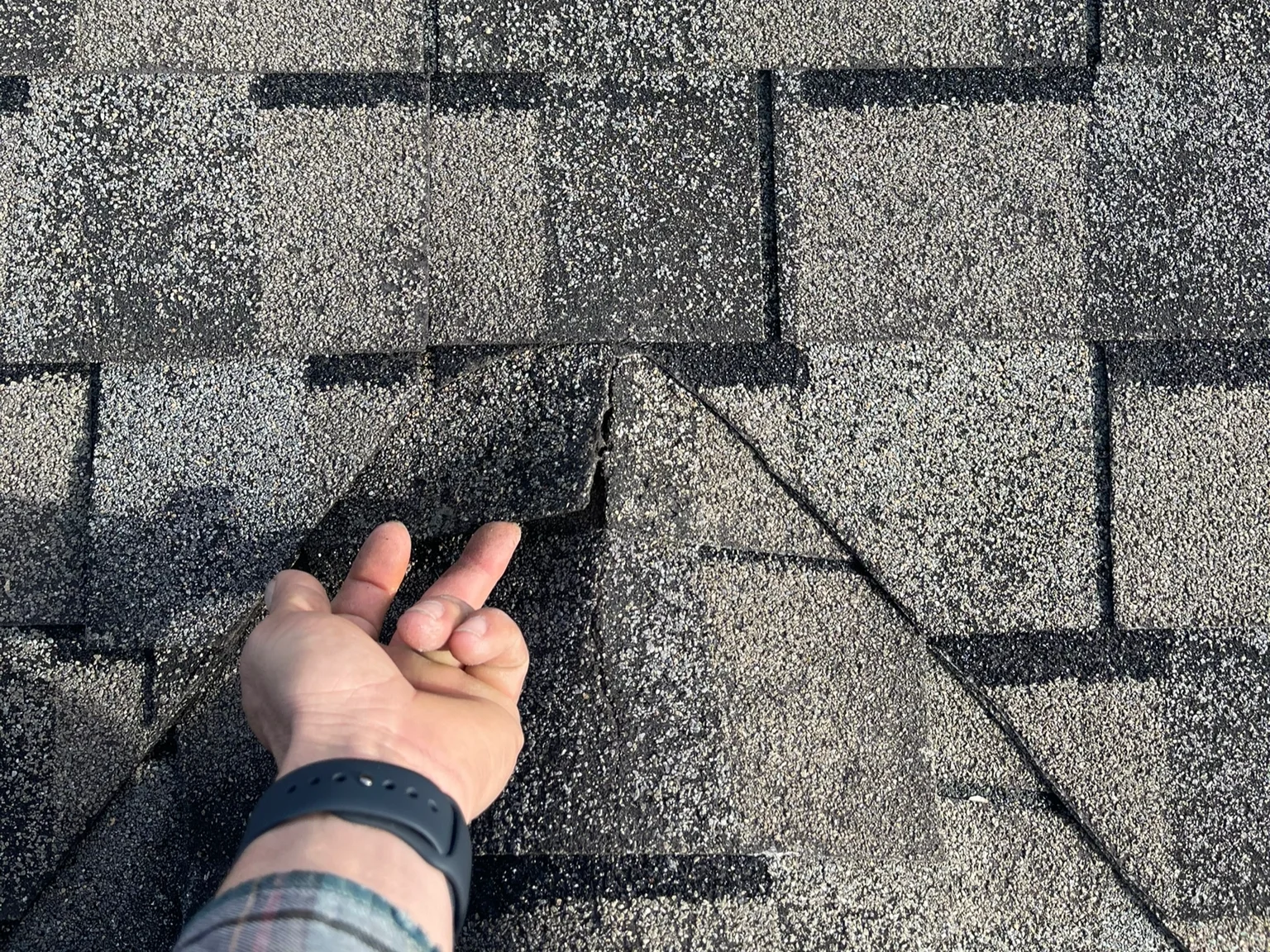
| Creased or lifted tabs | Isolated tabs that can be resealed or replaced | Widespread creasing across a slope |
| Ridge cap | A few pieces blown off | Most of the ridge loose or brittle |
| Decking | Dry, solid wood under the missing shingles | Soft, wet or rotted sheets in several places |
| Leak inside | Stain near one spot, caught early | Wet insulation, staining in several rooms |
| Roof age and shingle condition | Shingles still flexible, plenty of life left | Brittle shingles that crack when lifted |
How G and Bros sorts storm damage on Lower Shore inspections. Final calls depend on the roof, the shingle line and what we find under the damaged area.
Age matters as much as the damage itself. On a younger roof we can usually lift neighboring shingles, slip new ones in and reseal them. On an older roof the shingles around the damage are often too brittle to lift without cracking, so a small repair can turn into a slope or a full replacement.
How a Storm Repair Actually Happens
From the first call to the finished repair
Stop the water. If water is coming in, we tarp or make an emergency patch first. Take photos before anyone touches the roof if it is safe to do so.
Inspect the whole roof. We check the edges, ridge, flashing, vents and pipe boots, not just the spot you can see from the yard, and look in the attic for wet wood or insulation.
Document it. You get photos, measurements and an itemized estimate you can keep for your records or share with your insurance company.
Match the shingles. We look for the closest color and profile available. Older or discontinued shingles may not match exactly, and we tell you that up front.
Fix what is under it. Any soft decking under the damaged area gets replaced before new shingles go down. G and Bros charges $65 per sheet of 1/2 inch and $95 per sheet of 3/4 inch decking.
Seal and check. New shingles are nailed and sealed, the area around the repair is checked again, and we clean up nails and debris.
Shingle matching is the part homeowners ask about most. A repair on a roof that has weathered for ten or fifteen years will usually look a little different at first, even with the same product line. That is normal, and the difference tends to soften over time.
Insurance, Licenses and Storm Chasers
What G and Bros does: we inspect, photograph and measure storm damage and give you an itemized estimate you can share with your insurer. We document the damage; we do not negotiate your claim. Our roof insurance claim timeline lists the documents to keep.
After a big storm, out-of-town crews often knock on doors along US 13 and in the neighborhoods off Market Street. Before you sign anything, check that the contractor holds an active license with the Maryland Home Improvement Commission, ask for proof of insurance, and do not hand over a large deposit for a small repair.
If the storm turns out to be the last straw for an older roof, you can read about roof replacement and our GoodLeap financing options. We serve Pocomoke City along with Princess Anne, Salisbury and the rest of the Lower Shore, and our storm restoration page covers the full process.
Frequently Asked Questions
Can a storm damaged roof be repaired instead of replaced?
Often, yes. If the damage is limited to a few spots, the decking underneath is dry and the shingles around it are still flexible, a repair is usually the right call. Widespread damage or a brittle, older roof can make replacement the better choice.
How soon should I fix storm damage on my roof?
As soon as you can. Missing or lifted shingles let water reach the underlayment and decking, and the next storm can make a small repair bigger. Tarp it right away if water is getting in, then schedule the permanent repair.
Will new shingles match my old roof?
We look for the closest color and profile available. On a roof that has weathered for years, or one with a discontinued shingle, the repair may look slightly different at first. We will show you the options before we start.
What does storm damage on a roof look like from the ground?
Look for missing shingles, shingle pieces in the yard, bare spots along the ridge or edges, and gutters full of granules. Creased tabs are hard to see from the ground, which is why a close inspection helps.
Does G and Bros work in Pocomoke City?
Yes. We repair and replace roofs in Pocomoke City and across Worcester, Somerset and Wicomico counties, as well as southern Delaware.
Should I call my insurance company before a roofer?
Many homeowners do both in the same week. A roofer inspection gives you photos, measurements and an estimate to compare with the adjuster report. Your policy sets the reporting deadlines, so check it and call your agent with questions.
Storm hit your Pocomoke City roof?
G and Bros is GAF Certified Plus, family-owned since 2012, with 25+ years of Maryland roofing experience from our founder. We inspect, document and repair storm damage in Pocomoke City, Princess Anne, Salisbury and across the Eastern Shore and Sussex County, DE.
Get a Roof Quoteor call 410-677-4975

Recent Blog Posts