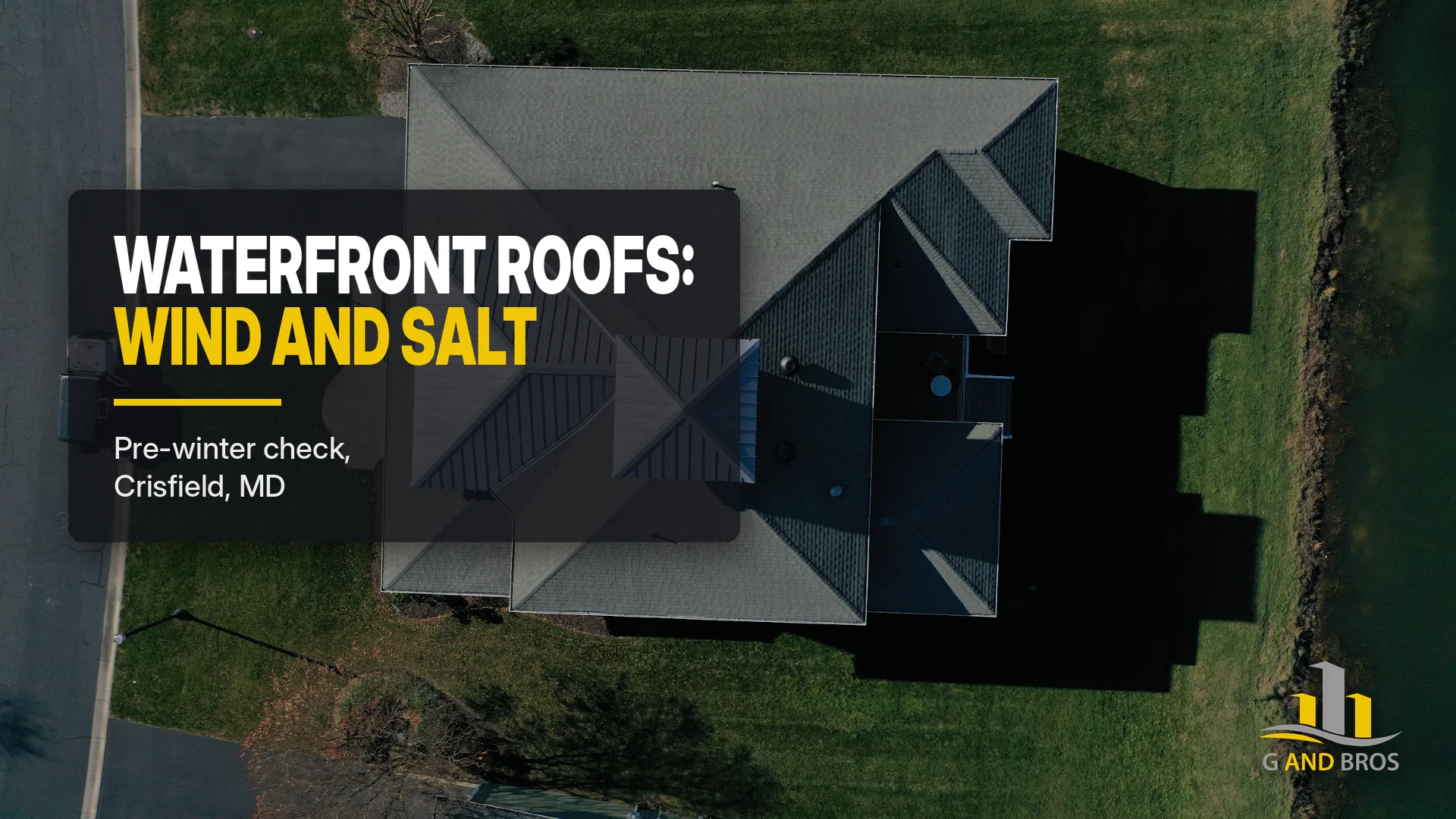
Wind and Salt on Waterfront Roofs in Crisfield, MD: What to Check Before Winter
A waterfront roof in Crisfield works harder than almost any roof on the Lower Shore. Wind comes off Tangier Sound with nothing to slow it down, and the same air carries a fine salt film that settles on every metal part of the roof. If you own a waterfront home in Crisfield, MD, mid-November is the time to find out how your roof handled the fall storms and whether it is ready for the nor’easters that usually follow.
We already wrote a salt-air survival guide for Crisfield homeowners that covers which roofing materials hold up best by the water. This post is the practical follow-up: how wind and salt actually break a roof down, where to look before winter, and what a fix usually involves.
Why Crisfield Roofs Take Both Hits at Once
Crisfield sits at the southern tip of Somerset County, with Tangier Sound on one side and marsh and the Little Annemessex River around much of the rest. A lot of the town is only a few feet above the water, and coastal flooding during storms like Sandy in 2012 is part of local memory. Plenty of homes here are older frame houses and cottages close to the shoreline, often with no tree line between them and the open water.
That setting means two things work on the roof together. Wind lifts and loosens shingles, mostly at the edges and the ridge. Salt does its damage more slowly, corroding the metal that holds everything together: nails, drip edge, flashing and vent collars. A shingle that wind has already loosened is easier to blow off once the nails holding it have started to rust, which is why waterfront roofs often fail in a pattern instead of one spot at a time.
Where Wind and Salt Go to Work
Wind and salt tend to find the same handful of spots. The drawing below shows where we look first on a waterfront roof, starting at the edge that faces the water.
Where we check first on a waterfront roof
Illustration. Wind lifts the first course at the eave, and salt corrodes the metal parts underneath. Based on what we see on coastal roof inspections.
Here is how the two forces split the work at each of those spots:
| Spot | What wind does | What salt does |
|---|---|---|
| Eave and rake edges | Gets under the first course and peels it back | Rusts drip edge and the nails along the edge |
| Shingle seal strips | Breaks the seal so tabs flap and crease | Grit and salt film can keep old seals from holding |
| Ridge cap | Lifts caps along the peak | Rusts exposed nail heads in the caps |
| Vents and pipe boots | Loosens vent covers and caps | Pits metal collars, cracks old rubber boots |
| Flashing | Pulls loose step and wall flashing | Eats through thin or unpainted metal |
What we usually find on waterfront roofs on the Lower Shore. Every roof is different, so an inspection tells you what yours needs.
Signs You Can Check From the Ground
You do not need to climb onto the roof to spot most early warning signs. Walk around the house on a calm, dry day, ideally after a windy week, and look for these:
- Shingle pieces, granules or ridge cap pieces in the yard or gutters
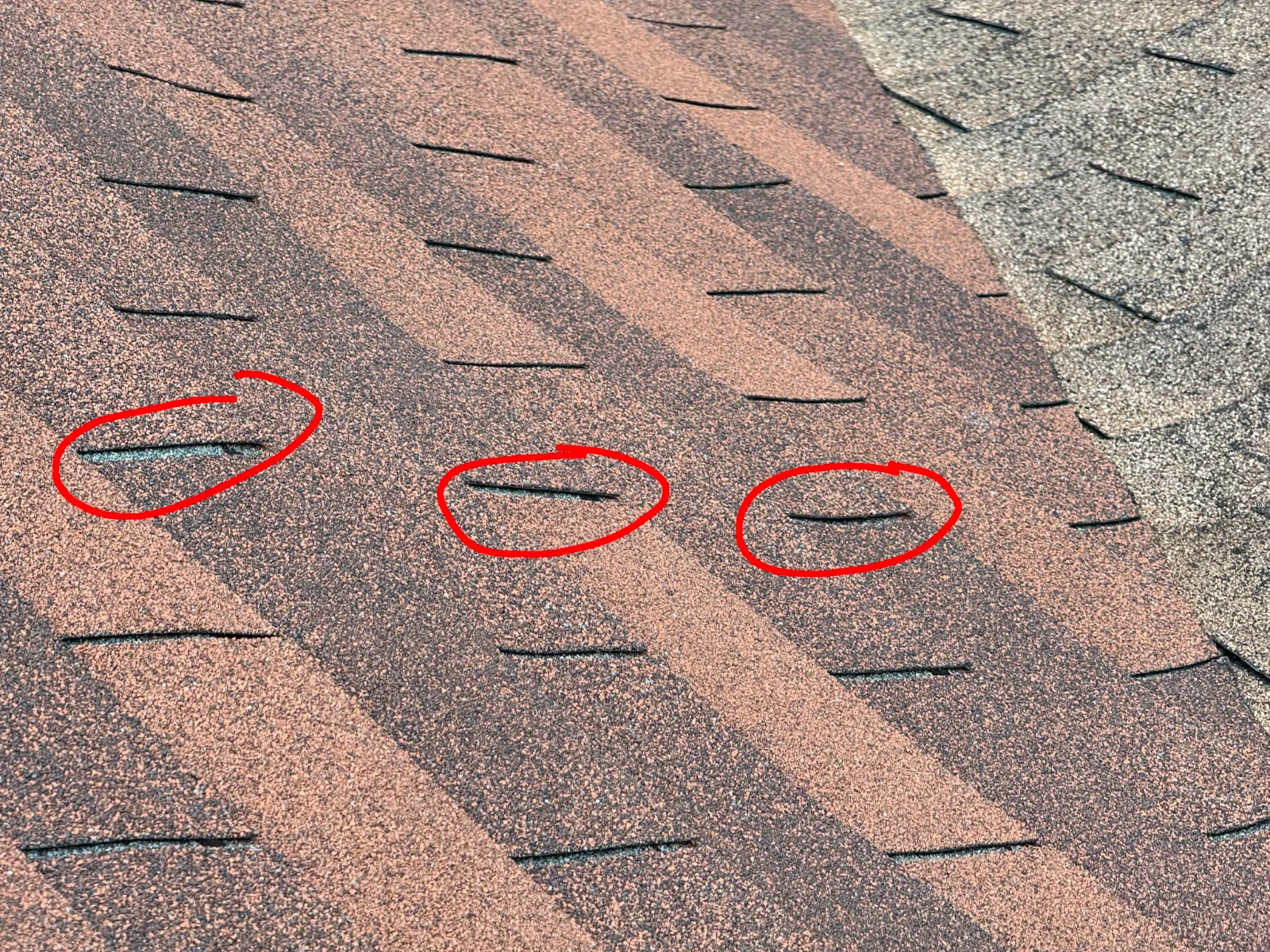
- Tabs that look raised, creased or out of line, especially near the edges
- Rust streaks running down from the drip edge or fascia
- A ridge line that looks uneven or has gaps
- Loose or tilted vent caps
- Water stains on ceilings or in the attic after a wind-driven rain
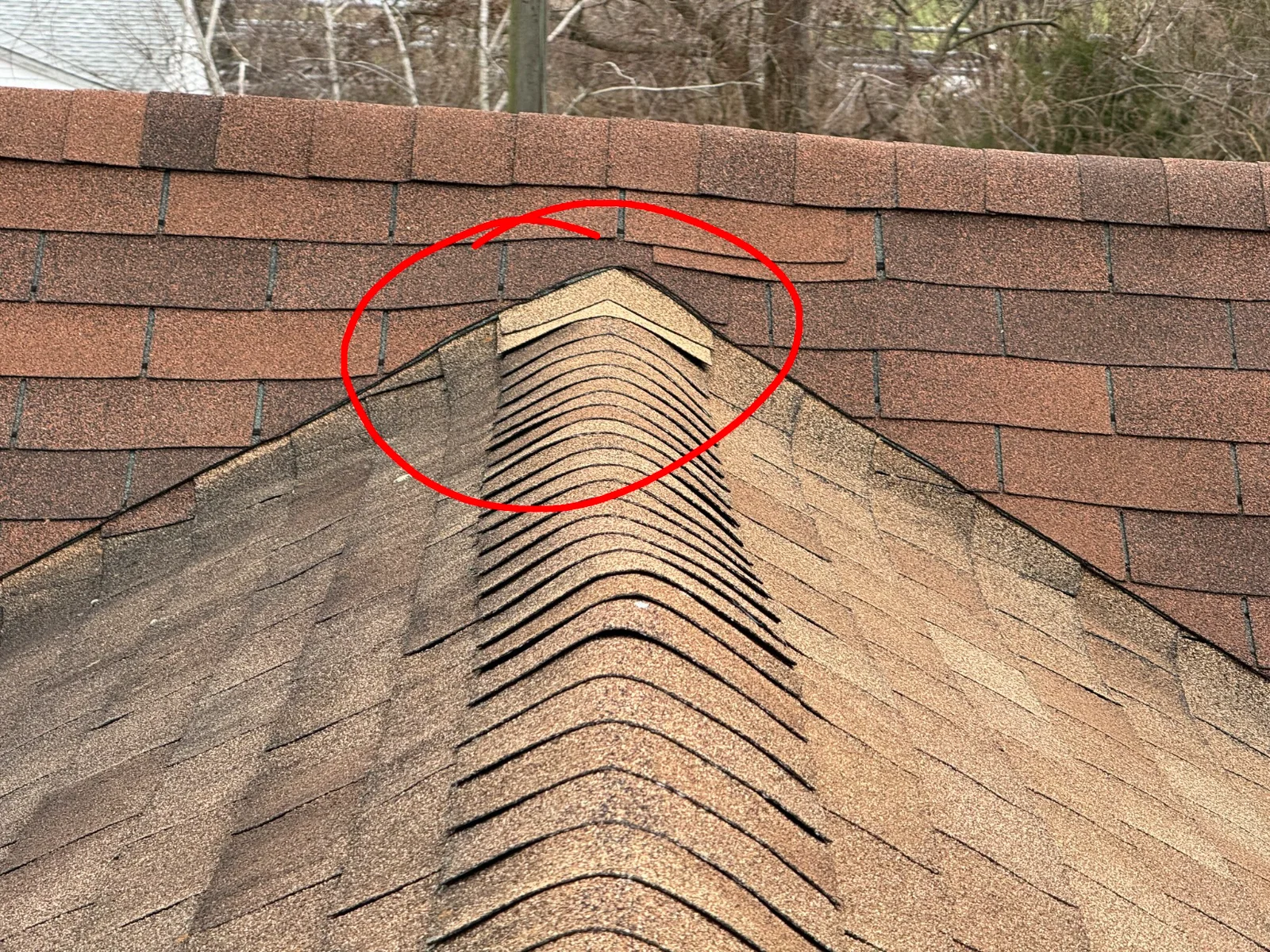
The ridge is one of the first places wind finds a weakness, because it is the highest point and catches wind from both sides. Ridge caps that have started to lift or crack are worth fixing before winter, since a lost cap leaves an open line along the top of the roof.
A Pre-Winter Check for Waterfront Roofs
This is the order we work in when a Crisfield homeowner calls us in November. It is also a good checklist to bring to whichever licensed roofer you hire.
Our November waterfront roof check
Start at the water side. The edge and slopes that face the open water take the most wind, so we look there first for lifted tabs and loose edges.
Check the edge metal. Drip edge and rake metal should be tight and solid. Rust, gaps or bent metal let wind get under the first row of shingles.
Test the seal strips. We check whether tabs are still bonded to the row below. Unsealed tabs can sometimes be resealed by hand; creased tabs usually need to be replaced.
Walk the ridge and penetrations. Ridge caps, vents and pipe boots get a close look for lifting, cracks and corroded metal.
Look inside. A quick attic check after a storm tells us whether wind-driven rain has already found a way in.
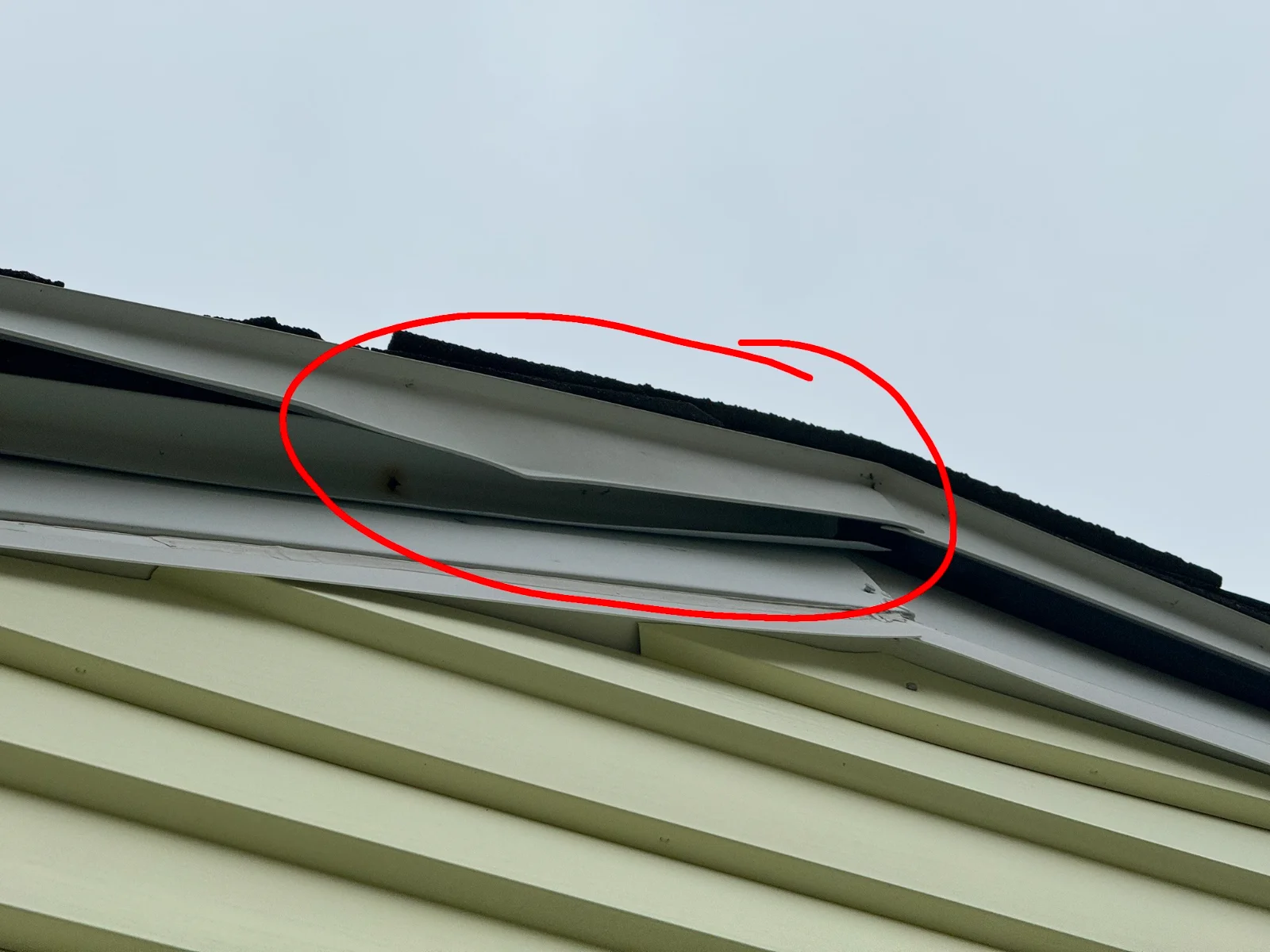
Edges like this one are where most waterfront wind damage starts. Once wind can get under the first course, every gust pries a little more, and the damage moves up the roof.
Repair or Bigger Job?
A few lifted tabs, a loose ridge cap or one rusted pipe collar are usually repair work. Wind damage that shows up across a whole slope, rusted nails on many shingles, or edge metal that has corroded along the waterfront side usually point to a bigger conversation. If your roof is older and the damage is a pattern rather than one spot, our storm damage repair guide for Pocomoke City walks through how we sort repairs from bigger jobs.
When a full replacement makes sense on a waterfront home, we focus on the details that matter most by the water: corrosion-resistant edge metal and flashing, careful sealing at the edges and ridge, and the manufacturer’s high-wind nailing pattern. G and Bros is GAF Certified Plus, and the strongest GAF warranty we offer is the Silver Pledge. If budget is the hurdle, you can check financing options through GoodLeap.
Before you hire anyone: make sure the contractor holds an active Maryland Home Improvement Commission license. You can look it up on the MHIC license page. If storm damage leads to an insurance claim, G and Bros documents the damage with photos and measurements; we do not negotiate claims for homeowners.
Storm warnings for Crisfield and the rest of Somerset County come from the National Weather Service office in Wakefield. When a coastal storm is in the forecast, that is the time to pick up loose items in the yard and make sure gutters are clear, not the morning after.
Frequently Asked Questions
How do I know if wind damaged my roof in Crisfield?
Look for shingle pieces or granules in the yard and gutters, tabs that look raised or creased, and ridge caps that are uneven. Inside, check ceilings and the attic for new stains after a windy rain. A roof inspection confirms what you see from the ground.
Does salt air really damage a roof?
Yes. Salt mostly attacks the metal parts of a roof, such as nails, drip edge, flashing and vent collars. When those corrode, shingles and flashing hold less tightly, so wind can lift them more easily.
What is the best time to check a waterfront roof?
Fall is a good time, after the late-summer storm season and before winter nor’easters. A second look after any major storm is worth it too, especially on the side that faces the water.
Can lifted shingles be resealed, or do they need replacing?
Tabs that have only lost their seal can sometimes be resealed. Tabs that are creased, torn or missing usually need to be replaced. A roofer can tell the difference up close.
Do you work in Crisfield and Somerset County?
Yes. G and Bros works across Somerset County, including Crisfield, Princess Anne and the surrounding area, along with the rest of the Lower Shore and southern Delaware.
Wondering how your waterfront roof handled the fall storms?
G and Bros is GAF Certified Plus, family-owned since 2012, with 25+ years of Maryland roofing experience from our founder. We inspect roofs in Crisfield, Princess Anne, Salisbury and across the Eastern Shore. See our Ocean Pines coastal roof damage guide and our Bethany Beach roof maintenance tips for more on salt air, or start with a roof inspection.
Get a Roof Quoteor call 410-677-4975

Recent Blog Posts